


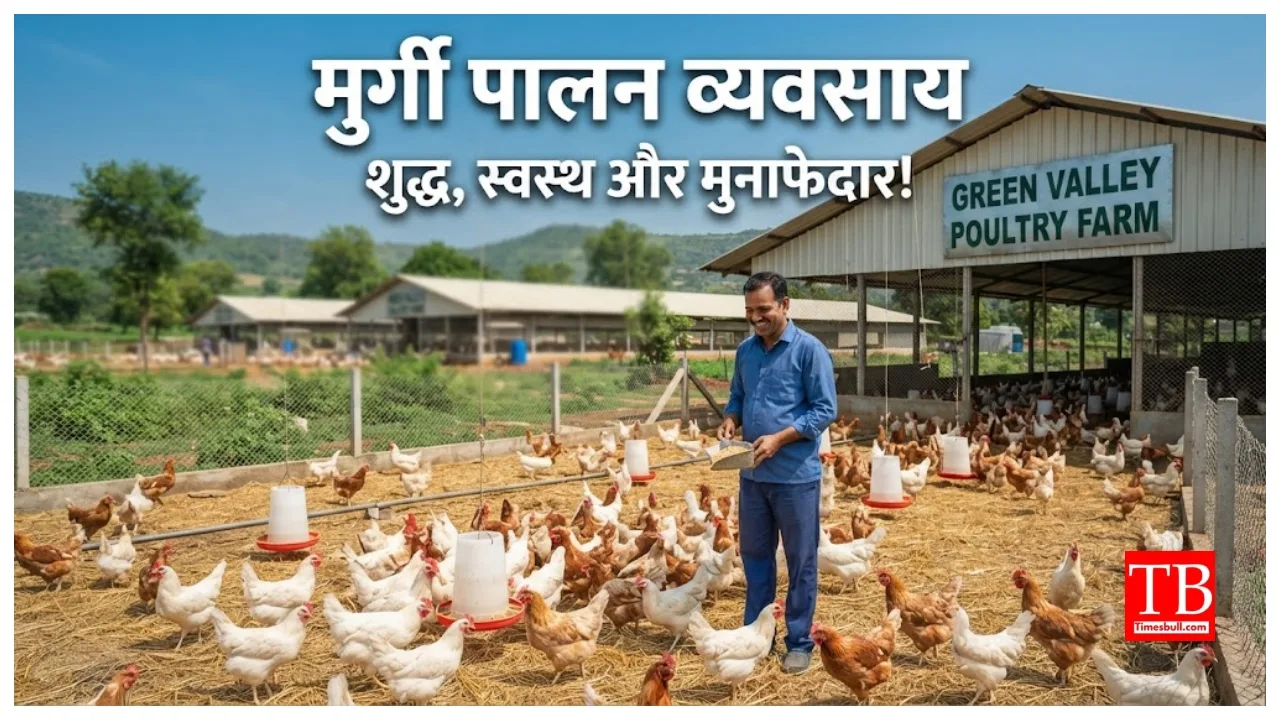
Poultry Farming: If you are currently earning a meagre salary and are considering resigning from your job to start a business, this news could be very significant for you. Meeting household expenses on a small salary is often difficult. Here, we present an excellent business plan that will keep your pockets full and allow you to build substantial savings.
We are talking about the poultry farming business—a venture that offers long-term sustainability. There are two ways to earn from this venture: selling the chickens themselves and selling their eggs. It is a profitable business in both cases. Let us explore the business model, investment requirements, and earning methods in detail.
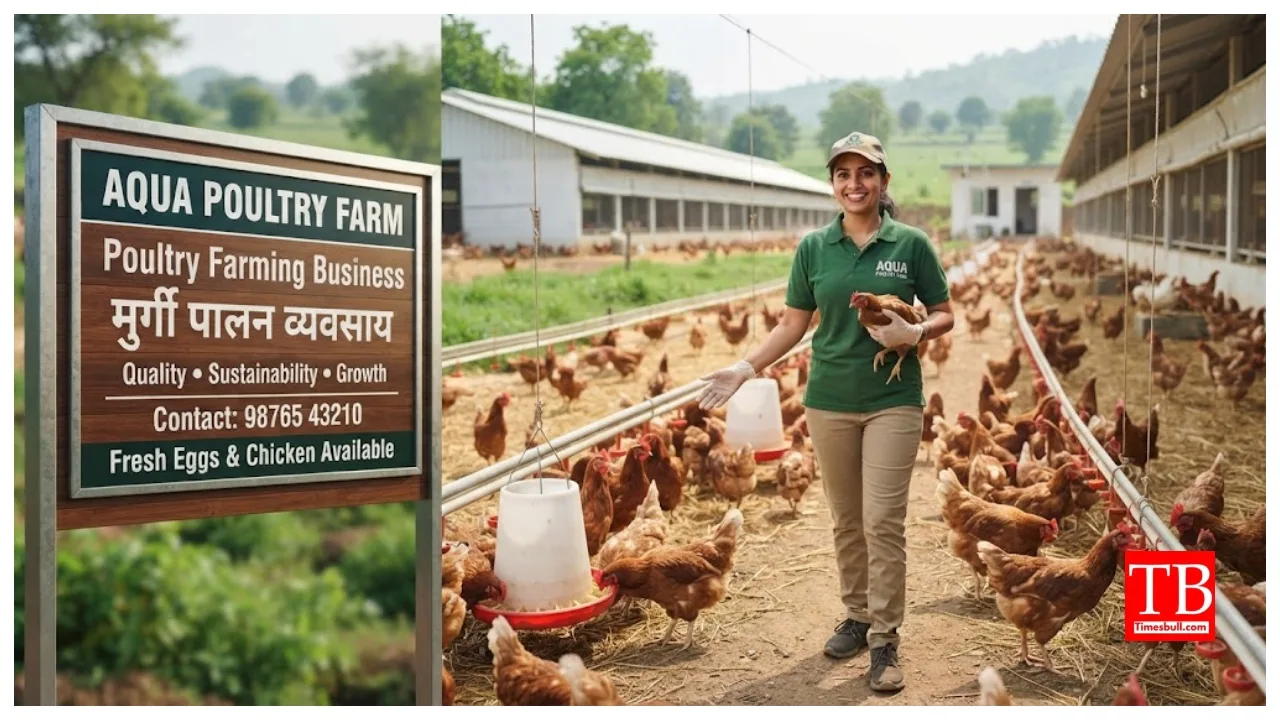
Understanding the Chicken Farming Business
You can evaluate which business model suits you best. Let’s start with the chicken farming aspect. This involves raising chickens that grow rapidly and are sold specifically for meat. A broiler chick reaches a weight of 2 to 2.5 kg in about a month and a half, making it ready for sale. By selling batches of chickens five to six times a year, you can generate profits repeatedly within a short timeframe. This method requires less initial capital than “layer farming” (raising chickens for egg production).
Understanding the Egg Business
In the egg business, you raise chickens specifically for egg production. This offers a reliable source of steady income. A hen typically begins laying eggs at 18 to 20 weeks of age and continues to lay eggs for about one and a half years. Learn How to Earn
In layer farming, eggs are produced daily, which can be sold to generate substantial income. When a hen stops laying eggs, it is sold in the market for meat, providing additional significant revenue.
According to experts, the egg business offers high and stable income because it generates daily cash flow and benefits from the constantly rising demand for eggs; however, it does require a slightly higher initial investment.
Starting the Business
If you are new to this business, you can begin with contract broiler farming. In this model, large companies like Suguna and Venky provide the chicks and feed and buy back the ready-to-market chickens, thereby reducing your risk. It also allows you to start poultry farming at a lower cost.
You can launch this business with an initial capital of ₹2 lakh. The government also provides subsidies for this purpose. With a budget of ₹2 lakh, you can set up a shed for 500 to 600 broiler chickens. Approximately ₹80,000 can be spent on the shed, and another ₹80,000 on chicks, feed, and medicines. The remaining ₹40,000 should be kept as working capital.
Earnings Calculation
After 45 days, a chicken typically reaches a weight of 2 kg; thus, 500 chickens would weigh a total of 1,000 kg. After accounting for costs, the net profit per batch is approximately ₹25,000. You can produce six batches a year (with each cycle lasting 45 days), easily resulting in an annual income of ₹1.5 lakh.
Estimated Costs
In the egg production business, hens are reared for five months before they begin laying eggs. With an initial budget of ₹2 lakh, you can raise approximately 300 layer hens. Constructing the shed and cages required for this setup will cost around ₹1 lakh. Additionally, feeding and vaccinating the 300 chicks over the five-month rearing period will incur an expense of approximately ₹90,000.
After five months, the 300 hens will yield about 250 eggs daily. After feed costs are deducted, the profit per egg is ₹1.50. Based on these figures, selling 250 eggs daily generates a daily income of ₹370, amounting to a monthly income of ₹11,000. Selling eggs alone yields an annual income of ₹1.30 lakh. Furthermore, after one and a half years, the older hens can be sold to generate an additional ₹40,000.
Where to Find Higher Returns
According to experts, the meat business offers higher earnings within a ₹2 lakh budget. This is because capital invested in broiler farming is tied up for only 45 days; with ₹2 lakh, you can rotate your capital six times a year to maximise profits. In contrast, the egg business requires rearing a flock of 1,000 to 15,000 birds to realise substantial returns.