


B28 High Speed Train: Good news for railway passengers. India is getting ready to introduce its inaugural high-speed train, the B28, onto the railway tracks in the near future. This train, which is being constructed by the state-owned corporation BEML, will have the ability to travel at speeds of up to 280 km/h. It is set to operate on the Mumbai-Ahmedabad bullet train route.
A prototype is anticipated to be completed by early 2027. This initiative will not only propel Indian Railways towards advanced technological achievements but also enhance employment opportunities, engineering expertise, and the nation’s high-speed rail environment.
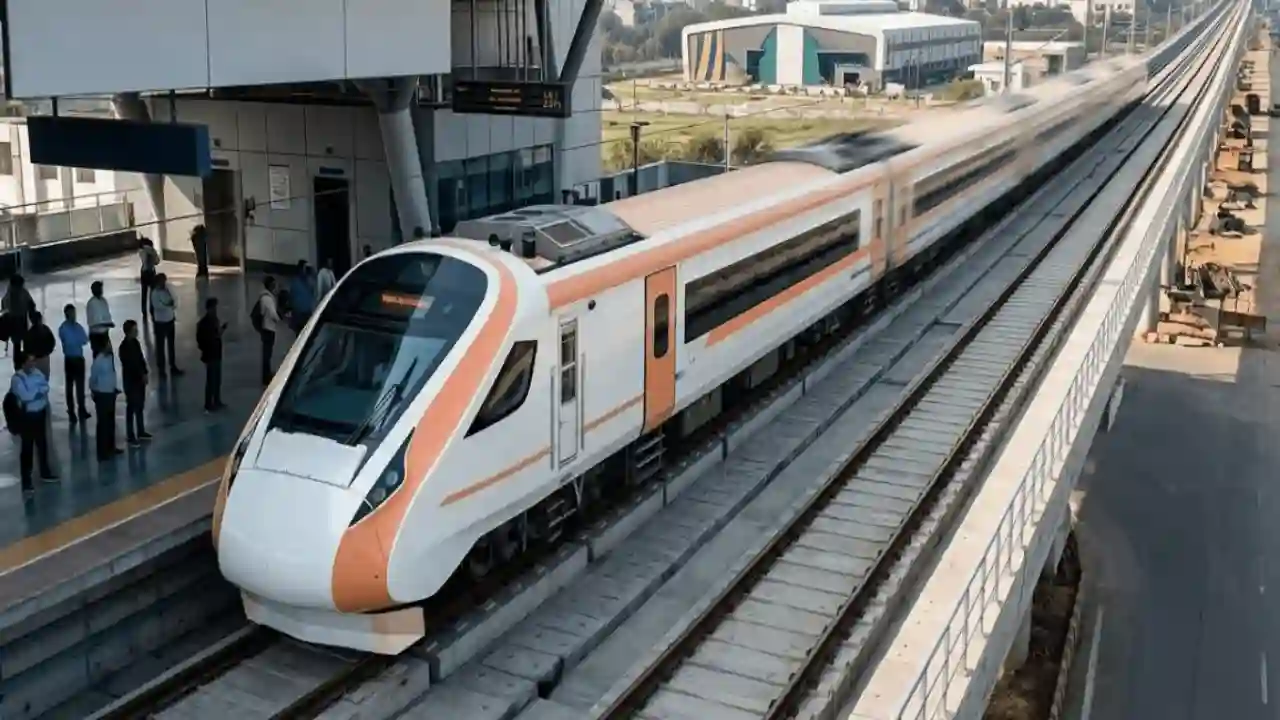
BEML is progressing with the development at its factory in Bengaluru. The company was commissioned by the Integral Coach Factory (ICF) to manufacture the high-speed train. Once the train is finalized, it will undergo initial testing at the factory followed by trials in Gujarat. Experts view this project as not only about introducing a new train but also as an opportunity for Indian engineers and technicians to acquire new skills and knowledge in technologies.
The B28 train is being designed to operate at speeds of up to 280 kilometers per hour, making it faster than any existing train in India. It will offer modern passenger facilities, comfortable seating, improved safety features, and cutting-edge technology. The introduction of high-speed rail service will significantly reduce travel time for long-distance journeys.
This train will be a part of the Mumbai-Ahmedabad High-Speed Rail Project, marking India’s first bullet train endeavor. The approximately 508-kilometer corridor is being equipped with advanced railway infrastructure. Multiple new stations are being constructed along the route and will be linked to other modes of transportation to enhance passenger convenience.
The project is employing contemporary engineering methods. Various areas are seeing the construction of high bridges, lengthy tunnels, and specialized tracks. Furthermore, state-of-the-art power supply and signaling systems are being developed for high-speed trains. Railway authorities emphasize that every aspect of the project is being executed in compliance with international standards.
To ensure safety, dedicated monitoring systems will be installed along this corridor. Equipment for monitoring weather conditions, wind patterns, and earthquake alerts will also be integrated. In the event of an emergency, immediate measures will be taken to ensure the safety of passengers.
The impact of the high-speed train project will extend beyond the railways. It will generate numerous employment opportunities directly and indirectly. The construction sector, technical services, and related industries will witness substantial benefits. It will also enable Indian companies to innovate and compete globally by developing new technologies.
The government aims to expand high-speed rail networks to other regions of the country in the future. Following the success of the Mumbai-Ahmedabad corridor, progress on several new routes might commence. In this context, the B28 train could represent a significant milestone in India’s railway history and usher in a new era of modern transportation for the nation.