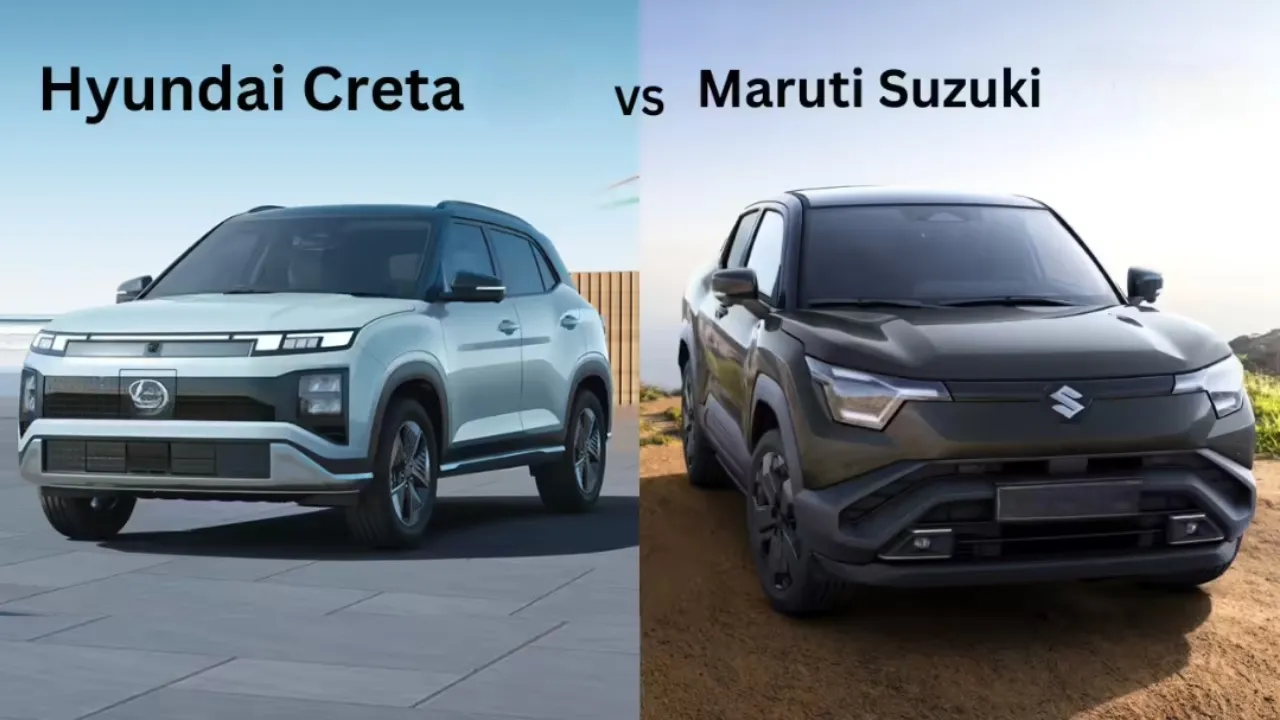
Car: These Powerful Cars to Rival Toyota Innova, Offer Great Features Too, Know More-maruti-cars-will-be-available-cheaper-complete-this-work-by-june-14-750807.html" class="tb-related-post-link" rel="bookmark">Maruti Suzuki: These Maruti Cars Will Be Available Cheaper, Complete This Work by June 14 Suzuki Vs Hyundai 2025 : In any mention of car-buying scenarios, Maruti and Hyundai would definitely cut. These two car companies established their reputation regarding trustworthiness, designs, and the value-to-money factor right from the beginning. With their latest models coming in hybrids, petrols, and even electric versions, the war now enters 2025 at a higher platform. Who, then, is the better contender for his money between these two this year? A decent comparison should show us better in this matter.
Designs And Styling
Hyundai has always gone loud with futuristic design language, giving some Creta, Verna, and i20 specially crafted LED lights, sporty edges, and a premium look that almost catches attention in an instant. Maruti Suzuki, on the other end of the spectrum, was more refined over the years; take a look at the Baleno, Fronx, and Grand Vitara, and they show a different image altogether-modern and more lavish-looking, especially the Nexa lineup. Maruti has deviated quite a bit from the original concept in that Baleno design, but this recent wave of designs seems to have imparted on an otherwise well-known moniker a lease of fresh air altogether.
Engine And Performance
Maruti Suzuki has been faithful to the older creed of smoothness and fuel efficiency. K-series engines underneath Swift, Brezza, and Grand Vitara are thus engineered to provide a blend of simple, reliable driving manners. On the other hand, Hyundai is adamant about performance-sporting. The turbo-petrol engines found on the i20 N Line and Creta Turbo are indeed powerful, offering thrilling fun behind the wheel. When it comes to catering to fuel economy-thirsty buyers, Maruti has got them. For performance and power, find a car manufactured by Hyundai.
Interiors And Features
The comfort and style are indeed just above Hyundai in this one. Fancy interiors thrown in with a selective few heavy-duty stuff, such as touchscreen, ambient lighting, ventilated seats, and wireless charging. All the while, Maruti Suzuki has not lagged in throwing all kinds of trickery these inputs can bestow. The modern features have all entered Maruti’s dictionary, with 360-degree cameras, heads-up display, and connected car tech being some of the latest noted. The newest Baleno and Grand Vitara are living witnesses to how advanced Maruti has become in keeping up with modern times. On one hand, while Hyundai gave the bigger plus point to the premium feel of the interiors, on the other hand, Maruti is far from being ruled out on its practicality and comforts.
Safety And Build Quality
And when it comes to safety, both brands got it right in 2025. Maruti Suzuki did improve upon the body integrity: now, with a reinforced body structure, Brezza and Grand Vitara see the advent of 6-airbags and even ADAS in some variants. However, Hyundai did not shy away either; thus, safety was much secured with solid crash test ratings, supplemented by electronic stability control and hill hold assist. Both companies have slipped into the category of “much more trustworthy than before”, with Hyundai still having an upper hand when it comes to building strength in general.
Price And Mileage
Price-wise, Maruti Suzuki lies on the cheaper end. In terms of mileage, it also banks in with numbers from 20 to 28 kilometres for every litre, depending on the respective model. Hyundai cars are usually priced a wee bit above, but then they completely deserve the premium for more comfort, features, and refinement in the design. Thanks to Maruti, for one, drivers wanting pocket-friendly, efficient options, whereas those wanting a slightly upscale atmosphere would choose Hyundai.
 Conclusion
 Conclusion
Whoever takes the prize in this Maruti Suzuki vs. Hyundai argument has one pretty hazy analogy for the year 2025, since both brands seem to attract fairly divergent buyers. Maruti Suzuki is strong on reliability, low upkeep costs, and high fuel economy. Hyundai has done a deal on the opposite attraction level towards the design front, with modernity, technology, and sheer driving experience immersion. Therefore, in all probability, these two will continue to remain different, depending on which of the two appeals more to you: practical value or stylish yet attractive performance. The year 2025, nonetheless, will see these two manufacturers essentially setting the benchmark in the Indian auto industry.