
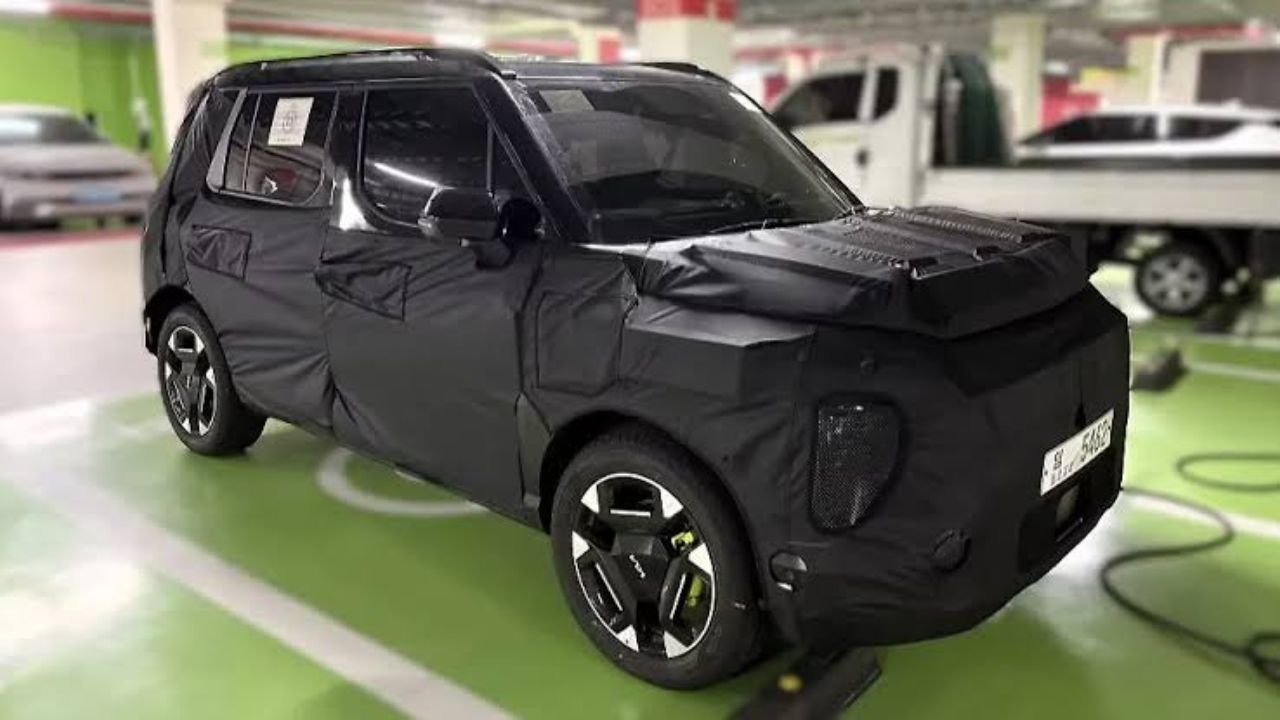
A new player is about to enter the world of electric vehicles and that is the Kia Syros EV. Ahead of its 2026 launch in India, its first spy shots have surfaced, which reveal some interesting details. This EV will compete with the Tata Nexon EV and Mahindra XUV400. So let’s know everything about this new electric SUV.
Read More – Vivo V60 5G Mobile Launch: Price, Livestream Details, and Full Specifications You Need to Know
Design
The spy shots reveal that the Syros EV retains the same design as its petrol/diesel versions, but there are some EV-specific changes. The most notable feature is the dual charging ports on both sides of the front fenders, which differentiate it from the Clavis EV. Apart from this, aero-optimized alloy wheels, neon coloured brake calipers and disc brakes are also visible.

Apart from this, features like LED headlamps, LED DRLs, flush-fitting door handles and shark fin antenna have been carried forward from the ICE version. However, some unique styling elements can be seen in the EV version.
Interior
On the inside, the Syros EV will look similar to its petrol/diesel versions, but will get EV-specific software updates in the instrument cluster. Kia may also introduce some new trim and upholstery options for this model. However, not many details about the cabin have been revealed yet.

Battery and Range
Talking about the battery, according to reports, the Kia Syros EV will use the Hyundai Inster EV’s 42kWh and 49kWh battery packs. Both these batteries use nickel manganese cobalt (NMC) cells. The first battery will be of 42kWh which will give a claimed range of 300km. The second battery will be of 49kWh which will give a range of up to 355km. This range will be close to that of Tata Nexon EV and Mahindra XUV400 in Indian roads and traffic conditions.
Read More – Ayushman Bharat Yojana: How to get free treatment up to Rs 5 lakh in emergency? Know here
Price
Now talking about the price, the price of petrol/diesel version is between ₹ 9.50 lakh to ₹ 17.80 lakh (ex-showroom). Its base variant will be up to ₹ 14 lakh. The other top-end variant will be ₹ 20 lakh. After launch, it will compete with Tata Nexon EV, Mahindra XUV400 EV and the upcoming Maruti Fronx EV.
Latest News
- Motorola Edge 60 Fusion Review: Mid-Range King or Outdated?

- FD Update– Breaking Your FD Early? Know the consequences

- Bank Holiday–RBI Announces Closure of SBI, HDFC and All Banks Next Week, Save the Dates

- Samsung Galaxy S26 Ultra Amazon Deal – Get ₹23,509+ Discount with Bank Offers and Exchange Benefits

- Best Scooters For College Girls 2026 – Perfect Mix Of Mileage, Style And Lightweight Design
- Kodak Matrix QLED Google TV 2026 Series Launched in India Just Under 10,999

- Senior Citizen FD Rates: सीनियर सिटीजन को यहां से मिल रहा बंपर ब्याज, जल्द करें निवेश

- UGC NET 2026 – How to Apply for UGC NET June 2026? Last Date May 24 Till 11:50 PM at ugcnet.nta.nic.in

- Mahindra Thar New Version Leaked – Powerful Engine And Advanced Features Coming

- Jio 5G Unexpected Speed Drop: Network Slowdowns Frustrate Users