


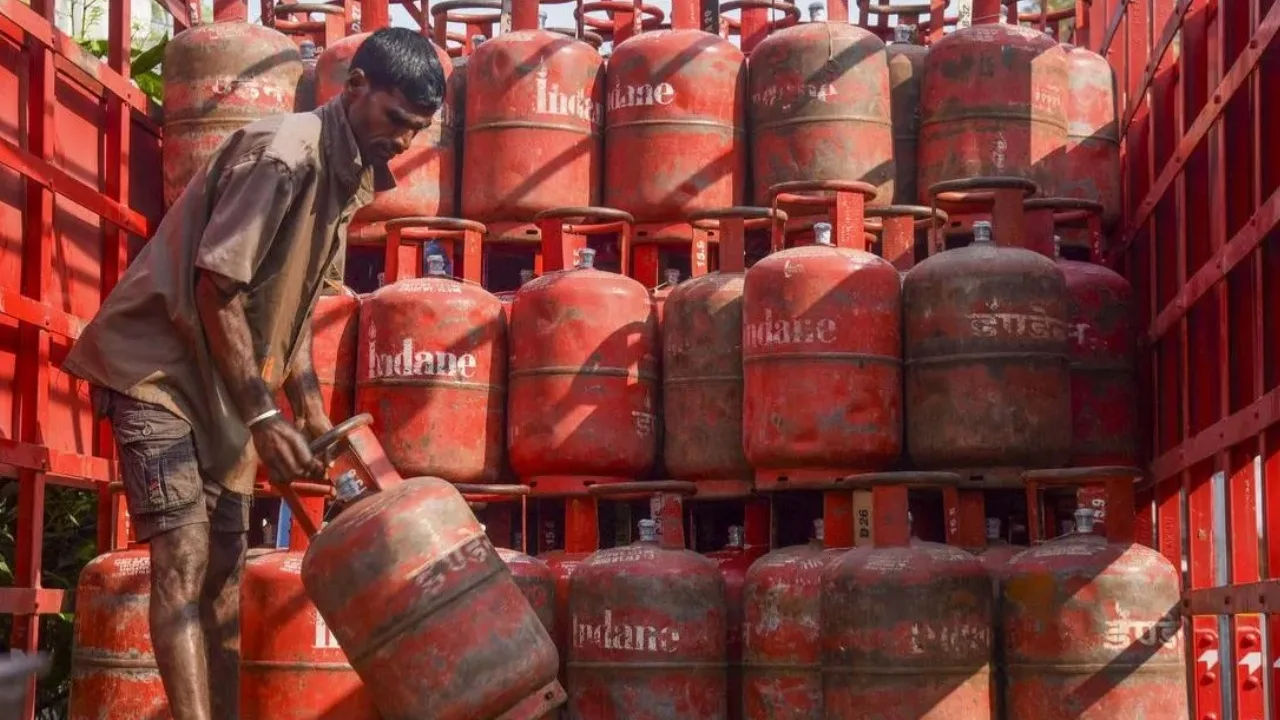
LPG Price: In the global market, crude oil prices have been on a downward trend. Over the last two days, Brent crude has dropped and now sits between $90 and $92 per barrel. This development has prompted speculation about whether LPG cylinder prices, along with petrol and diesel, might ease as well. Should international oil and gas prices stay subdued, there may be an eventual impact on domestic gas prices.
Nonetheless, lower crude oil prices do not translate into an immediate reduction in LPG cylinder costs. Pricing for cooking gas in India depends on a variety of elements, such as international LPG reference rates, the rupee-to-dollar exchange rate, costs tied to importing and transporting the gas, among others. Additionally, the government’s subsidy policies and periodic pricing reviews by oil companies also carry significant weight. To understand how a fall in crude prices may influence your household expenses, it is necessary to explore the process for setting LPG prices.
To what extent does crude oil influence LPG cylinder pricing?
Understanding the relationship between Brent crude and LPG cylinder prices in India is essential; the two are not directly linked. Since India imports over 55% of its LPG requirements, domestic prices are largely influenced by the Saudi Contract Price set by Saudi Aramco, which serves as a main benchmark for LPG rates in Asia.
LPG is composed mainly of propane and butane, which are by-products of both crude oil refining and natural gas processing. As a result, changes in crude oil and natural gas markets can impact the production costs and global prices of LPG. However, the effect of such fluctuations is neither immediate nor directly mirrored in LPG pricing. Instead, adjustments in the Saudi Aramco contract price tend to have a more pronounced effect.
How often do oil companies adjust prices?
LPG cylinder rates in India are controlled by state-run oil firms such as Indian Oil, Bharat Petroleum, and Hindustan Petroleum. These companies usually update LPG prices at the start of each month. While domestic prices may fluctuate, they are not automatically pegged to shifts in international costs. The government also intervenes with subsidies and other strategies to manage the effective price of household LPG.
Consequently, domestic users are shielded from absorbing the full brunt of international LPG price surges. Those eligible under the Pradhan Mantri Ujjwala Yojana scheme receive government-subsidised cylinders. Meanwhile, commercial cylinder prices are more quickly affected by changes in the global market.
Is a reduction in LPG cylinder prices likely soon?
On 10 November, Brent crude oil prices dropped by 1.2 percent in global trading, reaching $91.49 per barrel—the lowest since August. However, the following day saw a rebound, with prices returning to around $92 per barrel. These fluctuations suggest that, although there has been a recent decrease, volatility persists.
Therefore, it is too early to state that domestic LPG cylinder prices will imminently fall in response to lower crude prices. For a sustained reduction, declines would need to be observed in international LPG benchmarks, currency exchange rates, and import expenses. Moreover, government policy decisions remain a decisive factor in setting prices for Indian households.
How much will it affect your pocket?
According to analysts, if LPG prices fall in the international market and the rupee doesn’t weaken significantly, oil companies’ costs could decrease. Consumers could benefit from this in the future. However, it’s difficult to predict the exact amount of price reduction. It’s also possible that domestic cylinder prices will remain stable despite the international cost reduction. Therefore, the current decline in crude oil prices can be seen as a sign of relief for LPG consumers, and there’s hope for further price reductions in the coming months.