


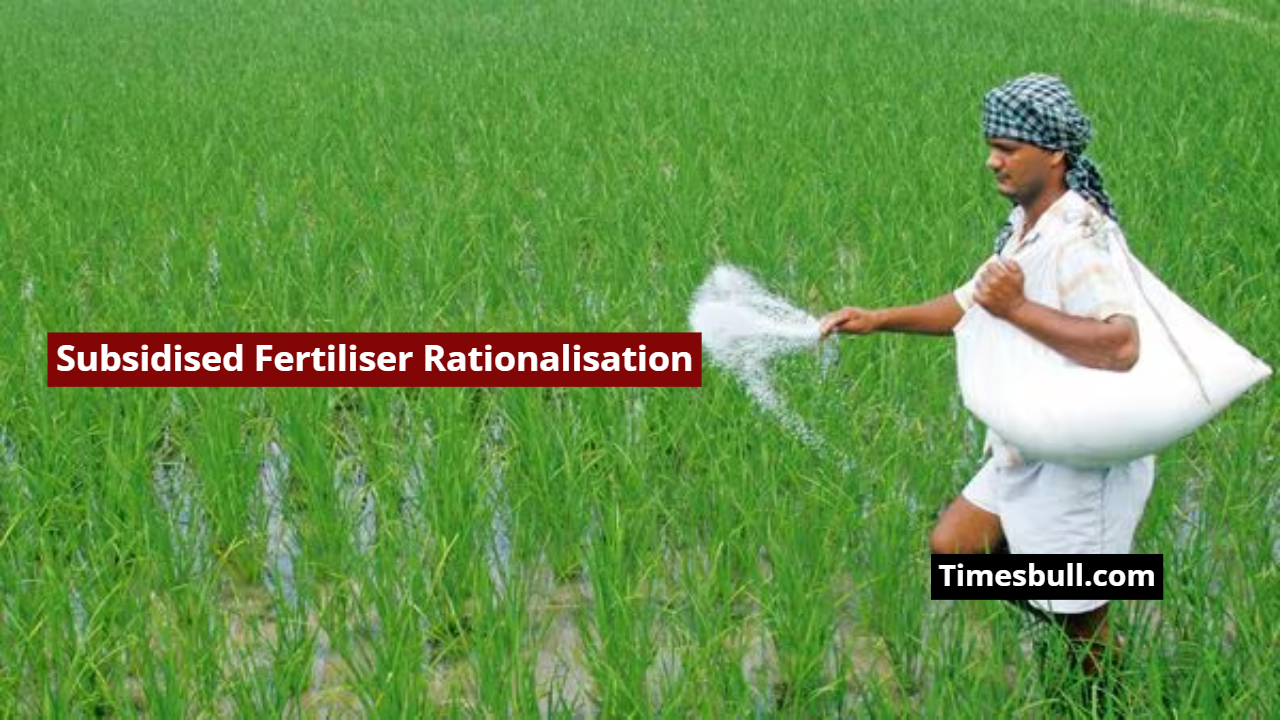
Subsidised Fertiliser Rationalisation: The central government is moving towards a comprehensive overhaul of the fertiliser subsidy system. The government is launching a new pilot project aimed at directly linking the amount of highly subsidised fertilisers received by farmers to their land holdings. This step is considered crucial not only to control the growing subsidy burden but also to prevent black market in the black market.
Under the current system, approximately 60 million tons of subsidised fertilisers are supplied to farmers each year, of which approximately 18 percent is met through imports.
The Pressure of Rising Subsidies and Its Real Picture
Fertiliser subsidy expenditure has increased alarmingly over the past few years. In the 2024-25 fiscal year, the government’s urea subsidy expenditure reached ₹1.91 lakh crore. This figure not only reflects a burden on government finances but also indicates that fertiliser use far exceeds the actual land requirement.
The government believes that due to excessive subsidies, many farmers over-utilise fertiliser. This is leading to an unbalanced reliance on subsidies, which is directly impacting soil fertility.
What is the main objective of the pilot project?
Chemicals and Fertilisers Minister J.P. Nadda told the Rajya Sabha that the primary objective of the new pilot project is to analyse fertiliser demand based on farmers’ land holdings. He stated that if a farmer is purchasing 50 bags of fertiliser when he needs only 10, this system must be improved.
Through this project, the government aims to promote balanced fertiliser use to improve soil health and prevent unnecessary expenditure on subsidies.
Impact of Imbalanced Nutrition on Soil and Economy
Imbalanced fertiliser use has long been a concern for agricultural scientists and policymakers. Excessive use of chemical nutrients not only weakens soil quality but also leads to declining yields and environmental damage.
The government’s efforts are yielding positive results. The Fertiliser Ministry reported in August that 14 states used 1.51 million tons less fertiliser in 2023-24 compared to the average of the previous three years, which is a positive sign.
The Crisis of Increasing Imports and the Question of Dependence
Fertiliser imports have also seen a significant surge alongside rising subsidies. Between April and October 2025, India’s urea imports increased by 136.6 percent. Overall, fertiliser imports have increased by 137 percent.
DAP imports increased by 69.1 percent, while domestic production declined by 7.4 percent. Despite a 12.6 percent increase in NP and NPK fertiliser production, their imports increased by 80.6 percent. Only MOP imports declined by 22.1 percent.
This dependence also increased because China temporarily banned fertiliser exports during the Kharif season, leading to a significant shortage in the domestic market. Furthermore, good rainfall has led to a sharp increase in demand for fertilisers in the country.
Read More- Whether Your Salary is High or Low, These 8 Habits Will Increase Savings
Hopes for Self-Sufficiency Through Domestic Production
Meanwhile, domestic urea production in India is steadily improving. In fiscal year 2024, the country produced a record 31.4 million tons of urea. The government hopes that with the commissioning of two new urea plants, India will take another strong step towards self-sufficiency.
While achieving complete self-sufficiency will take time, this pilot project could prove effective in preventing black marketing and controlling subsidy expenditure.