


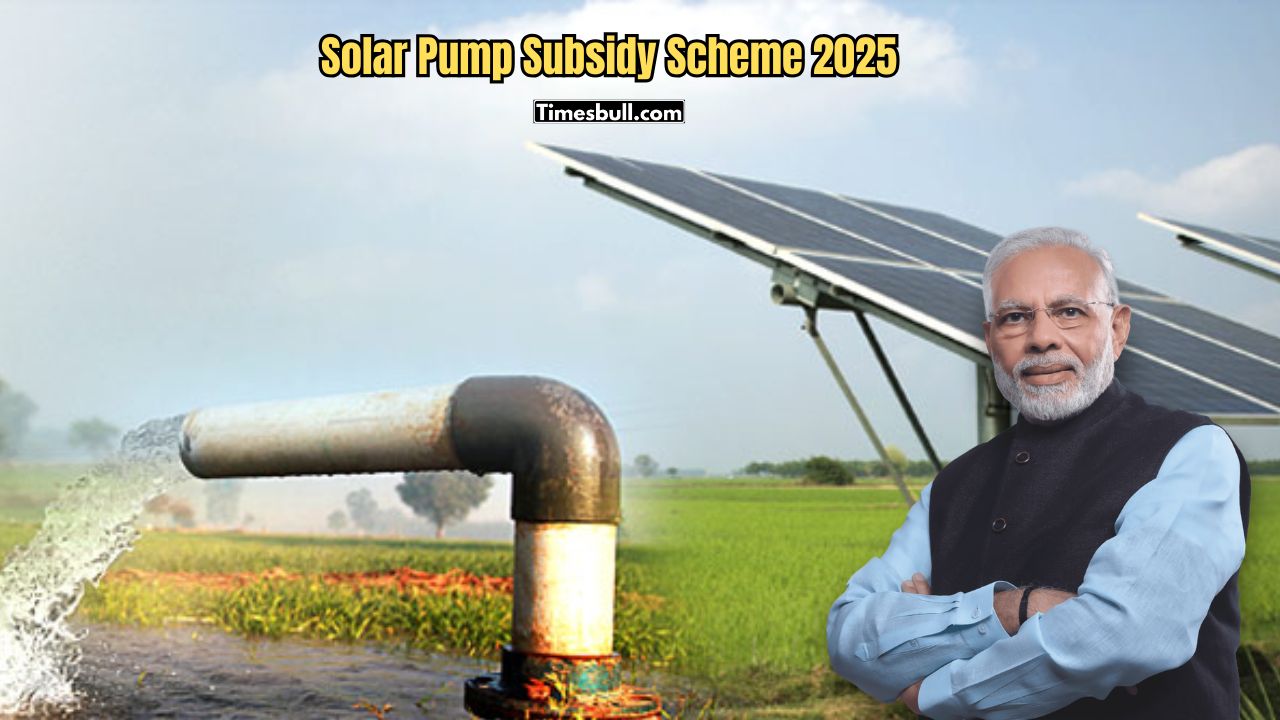
Agricultural production is important for the Indian economy and that water usage must be done as efficiently as possible for agriculture to be successful. Water is typically pumped onto agricultural fields using either diesel or electricity from the electrical grid. Because of this, the cost of producing food has increased, making it difficult for farmers to earn enough from their operation to cover these extra costs and have a profit margin on their operation. Due to this, there are a number of government-sponsored financial assistance programmes to aid farmers.
One of the recent financial assistance programmes introduced by the Indian government is the Solar Pump Subsidy Scheme. The purpose of this programme is to support farmers in obtaining solar-powered pumps. The government will offer a subsidy of 90 per cent or nine tenths of the installation cost of a solar pump system. This programme, along with others that are in development by the Indian government, will help to reduce the cost of farming and increase the overall earnings of farmers.
With solar-powered pumps, farmers are no longer dependent on electricity from the utility company or on fossil fuels to power their pumps. Over the long term, this means that farmers will have a much lower utility bill and have less impact on the environment.
Application Process
The application process for this scheme has been kept very simple so that every farmer can easily avail of its benefits.
To fill out the form, farmers can visit the Agriculture Department office or the designated energy agency center in their district. They obtain the application form and fill it out.
Required documents, such as proof of land ownership, identity card, photograph, and bank details, must be submitted along with the form. After verifying the documents, the department approves the installation of solar pumps.
In most states, this process has now been made online, allowing farmers to apply from their homes. When applying, options can be selected based on pump capacity, area, and water requirements.
Benefits for Farmers
Installing a solar pump frees farmers from power cuts and rising diesel prices. Once installed, the pump operates cost-free for many years.
Farmers can also earn income by selling excess electricity to the grid, where this facility is available. Irrigating fields with solar energy not only reduces costs but also increases crop productivity.
In the long run, solar pumps are proving to be a self-reliant and sustainable option for the agricultural sector.
Conclusion
The Solar Pump Subsidy Scheme has brought great relief to farmers. The 90 percent subsidy provided by the government is providing financial assistance to farmers in adopting new technology.
This scheme not only saves energy but also makes agriculture more productive and environmentally friendly. In the future, this initiative will play a vital role in strengthening and strengthening rural agricultural life in India.