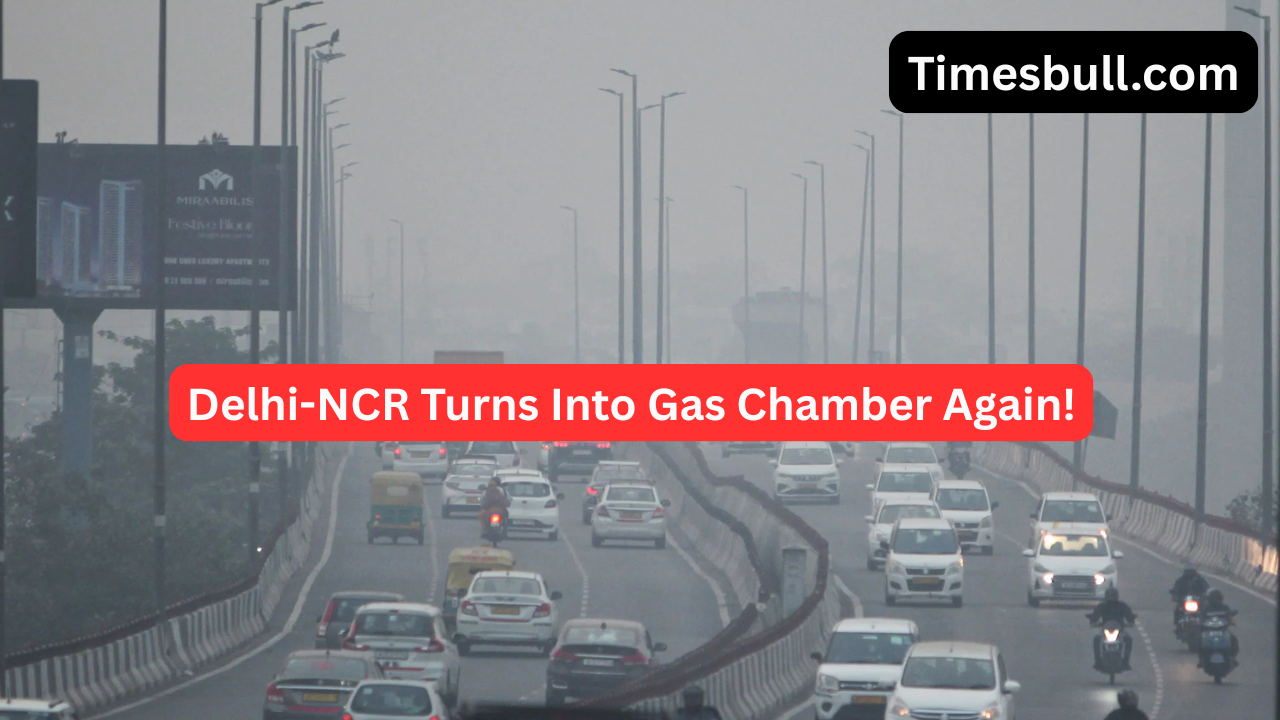
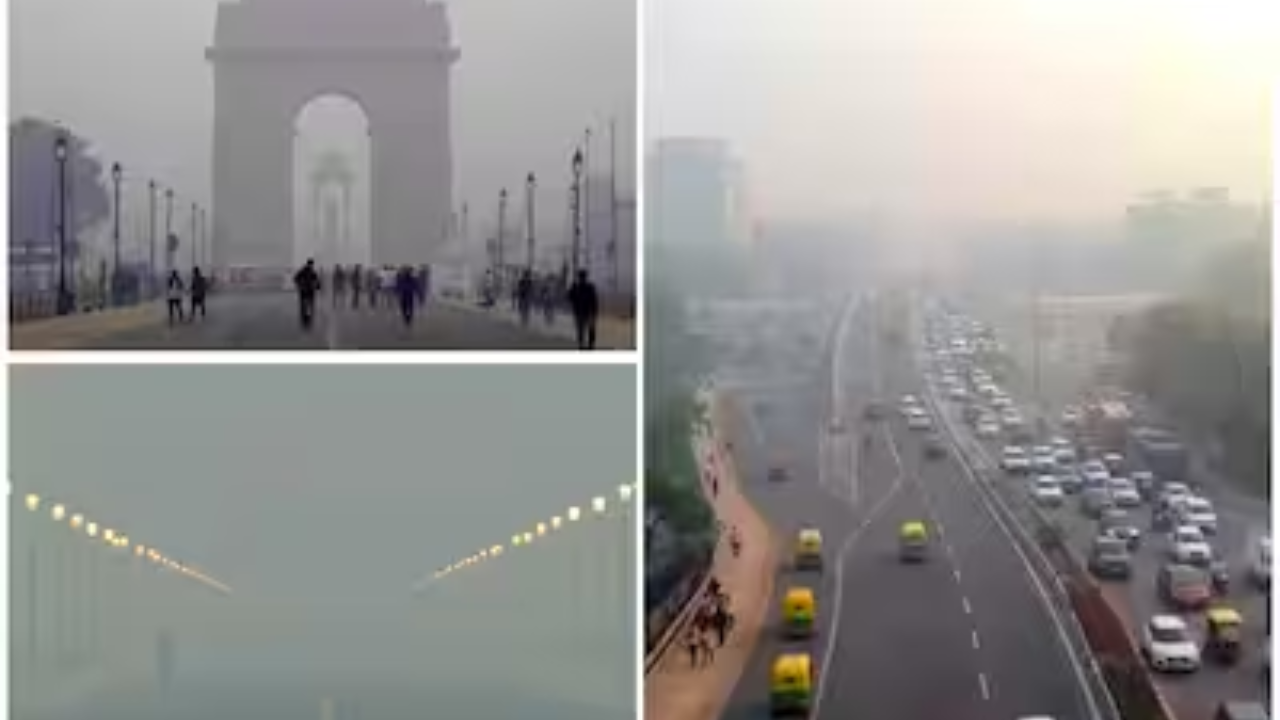
Delhi-NCR Turns Into Gas Chamber Again. Delhi-NCR is once again reeling under severe air pollution. According to the Central Pollution Control Board (CPCB), Noida recorded an average AQI of 402, which falls in the “severe” category. Meanwhile, Delhi’s average AQI reached 414. A thick haze and smog have enveloped the capital and its surrounding areas. If you’re a resident of Delhi-NCR, be alert, as you could face a number of problems.

The situation is also very poor in Gurugram and Greater Noida, while places like Faridabad and Dwarka have recorded relatively better air quality in Delhi-NCR. The administration has taken several steps to address these poor pollution levels.
Read More:- Silver Rates Update – 12 Major Cities 100g and 1kg Prices as of 13 November.r
How bad is the pollution level where?
- Noida – 402 (severe)
- Greater Noida – 388 (very poor)
- Delhi (average) – 414 (severe)
- Wazirpur (Delhi) – 458 (worst)
- NSIT Dwarka – 216 (poor but improving)
- Gurugram – 355 (very poor)
- Faridabad – 292 (poor)
Seven of Delhi’s 39 monitorincentresrs reported air quality in the ‘very poor’ to ‘severe’ category.
CAQM implements GRAP Phase III, bans several activities
The Commission for Air Quality Management (CAQM) has implemented Phase III restrictions under the Graded Response Action Plan (GRAP) in view of the deteriorating situation in Delhi.
Under these restrictions:
All construction and demolition activities will remain suspended for the time being. Only essential projects, such as road, railway, and airport work, will continue.
Movement of diesel-powered medium and light commercial vehicles (MGV/LCV) will be prohibited.
Operations of industries running on unapproved fuels have been suspended.
Schools up to grade 5 have been transitioned to a hybrid mode (online and offline).
Doctors warn
Experts say that constantly breathing toxic air weakens not only the respiratory system but the entire body’s immune system.
According to Dr Rakesh K. Chawla of Jaipur Golden Hospital, “This is not just a weather-related inconvenience, but a constant attack on the lungs, which worsens asthma and other lung diseases. Clean air is not a luxury; it is every citizen’s right.”
According to the State of Global Air 2025 report, India will experience over 200,000 deaths due to polluted air in 2023. South Asia has now become the most polluted region in the world, with the highest concentrations of PM 2.5.
Slow winds and cold are adding to the problem.
CAQM stated that calm winds, a stable atmosphere, and a drop in temperature are the main reasons behind the sudden increase in pollution this time. Under these conditions, airborne pollutants become trapped, making breathing difficult.
Read More:- Monsoon Alert – IMD Issues Heavy Rainfall Warning for 6 States
How to avoid polluted air
- Avoid going outside in the morning and evening.
- Wear an N95 mask.
- Keep an air purifier or natural plants (such as snake plants and money plants) at home.
- Keep children, the elderly, and patients indoors.
- Drink plenty of water and eat foods rich in vitamin C.