


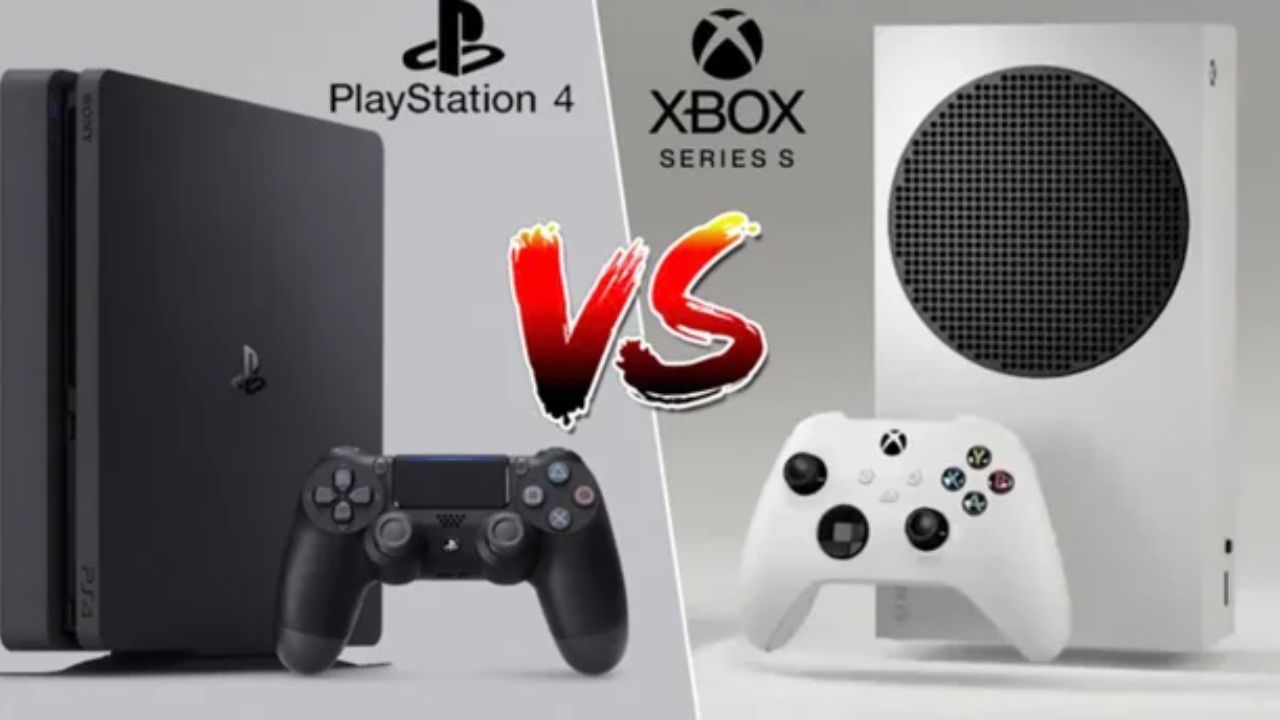
Xbox vs PS4 comparison: The market for console gaming has advanced so quickly over the last decade that, even now, two favorites that continue to be matched are the Sony PlayStation 4 and the Microsoft Xbox Series S. As iconic as the PS4 is, however, the Xbox Series S offers contemporary hardware and enhanced performance to those upgrading their play. Let’s run through how both consoles measure up in 2025 and if switching from a PS4 to an Xbox Series S is actually worth it.
Modern Architecture and Performance Advantage
The Xbox Series S takes the crown with its proprietary 8-core AMD Zen 2 CPU at 3.8GHz, giving a much faster performance compared to the PS4’s antiquated 8-core AMD Jaguar CPU at 1.6GHz. The difference is felt in open-world games, loading screens, and overall responsiveness. The games are smoother, frame rate pacing is improved, and challenging gameplay feels more consistent on the Series S than it does on the PS4’s aging tech.
Processor and Graphics Comparison
Where the divide grows even larger is in graphical power. The Xbox Series S contains a custom AMD RDNA 2 GPU with 20 Compute Units clocked at 1.565GHz and is thus able to run games at higher resolutions and frame rates. In comparison, the PS4 uses an older AMD GCN Radeon GPU that doesn’t come anywhere close to meeting contemporary standards. Visual fidelity, ray tracing support, and texture quality all feel that much more polished on Series S-optimized titles, particularly newer AAA releases.
Storage and Memory Efficiency
The Series S has a 512GB PCIe Gen 4 NVMe SSD built in, which significantly cuts load times. Booting up, fast traveling, and texture streaming become nearly instantaneous. The PS4 has a much slower 500GB or 1TB HDD included, resulting in delays, lag when navigating open-world areas, and long startup rituals. The Xbox also includes 10GB of GDDR6 RAM, faster and more efficient than the PS4’s 8GB, enabling improved multitasking during system functions and smoother recent games.
Connectivity and Multimedia Support
Both consoles offer HDMI output and Wi-Fi connectivity, maintaining compatibility with new screens and home networks. The PS4 also offers optical audio output and disc-based input options, a blessing for physical game enthusiasts. The Xbox Series S is completely digital, perfect for players who prefer cloud gaming, Game Pass, and digital downloads, but frustrating for physical disc enthusiasts.
Library and Backward Compatibility
Even now, the PS4 has a huge list of exclusives and third-party titles. Yet, the Xbox Series S has Game Pass with it, with hundreds of games with regular additions. Backward compatibility lets users play older Xbox games without extra cost. This degree of ecosystem support makes the Series S future-proof.
Final Verdict: Xbox Series S Leads for the Future
The PS4 is still a solid entry-level console, particularly for single-player exclusives. But in 2025, the Xbox Series S strongly feels newer with quicker processing, enhanced graphics, and near-instant load times. Players who crave the silky feel, digital ease, and longevity would do well to upgrade. But if you already have a PS4 and still heavily use physical discs, hanging onto it may still be practical, just realize you’ll be losing out on newer performance benefits.