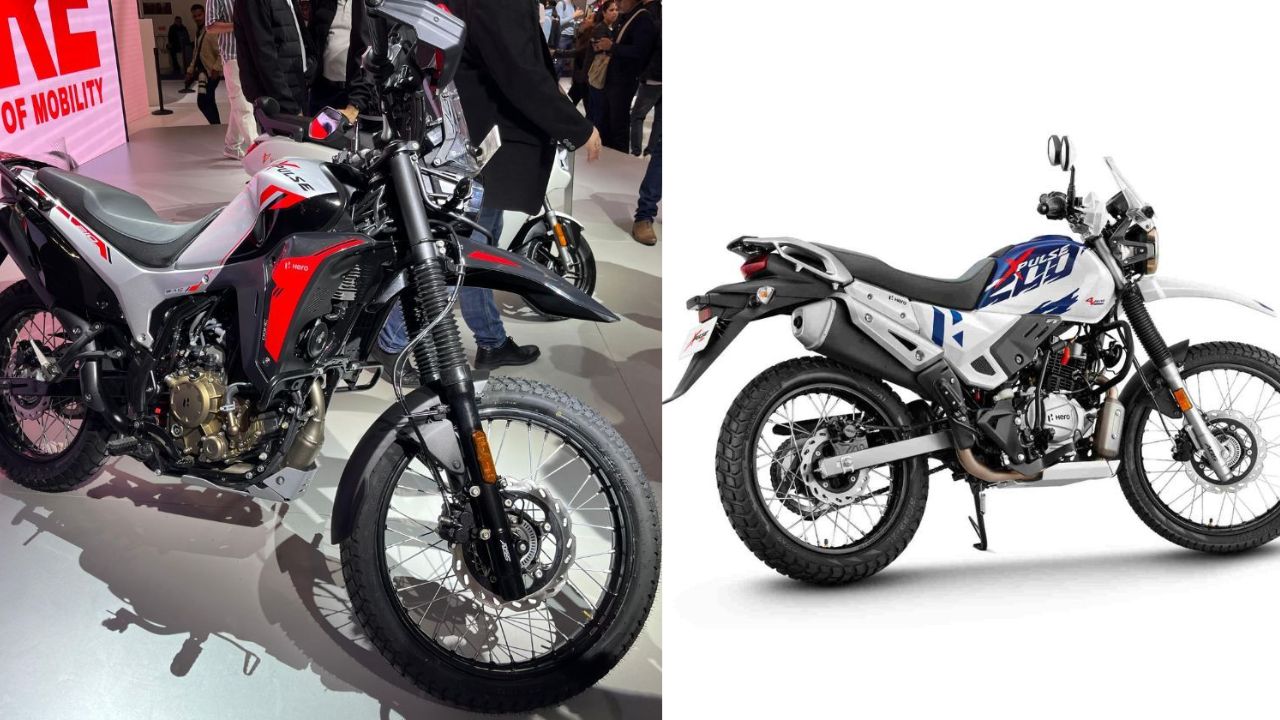
If you’re someone who enjoys both on-road and off-road riding, the Hero XPulse series is probably your first choice. But the big question now is: which bike, the new XPulse 210 or the old XPulse 200 4V, is better for you? Should you spend more on the XPulse 210 for the new engine and extra power? Let’s take a look at each of these powerful bikes to help you make a more informed decision.
Read more: 2025 Hyundai Venue: Is This New 12.3-Inch Display and Adas Taking the Compact Suv World by Storm
Engine and Power
First, let’s talk about the heart of these bikes: the engine. The Hero XPulse 210 is powered by a 210cc liquid-cooled engine that produces 24.6 horsepower and 20.7 Nm of torque. The XPulse 200 4V, on the other hand, is powered by a 199.6cc, air-cooled engine that produces 19.1 horsepower and 17.35 Nm of torque. The biggest difference here is that the XPulse 210 has a 6-speed gearbox, while the 200 4V has a 5-speed gearbox. This 6-speed gearbox makes cruising on the highway more comfortable. Do you think this extra gear and power can transform your ride?
Acceleration Test
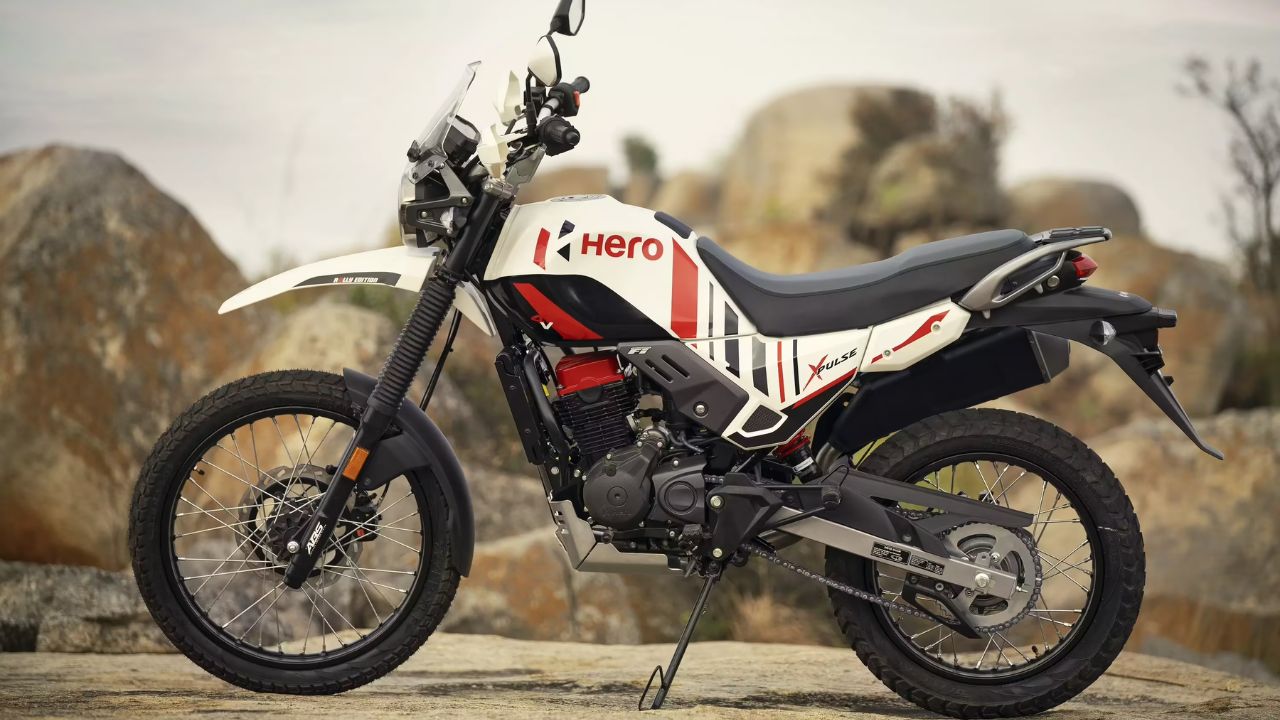
The real test comes when you twist the throttle. According to our test, the XPulse 210 accelerated from 0-60 km/h in just 3.9 seconds, while the 200 4V took 4.33 seconds to reach the same speed. The difference was even more pronounced in the 0-100 km/h race, where the Xpulse 210 completed the journey in 11.2 seconds, while the 200 4V took 13.52 seconds. It’s worth noting that the 200 4V is 9 kg lighter than the 210, and despite its lower power, it delivers significantly better performance.
Roll-On Acceleration
In real life, you don’t always race from zero; instead, you need roll-on acceleration to overtake in traffic. Here too, the Xpulse 210 excelled. The 30-70 km/h sprint took 4.44 seconds for the 210, while the 200 4V took 5.24 seconds. The XPulse 210’s liquid-cooled engine delivers smooth acceleration and feels like it’s running at full power even in the upper range, while the 200 4V can feel a bit labored.
Braking Performance
Speed is only safe if there’s stopping power. Fortunately, both bikes share the same braking setup: a 276mm disc at the front and a 220mm disc at the rear. In our test, the XPulse 210 stopped from 60-0 km/h in 17.89 meters, while the 200 4V took 18.11 meters. In real life, the difference is so slight that you won’t even notice it. However, both bikes may experience some front fork diving under hard braking, which is common with most bikes in this class.
Read more: Kia EV4: Is This the Biggest Blow to Electric Cars Under ₹30 Lakh, Full Details
Price and Variants
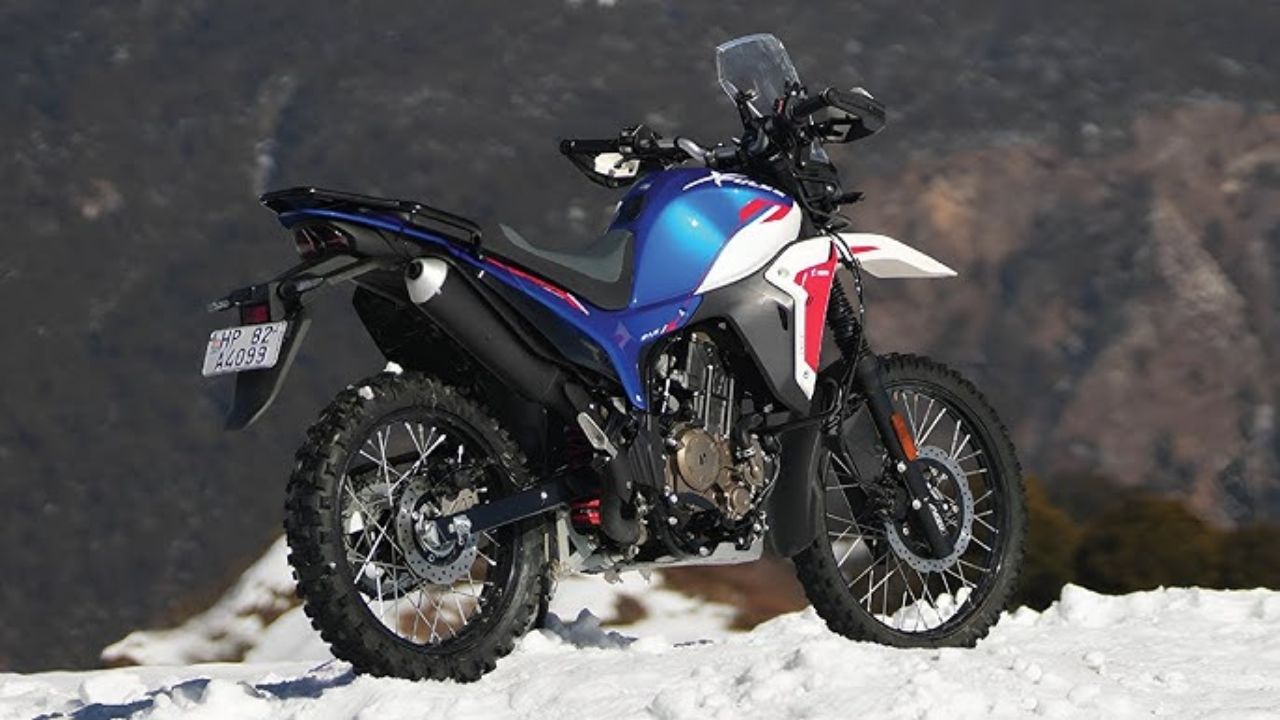
Now comes the most important issue: price. The Hero XPulse 210 is priced at ₹1.62 lakh (ex-showroom), while the top variant is available for ₹1.71 lakh (ex-showroom). The top variant offers features like a TFT display, dual-channel ABS, knuckle guards, and a windscreen. The XPulse 200 4V, on the other hand, starts at ₹1.40 lakh (ex-showroom). Its Pro and Dakar Edition variants are available for ₹1.52 lakh (ex-showroom), and ₹1.55 lakh (ex-showroom). Will spending an extra ₹22,000 on the XPulse 210 be worth it?