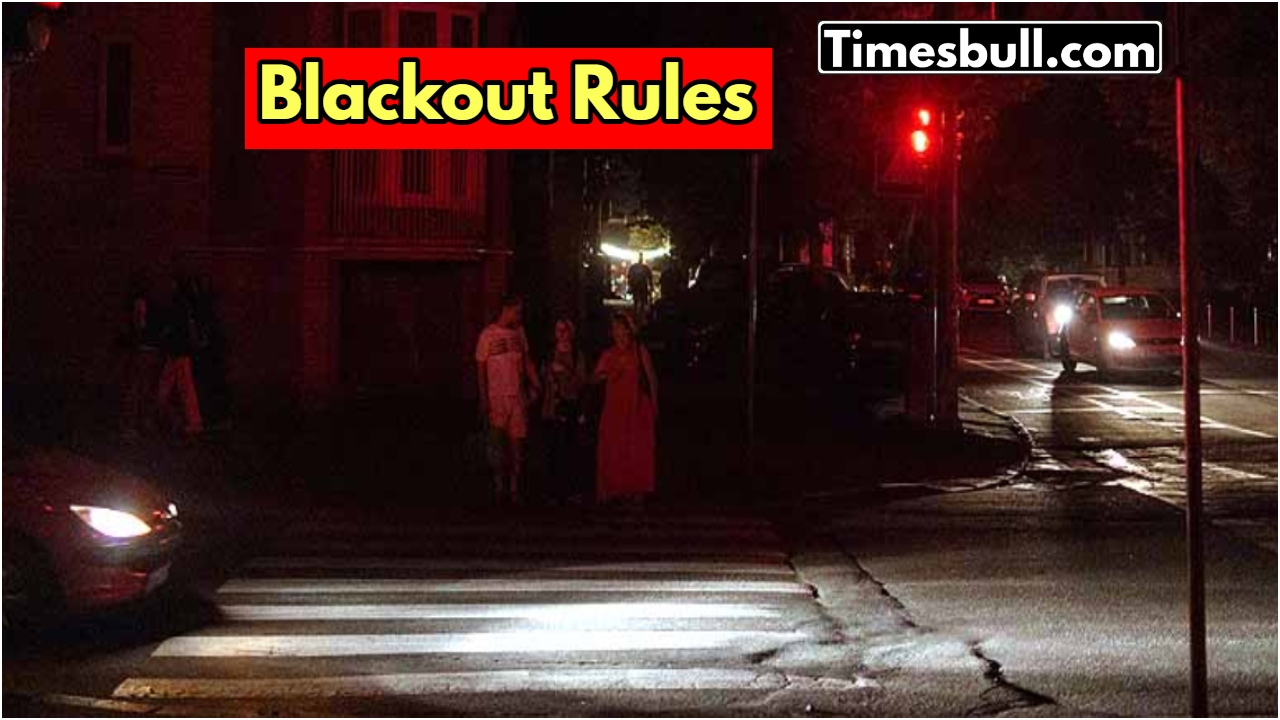
New Delhi: These days, the relationship between India and Pakistan has become so strained that it is almost like a war. No one knows when a fierce battle will be declared. In such a situation, everyone wants to know what a blackout is during a war, which is essential for you to understand. Many rules apply during a blackout. You must know the laws applicable to everything from black paint on vehicle lights to house lights.
Blackout is a strategy during a war in which artificial light is minimised. This makes it difficult for enemy planes or submarines to find their targets. This prevents the enemies from finding the locations of our essential equipment. This was prevalent during the Second World War in the 20th century. Blackout rules controlled the lighting of homes, factories, shops and vehicles.
Read More: Easy Lauki Chilla Recipe: A Healthy & Kid-Friendly Breakfast Idea (Step-by-Step Guide)
Read More: Moody’s Report: Pakistan’s Economy at Risk Amid Rising Tensions with India
Rules related to blackout
Covering windows and doors completely
Before declaring war, the British government implemented blackout rules on September 1, 1939. It was mandatory to cover all windows and doors with heavy curtains, cardboard or black paint at night so that no light could escape from the houses. The government had said that it would ensure the availability of these materials.
In this, all the lights of the streets and highways are turned off. Apart from this, they are partially painted with black paint. So that the light remains downwards only. On October 1, 1914, the Metropolitan Police Commissioner in London had instructed to turn off or dim the external lights.
Rules for shops and factories
During blackouts, painting the large glass roofs in factories with black paint is done. This reduces the natural light even in daylight. Along with this, shops had to install double airlock doors. This would prevent the customers from coming and going out of the house due to the light.