


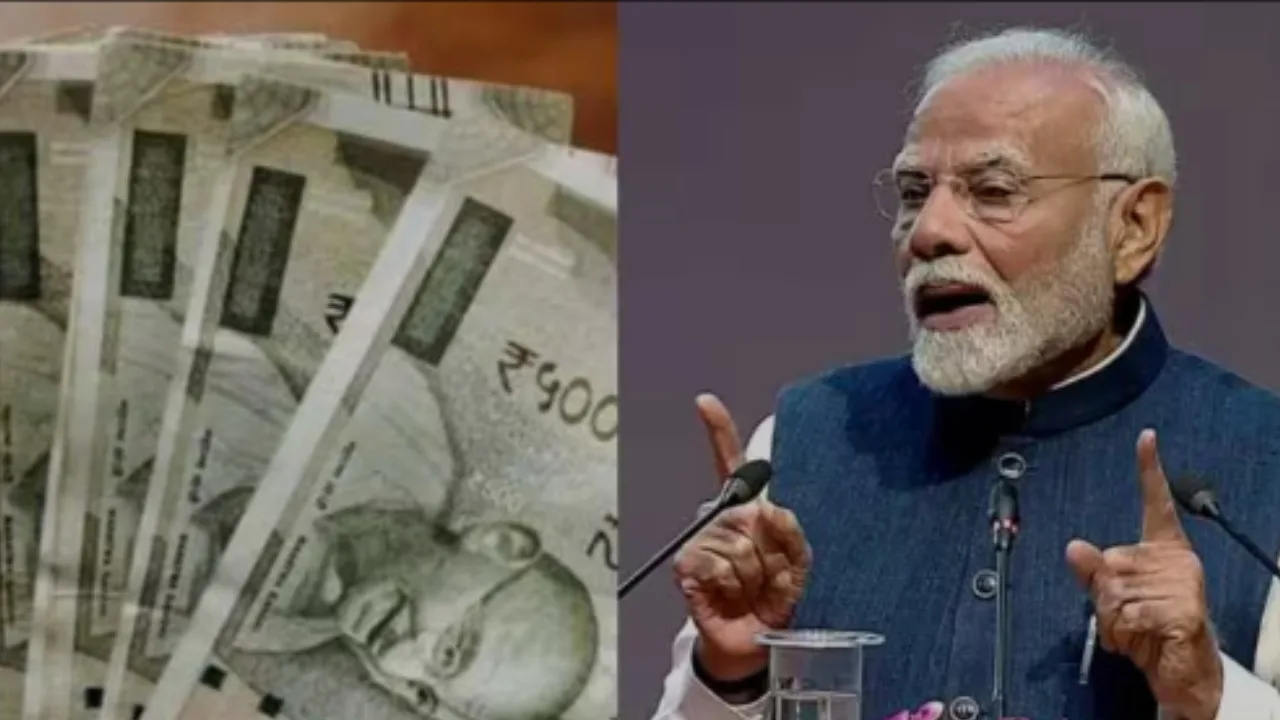
8th Pay Commission: The latest developments on the 8th Pay Commission have left central government employees and pensioners wondering whether they will see an increase in their salaries and pensions in 2027, following the Commission’s recommendations. At present, there is no definitive answer. The 8th Pay Commission has until 3 May 2027 to submit its report. However, even after the report is handed in, an immediate hike in salaries is not assured.
The government must first review the recommendations, grant approval, and then issue the necessary implementation directives. For this reason, employees are now watching the 2027 timeline closely, as well as the potential effective date of 1 January 2026.
When is the 8th Pay Commission expected to submit its report?
A notification from the Ministry of Finance dated 3 November 2025 established the 8th Central Pay Commission, granting it 18 months from its formation to provide its recommendations. This sets the submission deadline at 3 May 2027. The Commission marked its first year on 3 November 2026, leaving around six months until the deadline. Yet, it is not guaranteed that the report will be published exactly on 3 May 2027—that date simply marks the final deadline for submission.
Is an immediate salary increase likely once the report is submitted?
The notion that salaries will rise as soon as the report is delivered is not necessarily accurate. The Pay Commission’s mandate is to examine the prevailing pay structure, allowances, pension schemes, and additional service benefits, and to advise the government on changes. The ultimate decision, however, lies with the government. After receiving the report, the government will choose which suggestions to accept, after which orders will be issued to bring the new pay structure into effect. Consequently, there may be a delay between the report submission and the actual crediting of higher salaries to employees.
Timeline overview
– 3 November 2025: 8th Pay Commission established
– 3 November 2026: Completion of the Commission’s first year
– By 3 May 2027: Deadline to submit recommendations
– Following this: The government will review the report and decide on the next steps
– After approval: Steps to implement new salaries and pensions will commence.
Thus, while the report will likely be ready in 2027, the timing of salary increases will rely on government consent and the actual date of implementation.
Why is 1 January 2026 considered significant?
Much attention has been given to the date of 1 January 2026 in discussions about the 8th Pay Commission. The government, while approving the Pay Commission’s Terms of Reference in October 2025, indicated that, following the ten-year cycle observed previously, the new recommendations might typically take effect from 1 January 2026. It should be noted that the effective date and the date on which employees actually receive increased pay are not always the same.
If, for example, the government approves the Commission’s recommendations at a later date but sets 1 January 2026 as the effective date, employees may become eligible for arrears for that period. However, the details regarding the arrears amount, how they will be paid, and the effective date will only be finalised after the government issues an order.
How much of an increase is anticipated?
This remains an unanswered question. The extent of the salary hike will mainly be influenced by the Fitment Factor, which is a multiplier used to calculate the revised Basic Pay. To illustrate, if an employee currently earns a Basic Pay of Rs 18,000 and a Fitment Factor of 2.57 is applied:
Rs 18,000 × 2.57 = Rs 46,260
This example is meant to clarify the concept of the fitment factor; the actual factor for the 8th Pay Commission has not yet been decided. The true figure will only be known after the Commission makes its recommendation and the government grants approval.
Progress of the Commission to date
The 8th Pay Commission has called for input in the form of suggestions and memorandums from employees, pensioners, staff associations, unions, and government agencies. According to an official statement from the Commission, submissions were accepted from 5 March 2026 until 15 June 2026, and this phase is now finished. The Commission will now use these inputs, along with other relevant data, to finalise its recommendations.
What should employees expect in 2027?
Currently, the most important date is May 3, 2027, as this is the 18-month deadline given to the Commission to submit its report. However, after the report is submitted, the process of government approval and implementation of the new pay system remains. Therefore, it is premature to say that central employees will begin receiving the increased salary from a specific month in 2027. If the government accepts the new recommendations as effective January 1, 2026, employees may receive the arrears for that period later. However, a final decision on this will be made only after an official government order.
The 8th Pay Commission’s report is due by May 3, 2027, but salary increases aren’t necessarily immediate. The government must first decide on the recommendations and issue orders to implement them. It may come as a relief to employees that the government is considering January 1, 2026, as a potential effective date. If final approval is granted, the issue of arrears will also become important once the increased salaries are implemented.