


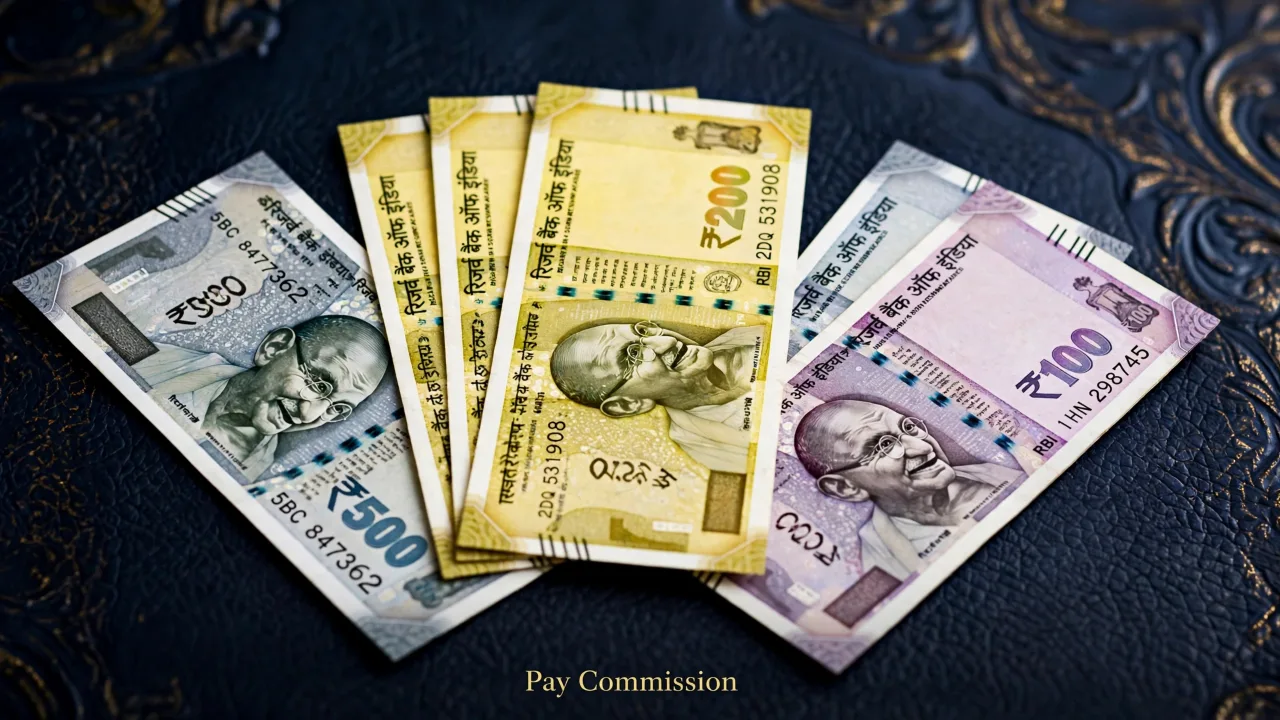
Central government employees and pensioners may not have to wait for an entire decade between future salary and pension revisions if a proposal submitted by employee and pensioner organisations is accepted. Several associations have urged the Eighth Pay Commission to consider revising salaries and pensions every five years instead of following the existing 10-year pattern.
The organisations argue that rising inflation and changing economic conditions gradually reduce the purchasing power of employees and pensioners when basic pay and pensions remain unchanged for long periods. They believe a shorter revision cycle could help maintain the real value of income.
However, the five-year revision proposal is currently a demand made by employee and pensioner organisations. The Eighth Pay Commission has not announced any decision to adopt it, and the government has not approved a change to the existing system.
Why Are Employee Organisations Demanding Salary Revision Every 5 Years?
The demand for a shorter salary revision cycle has gained attention during consultations with the Eighth Central Pay Commission.
Under the existing practice, major salary and pension revisions are generally linked to Pay Commissions constituted at intervals of around 10 years. Employee organisations argue that this long gap can affect the purchasing power of serving employees and pensioners as the cost of living increases.
Dearness Allowance (DA) provides serving employees with inflation-related relief, while pensioners receive Dearness Relief (DR). However, these adjustments do not automatically revise the underlying basic pay or basic pension.
The organisations therefore want the government to consider a more frequent mechanism for reviewing salaries and pensions.
Bharat Pensioners Samaj Proposes a Five-Year Revision Cycle
Bharat Pensioners Samaj (BPS) included the demand for salary and pension revision every five years among its 13 major proposals submitted to the Eighth Pay Commission on August 7, 2026.
The organisation argued that employees and pensioners should not have to wait for 10 years for a comprehensive revision of their income.
Its proposals also included changes to the Dearness Allowance and Dearness Relief mechanism. BPS has called for quarterly DA and DR revisions based on three-month average inflation data so that pensioners and employees can receive inflation-related adjustments more frequently.
It has also suggested examining the merger of Dearness Relief with basic pension once the DR rate exceeds 25%.
These are recommendations submitted for consideration, not benefits that have been approved or implemented.
NC-JCM Staff Side Also Supports More Frequent Pay Revision
The National Council-Joint Consultative Machinery (NC-JCM) Staff Side has also highlighted the need for periodic salary revisions.
The staff-side memorandum argues that pay should ideally be reviewed every five years to maintain its adequacy and relevance in changing economic conditions.
Employee representatives believe that a decade-long gap can make existing pay structures less responsive to rising living costs and changes in the economy.
The proposal is intended to create a more regular mechanism for reviewing compensation rather than relying entirely on a new Pay Commission after a long interval.
Railway Pensioners and Postal Employees Seek Changes
The Railway Senior Citizens’ Welfare Society (RSCWS) has also raised concerns about the long gap between Pay Commissions.
According to the organisation, Dearness Allowance and Dearness Relief provide only partial protection against inflation. The difference between periodic pay revisions and continuously rising living costs can gradually reduce the real value of salaries and pensions.
Meanwhile, the Federation of National Postal Organisations (FNPO) has proposed establishing a Permanent Wage Review Body instead of relying exclusively on the existing 10-year Pay Commission pattern.
Such a body could provide a continuing mechanism for reviewing wages and related benefits as economic conditions change.
Why Is a Five-Year Revision Cycle Important for Pensioners?
The proposal is particularly important for pensioners because their income structure differs from that of serving employees.
Government employees generally receive annual increments under applicable service rules, in addition to Dearness Allowance revisions. Pensioners, however, do not receive annual increments in the same way. They receive Dearness Relief adjustments to compensate for inflation.
Bharat Pensioners Samaj has therefore proposed more frequent DR revisions and a review of how inflation-related relief is calculated.
Its key proposals include:
- Revising Dearness Allowance and Dearness Relief every three months.
- Using three-month average inflation data for the calculation.
- Considering the merger of DR with basic pension once the rate exceeds 25%.
- Ensuring more comprehensive compensation for the impact of inflation.
The organisation believes these measures could help protect pensioners’ purchasing power, particularly during periods of rising living costs.
Will the Government Replace the 10-Year Pay Commission System?
At present, there is no official confirmation that the government will replace the existing 10-year pattern with a five-year salary and pension revision cycle.
The proposals have been submitted by employee and pensioner organisations for the Eighth Pay Commission’s consideration. The Commission will examine the representations before making its recommendations to the government.
The financial implications of introducing revisions every five years would also need to be examined. More frequent revisions could increase the government’s salary and pension expenditure, depending on the structure and extent of the changes.
The government will take the final decision after considering the Commission’s recommendations.
What Is the Current Status of the 8th Pay Commission?
The Union Government constituted the Eighth Central Pay Commission on November 3, 2025, under the chairpersonship of Justice Ranjana Prakash Desai.
The Commission was given 18 months to submit its recommendations. It invited memoranda and suggestions from employees, pensioners, associations, unions and government departments between March 5 and June 15, 2026. The submission window has now closed.
The Commission completed its first year on November 3, 2026. Its recommendations will be submitted to the government for consideration, after which the government will decide which proposals to accept.
For now, the five-year revision proposal remains an important demand before the Commission, but employees and pensioners should not treat it as an approved change in salary or pension rules.
Disclaimer: The five-year salary and pension revision cycle, quarterly DA/DR adjustments and proposed merger of DR with basic pension are demands made by employee and pensioner organisations. They have not been officially approved by the government. Any change will depend on the Eighth Pay Commission’s recommendations and the government’s final decision.