


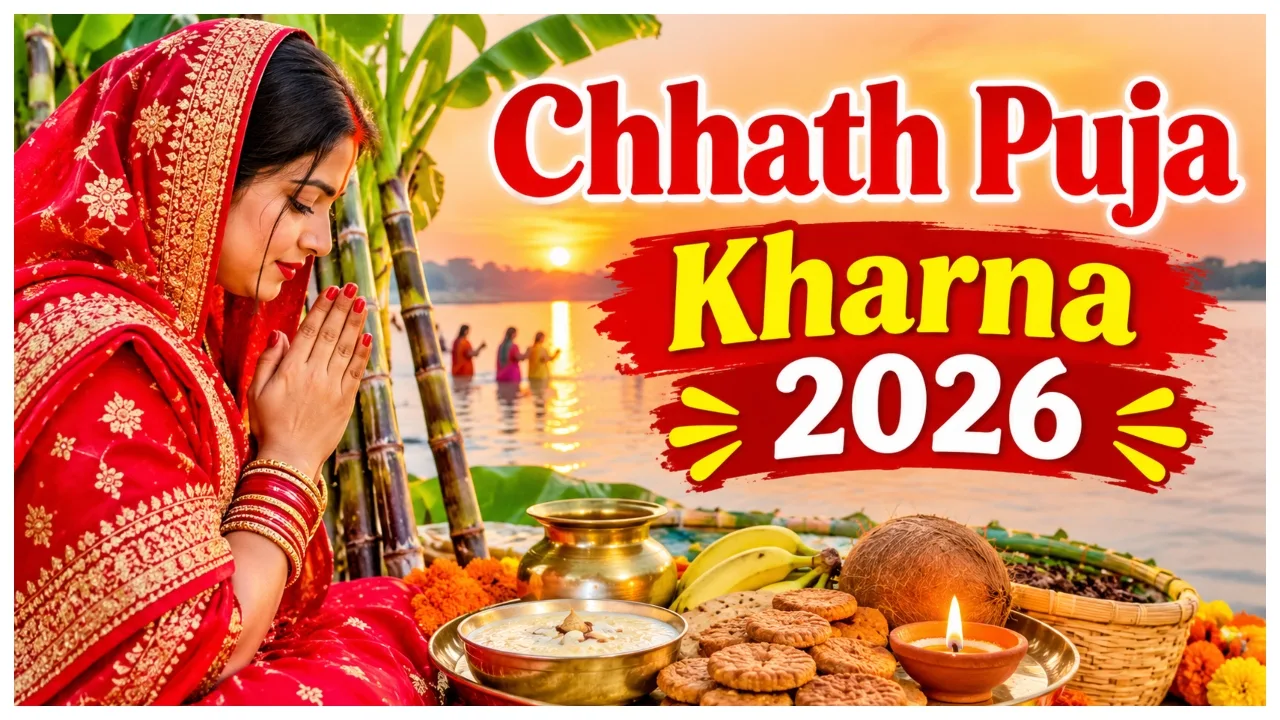
Chhath Puja 2026: Today, November 14, marks the second day of the grand Chhath festival, known as ‘Kharna’. On this day, a *prasad* (offering) consisting of gur ki kheer (jaggery-based rice pudding) and roti (flatbread) is prepared. It is first offered to Chhathi Maiya and the Sun God, and then consumed by the devotees themselves. Following the consumption of this prasad, a 36-hour nirjala fast (a fast observed without even a drop of water) begins.
On the day of Kharna, devotees observe a fast throughout the day and, after performing rituals in the evening, partake in the *prasad* of *gur ki kheer* and roti. But do you know why Kharna is observed during Chhath Puja, and why there is a tradition of preparing specifically this *prasad* on this day? Let us find out.
Why is Kharna observed?
The second day of the grand Chhath festival is called Kharna. On this day, devotees fast from morning until evening. At sunset, after bathing, they prepare for the rituals with great purity. Subsequently, they invoke Chhathi Maiya and the Sun God, offering them the *prasad*. After Kharna, the devotee takes a vow to observe the nirjala fast for the following day.
Why are gur ki kheer and roti prepared for Kharna?
The *prasad* for Kharna consists specifically of *kheer* made with jaggery and rotis made from wheat flour. Milk, rice, and jaggery are used to prepare the kheer. Jaggery is considered a traditional and sattvic (pure/wholesome) food item. Meanwhile, wheat *roti* represents simplicity and is a staple of traditional cuisine. In many families, this *prasad* is prepared on an earthen stove using mango wood as fuel.
The rigorous fast begins after Kharna
Kharna is the second day of Chhath Puja. This year, it is being observed on November 14. Devotees fast from the morning and consume the prasad only after the evening rituals. With this, their nirjala fast commences—a rigorous fast during which no food or water is consumed for approximately 36 hours. On the evening of the following day, November 15, an arghya (offering) is made to the setting sun. Then, on the morning of November 16, the fast is concluded (*paran*) following the worship of the rising sun.
What is the tradition for preparing prasad for Kharna?
Great care must be taken regarding cleanliness when preparing prasad for Kharna. In many households, separate utensils are used specifically for preparing this *prasad*. The methods for preparing the *prasad* may vary slightly from one region to another.