


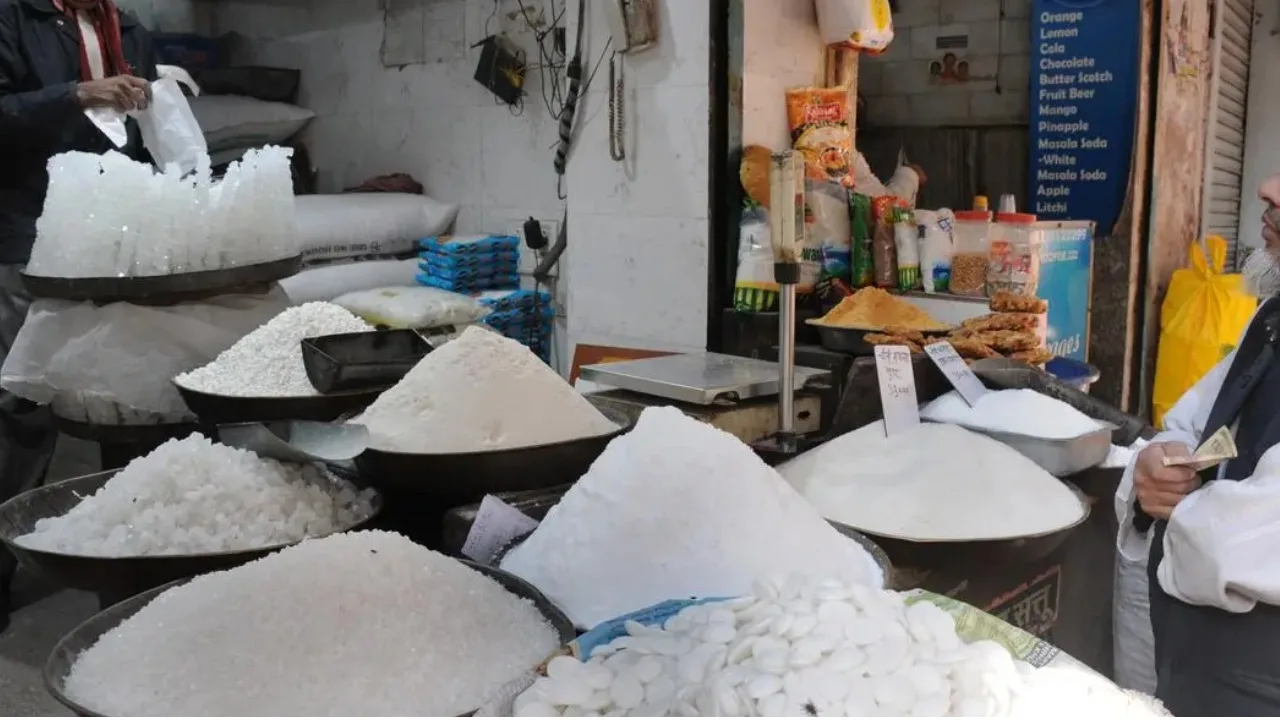
Sugar Price Hike: Major setback for sugar lover. Sugar, a staple ingredient from the common person’s morning tea to every sweet dish made at home, is now putting a significant strain on their finances. The cost of sugar is steadily climbing in the market. Surprisingly, none of the government’s attempts to control inflation have produced meaningful results. The situation has deteriorated to the point where sugar prices have once again approached Rs 70 per kg in many major cities across the country.
In numerous cities, prices have reached between Rs 60 and Rs 70 per kg
Sugar prices are causing distress among residents of various metropolitan and major cities nationwide. Kolkata has been hit the hardest, with sugar prices reaching Rs 70. There is little relief in the capital, Delhi, where sugar is sold at Rs 64. The scenario is similar in Mumbai, the financial capital, and Ranchi, the capital of Jharkhand, where sugar costs Rs 63. Among these key cities, Chennai has the lowest price, though sugar still costs Rs 60 there.
A significant 30 percent rise in a year
This surge in sugar prices is not abrupt; it has been gradually increasing over the past year. Data reveals that sugar prices have gone up by 30 percent during this period. Many hoped for price stability, but that has not been the case. The latest update shows that sugar prices have further increased by 5 percent in the last month alone. These steadily rising costs have pushed up the monthly expenses of ordinary households.
Why even the government’s stringent measures have been ineffective
The government is actively trying to control inflation and has implemented several important measures to boost sugar supply and reduce prices. It has reissued a quota for importing 250,000 tons of sugar to avoid market shortages. Additionally, sugar mills have been explicitly directed to sell 90% of their quota this month. Moreover, sugar mills have resumed production earlier and at a faster pace this time. Despite these efforts, retail prices show no indication of falling.
Pressure from the international market is also evident
Alongside all these domestic initiatives, a major external factor is influencing prices. Sugar costs are rising in the international market, and this increase directly affects local price trends. While mills are restarting production early and government quotas are being allocated, the international market remains buoyant. In this context, the average consumer may have to wait longer for more affordable sugar, as there are no clear signs of relief in the market.