


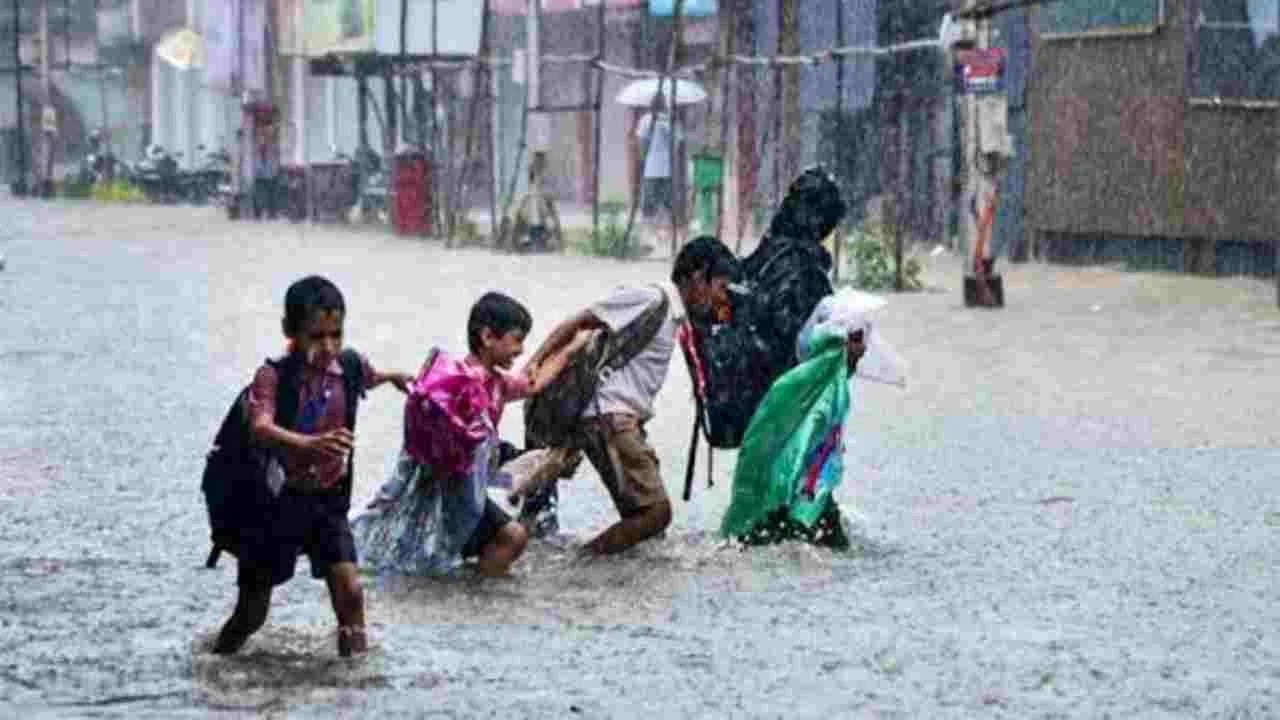
School Closed: Big news for school students. Due to Cyclone ‘Arnab’s impact, Ranchi is expected to experience ongoing rainfall on October 28th and 29th. Following an Orange alert from the Meteorological Department, the district administration has implemented preventive actions.
Schools Will Be Closed for 2 Days
With student safety as the top priority, both government and private schools have been instructed to remain closed for two days. Deputy Commissioner Manjunath Bhajantri has directed the District Education Officer (DEO) accordingly. Schools conducting exams have been advised to make choices based on the present situation.
The Meteorological Department predicts that persistent rainfall may result in water accumulation in low-lying zones and roadways throughout Ranchi. This could create transportation challenges for residents. The district administration remains vigilant, preparing for the anticipated rainfall and severe weather conditions.
There’s a threat of harm to fragile structures and agricultural crops. Continuous rainfall poses a risk of partial or severe damage to mud houses, informal settlements, and unstable buildings. Additionally, swelling water levels in rivers and major streams might trigger flood-like situations in depressed areas. Cultivated crops face potential destruction from water saturation in agricultural fields.
The Meteorological Department has predicted heavy rain accompanied by strong winds. In view of this, the district administration has decided to suspend school classes under Section 34 of the Disaster Management Act, 2005.
Preparations to deal with waterlogging and tree falling
In view of the potential impact of Cyclone Arnab and the orange alert issued by the Meteorological Department, the Ranchi Municipal Corporation has intensified its preparations. Amid the possibility of strong winds and heavy rain, the corporation’s relevant branches have been instructed to remain on 24-hour alert for the next three days. Four emergency response zones have been created in each of the city’s 53 wards. Two Quick Response Teams (QRTs) will be deployed in each zone.