


Rice Price: Prices of many commodities are rising in India, placing an increased burden on the general public. Specifically, the prices of pulses, rice, and sugar have been consistently climbing. In response, the government is taking steps to control rice prices within the domestic market.
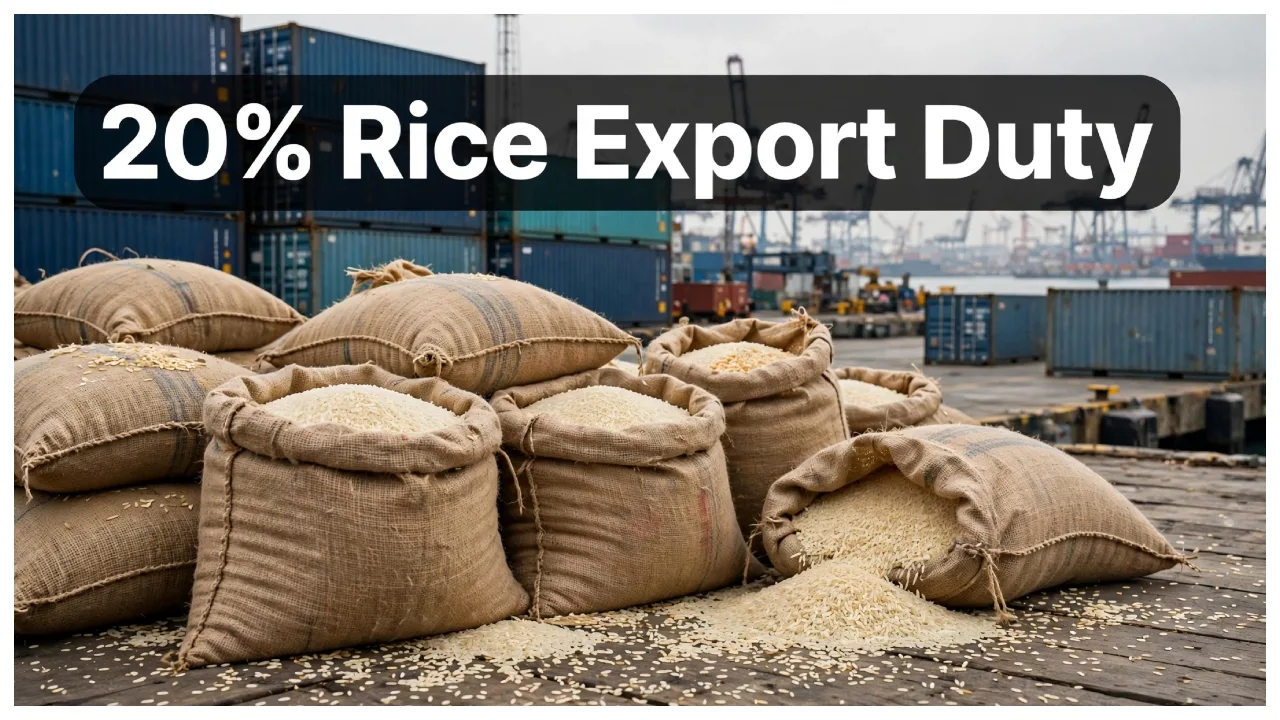
To this end, the Government of India is considering imposing an export duty of up to 20% on certain varieties of rice. The primary objective of this move is to increase the availability of rice and curb rising prices in the domestic market. Such a duty could be applied, in particular, to broken rice and certain premium non-basmati rice varieties.
Why is the government increasing the export duty?
According to media reports, the prices of various rice varieties have surged in certain parts of the country. In some southern states, stocks of non-basmati rice are running low. Furthermore, the rising cost of broken rice has impacted sectors such as poultry farming and the animal feed industry. The government aims to ensure that a larger portion of the rice stock remains within the domestic market rather than being exported abroad. This would provide relief to local businesses and industries while also offering consumers some respite from the persistent price hikes.
Will this impact exports?
If the government imposes an export duty of up to 20%, the cost of exporting Indian rice to foreign markets will rise significantly, which could lead to a substantial decline in export volumes. However, as India is a major global rice exporter—and given that the price of Indian rice is a key factor in international market competition—exports are unlikely to cease entirely. This government decision could potentially benefit other rice-exporting nations like Thailand, Myanmar, and Vietnam—countries that previously struggled to compete in the global market due to their higher price points compared to Indian rice.