


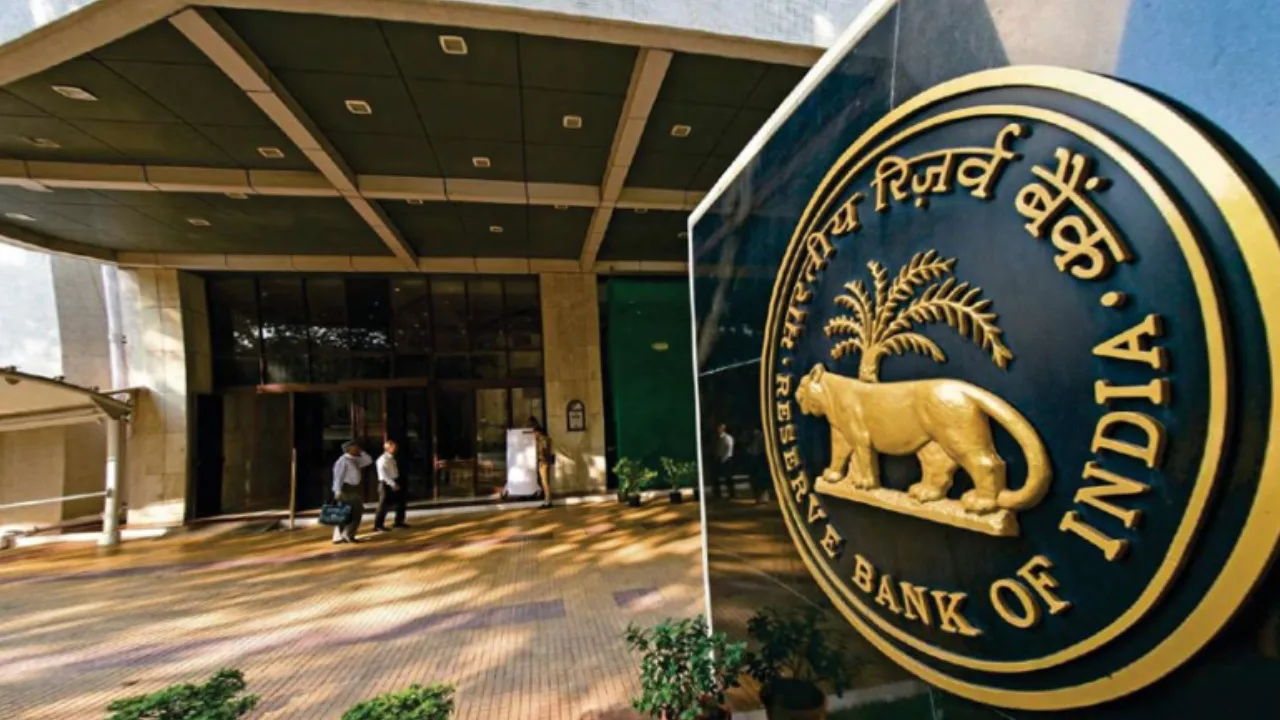
RBI: With digital fraud incidents on the rise, the Reserve Bank of India (RBI) is set to introduce major protections for banking customers. If a person suspects fraudulent activity related to their bank account, they will soon be able to immediately halt all new outgoing digital debit transactions with a single click. This is part of a new RBI initiative proposing the introduction of a ‘Stop Switch’ feature. Another proposal would let customers require the consent of a trusted individual before making substantial transfers.
Know about RBI’s Stop Switch
The RBI’s plan would mandate banks to offer customers a Stop Switch option, which would let them instantly block all new digital payments out from their accounts. As a result, if customers fear their digital payment details or bank account have been compromised, they would not have to individually deactivate every payment service or repeatedly visit their branch.
By activating the Stop Switch, all new debit transactions would be suspended for the customer. New UPI registrations on third-party apps, standing instructions, and payment mandates would likewise be prevented. The reception of funds into the account, however, would continue as usual. Scheduled deductions like auto payments, EMIs, or bank fees would not be impacted by this feature. To reactivate digital debits, banks would carry out an identity verification process. There could also be a mandatory waiting period before services resume.
Giving customers autonomy over digital payment limits
It is also being proposed by the RBI that customers be empowered to control their digital payment thresholds. They could set their own caps on single transactions, payments to particular individuals, and the total value of daily transactions. Limits could also be set across all digital payment channels for the day. Customers would additionally have the facility to temporarily disable select payment channels.
These capabilities would extend to debit, credit, and prepaid cards. This means customers could specify their own restrictions for ATM, POS, online, and contactless transactions. There would also be the option to separately enable or disable international and domestic transactions. For new account holders, digital payment channels would stay disabled by default, only becoming active once the customer has given explicit consent and completed necessary verifications.
Mandatory approval from a trusted person for large transfers
A Trusted Person Mechanism (TPM) is also among the RBI’s proposals. Under this system, customers would nominate an individual aged 18 or older as a trusted person. The customer would set the transaction amount above which approval from this person is needed. When a transaction at or above this threshold is initiated, the trusted person would get details such as the amount, recipient, and other payment data. The trusted individual would then have an hour to either approve or decline the payment. If the person does not respond or rejects the payment within that hour, the transaction would be automatically cancelled. This mechanism would be optional. Both customer and trusted person approval must be given for it to function, and a 24-hour waiting period would be required before the feature is activated.
Importantly, the trusted person would not be granted access to view the customer’s bank balance, fixed deposits, investments, or insurance. They could neither execute payments themselves nor would they bear any responsibility for accepting or rejecting payments on the customer’s behalf. UPI transfers, payments to merchants, and already-scheduled automatic payments would not be covered by this mechanism.
Timeline for implementation
The RBI has invited feedback from the public and relevant stakeholders on these proposals through 14 December 2026. If these are fully approved, the new measures may be implemented from 1 July 2027, although banks may choose to introduce them earlier. Beyond that, the RBI is suggesting a broader definition of bank negligence, which would encompass failure to enforce multi-factor authentication, not sending transaction notifications, lacking a 24-hour fraud complaint system, or not responding quickly to complaints.