


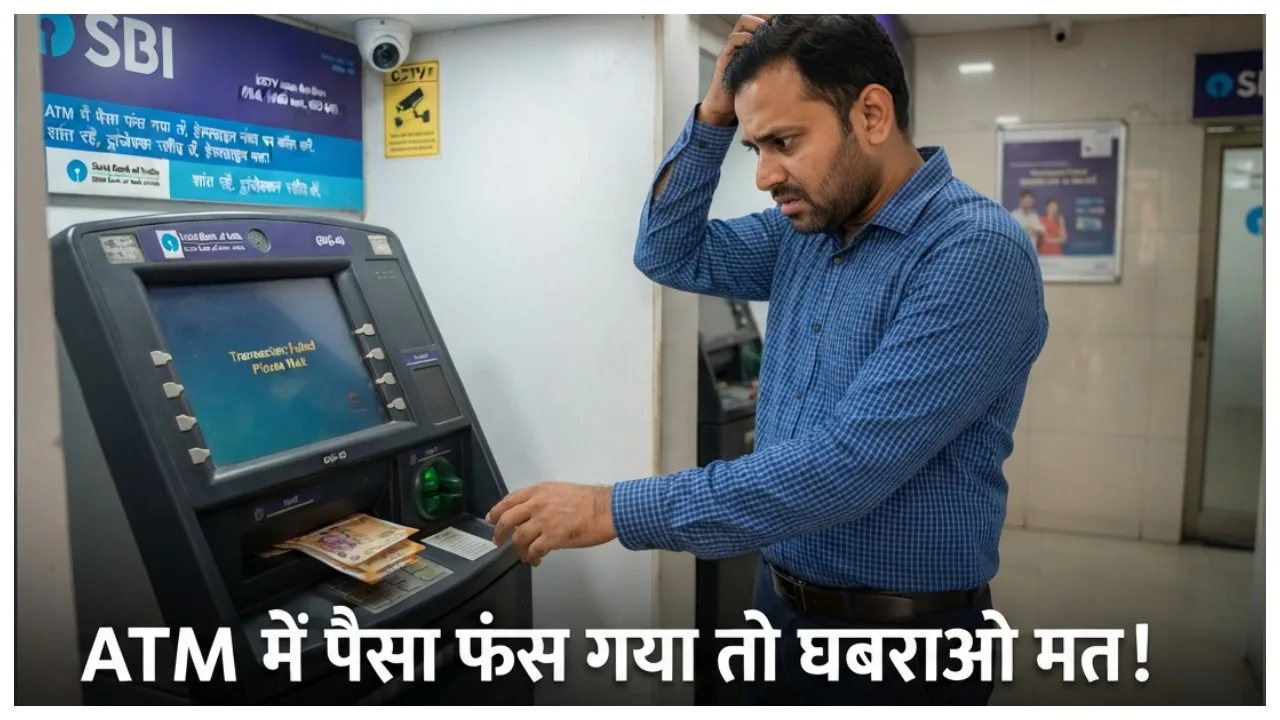
RBI ATM Rules: Often, when withdrawing cash from an ATM, the money may get stuck in the machine and not be dispensed, even though it has already been deducted from your account. There is no need to panic in such a situation. According to RBI regulations, if money is deducted from your account despite an ATM transaction failure, the bank is required to return the funds within a specified timeframe.
If the bank fails to return the money within this limit, the customer is entitled to compensation. Let us explore in detail what steps you should take if a transaction fails while using an ATM and the rules regarding the recovery of your funds from the bank.
Refund within 5 days if cash is not dispensed.
As per RBI guidelines, if cash is not dispensed from an ATM but is deducted from your account, the bank must refund the amount within a maximum of 5 calendar days from the date of the transaction. This timeframe is referred to as ‘T+5 days’, with ‘T’ representing the date of the transaction. In many cases, the money is credited back to the account within a few hours or a day or two. However, if this does not happen, the bank is obligated to process the refund within 5 days, in accordance with the rules established by the RBI.
Read More:- Haridwar to Get Pod Taxi Service on a 21-Km When It Will Started?
Read More:- GST New Rules from December 20265 Major Changes Every Business Must Know
Read More:- BSNL ₹2,449 Recharge Plan: 380 days validity, 2GB Daily Data and Insurance Cover of ₹1 lakh
Compensation of ₹100 per day for delayed refunds
If the bank fails to return the funds to the account within the stipulated 5 calendar days, the customer is entitled to compensation of ₹100 for every day thereafter, starting from the sixth day. This daily compensation of ₹100 applies in cases where the customer has not yet received the original amount back, falling under the purview of the RBI’s established regulations.
What should you do if a transaction fails?
If an ATM transaction fails but money is deducted from your account, ensure you keep details such as the ATM receipt, bank notification, transaction ID, date, time, and the location of the ATM. Additionally, lodge a complaint through channels such as the bank’s customer care number, mobile banking app, or net banking portal. You can also verify the status of your complaint if necessary. If the bank fails to provide a resolution, you may file a complaint with the RBI Ombudsman.