


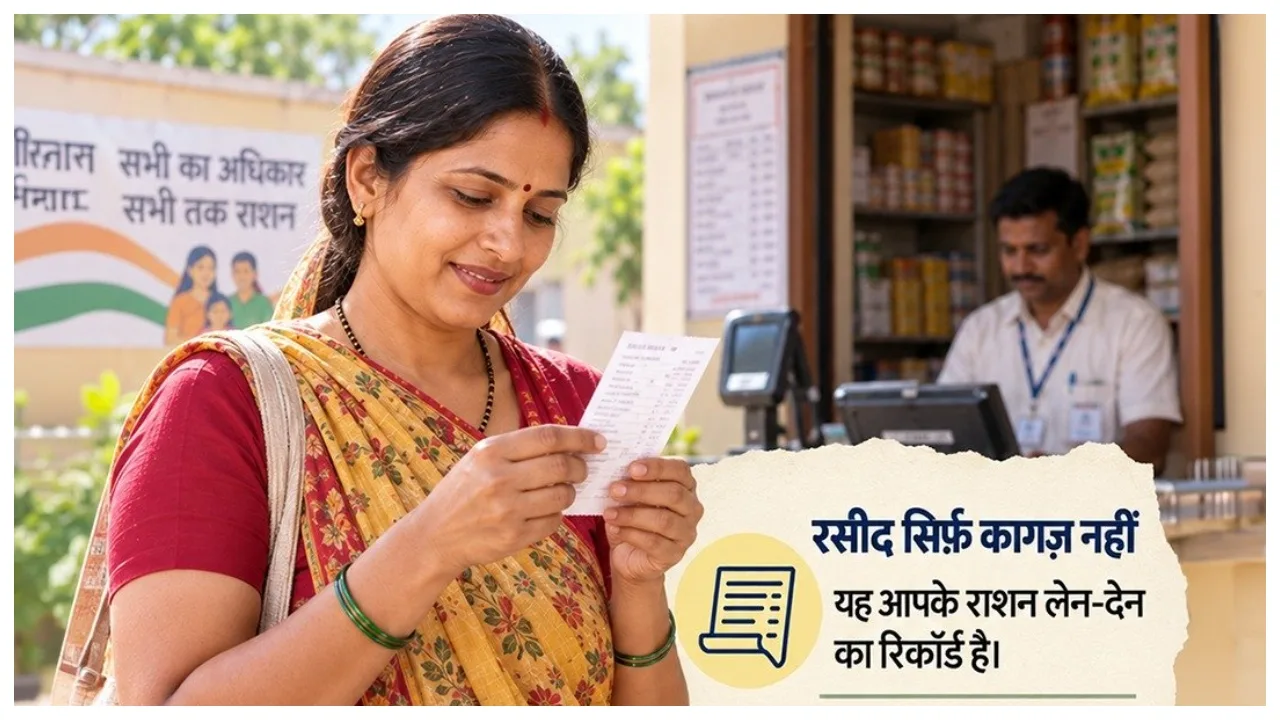
Ration Card: If you are a ration card holder, this information could be critical for you. It is worth noting that simply returning home with your food grains after visiting a government ration shop is not enough. You must also obtain the receipt generated by the e-POS (Electronic Point of Sale) machine. This slip contains full details of your ration, allowing you to easily verify whether the shopkeeper has provided the correct, mandated quantity of food grains.
Often, ration card holders do not collect this receipt, leaving them unaware of what information has been recorded against their name. Therefore, it is essential to collect the slip when receiving your ration and ensure the quantity on it matches what you actually received.
Why is the receipt necessary when collecting rations?
At the time of distribution, your ration card is verified through an e-POS machine, which also records the transaction details. The receipt generated by this machine provides information regarding the quantity of food grains and the specifics of the transaction. It shows exactly how much ration was recorded against your card and how much you actually received. If there is a discrepancy in the quantity, this slip can serve as documentation (proof) for filing a complaint.
Read More:- Bisleri Water Fails FSSAI Test Again, Bacterial Contamination Detected
Read More:- Delhi-Bihar Bus Fare: 200+ Buses On 18 Routes, Check Full Fare List Out
Read More:- HDFC Bank Customers Beware! This Service Will Stop from January 1
Verify the quantity of food grains mentioned on the receipt.
Always weigh the food grains you receive from the shopkeeper. The quantity recorded on the receipt should match the actual weight of the items you receive. If the receipt indicates a larger quantity than what you actually received, you can file a complaint.
How much food grain is provided under a ration card?
Under the National Food Security Act, eligible ration card holders are provided with a fixed quantity of food grains. For those holding a PHH (Priority Household) ration card, each individual is entitled to 5 kg of food grains. For instance, a family of five would receive 25 kg of food grains. Under the AAY (Antyodaya Anna Yojana) ration card, 35 kg of rations are provided.
Keep your ration receipt safe.
After receiving your rations, do not leave the receipt generated by the e-POS machine at the shop. Keep it safe with you. This document may be required if you need to file a complaint regarding any discrepancies in your ration allocation.
Check your ration details via the ‘Mera Ration’ app.
Ration card holders can also check their ration card information using the ‘Mera Ration’ app. Through this app, you can verify your eligibility for rations and review details related to your ration transactions.