


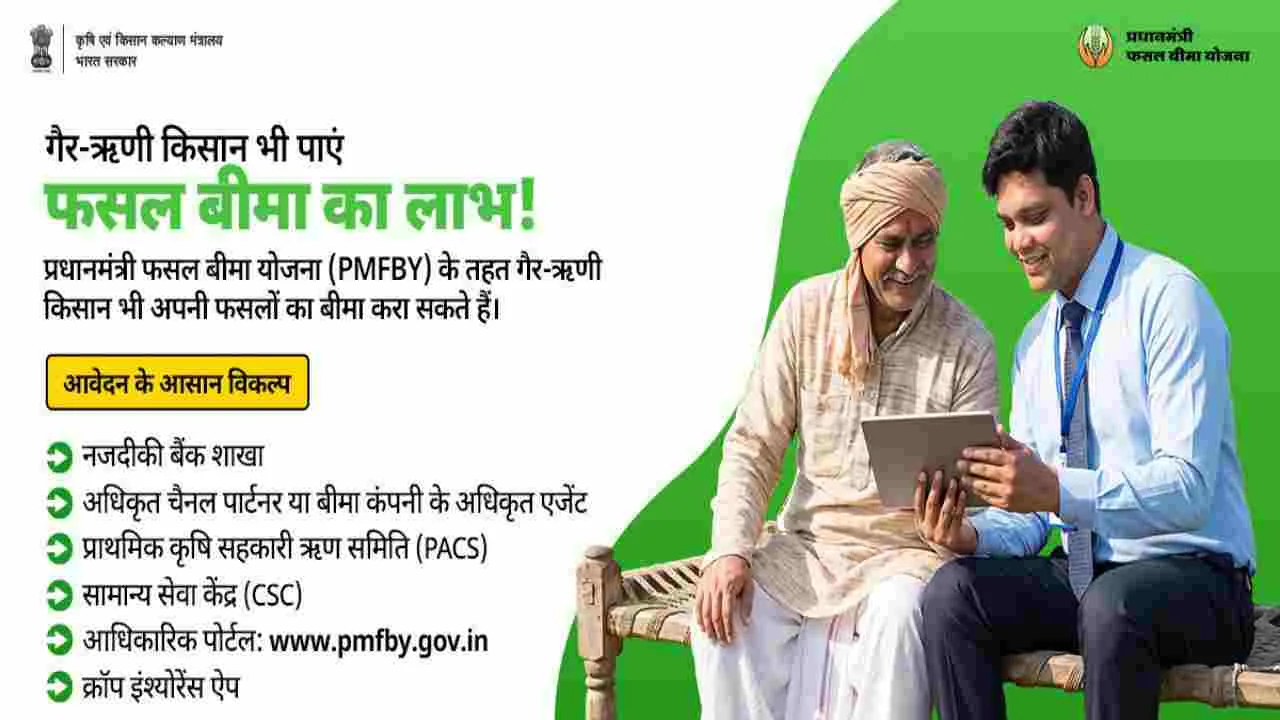
PM Fasal Bima Yojana: The Pradhan Mantri Fasal Bima Yojana (PMFBY) provides crop insurance to eligible farmers to help protect them against financial losses caused by natural calamities and other specified agricultural risks. Importantly, farmers who have not taken loans from banks, known as non-loanee farmers, can also obtain crop insurance under the scheme, subject to the applicable guidelines and eligibility conditions.
Crop production can be affected by several unpredictable factors, including droughts, floods, cyclones, excessive rainfall, and other natural disasters. Such events can cause significant damage to standing crops and create financial difficulties for farmers. Crop insurance under PMFBY aims to reduce this burden by providing financial protection against covered crop losses, in accordance with the scheme’s terms and conditions.
How Can Non-Loanee Farmers Apply for PMFBY?
Farmers interested in insuring their crops can approach their nearest bank branch, Common Service Centre (CSC), Primary Agricultural Credit Society (PACS), or an authorised insurance agent. Applications and relevant information may also be available through the official PMFBY portal.
Farmers can visit https://pmfby.gov.in or https://pmfby.gov.in to check scheme details, application procedures, notified crops, insurance coverage, and other relevant information. Before applying, they should confirm the applicable enrolment deadline, required documents, premium amount, and eligibility criteria for their crop and location.
Where Can Farmers Get More Information?
For assistance and further information about the Pradhan Mantri Fasal Bima Yojana, farmers can call the Kisan Helpline at **14447**. They should verify the latest scheme guidelines and application deadlines before completing the enrolment process.
प्रधानमंत्री फसल बीमा योजना (PMFBY) के तहत गैर-ऋणी किसान भी अपनी फसलों का बीमा कराकर प्राकृतिक आपदाओं और अन्य जोखिमों से सुरक्षा प्राप्त कर सकते हैं।
आवेदन के लिए नजदीकी बैंक शाखा, CSC, PACS, अधिकृत बीमा एजेंट या आधिकारिक पोर्टल https://t.co/3sJEBrIAHu पर जाएं।
अधिक जानकारी के… pic.twitter.com/bLFZn4Rtta
“>October 21, 2026
PMFBY offers eligible non-loanee farmers an opportunity to obtain crop insurance even if they have not borrowed money from a bank. By checking the official portal or contacting an authorised service provider, farmers can learn about the coverage available for their crops and take the necessary steps to protect themselves against eligible agricultural risks.