


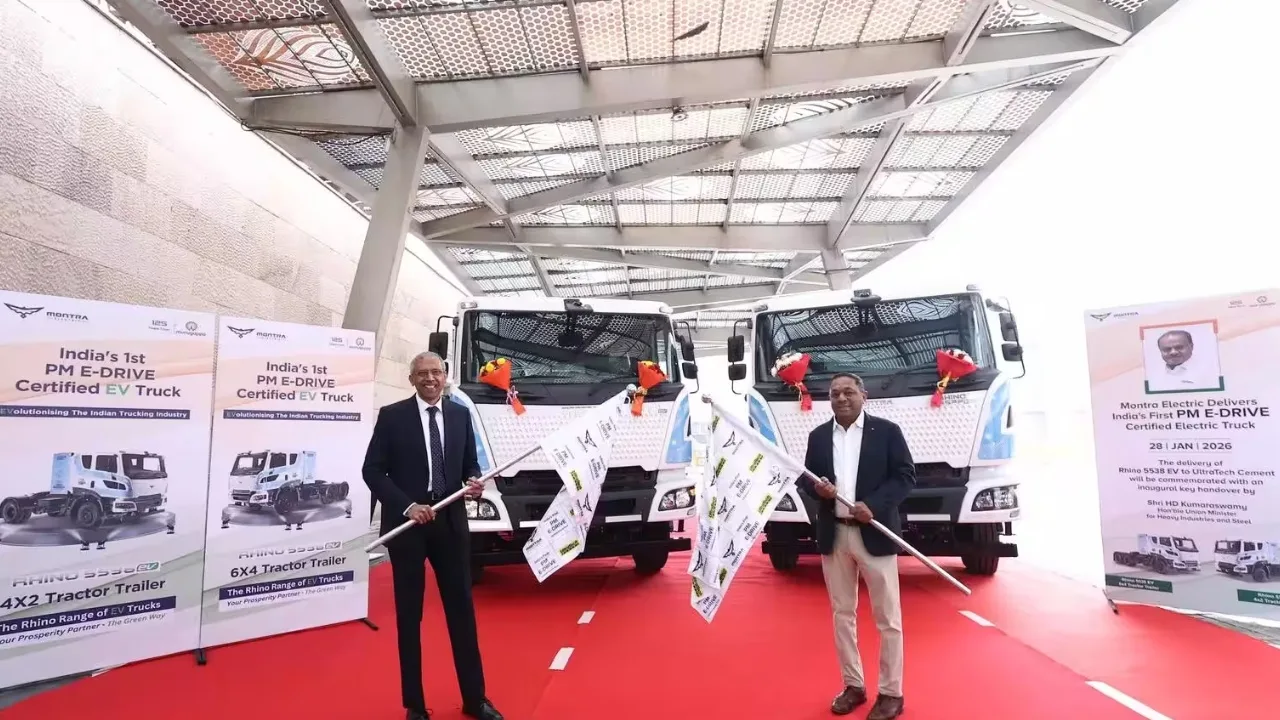
PM E-DRIVE: The government has taken a significant initiative to boost the production of electric trucks within the country and decrease reliance on imports through the PM E-DRIVE Scheme. The scheme enforces stricter localization regulations for N2 and N3 category e-trucks.
Starting from April 1, 2027, it will be compulsory to manufacture traction motors and various essential components in India. The government is determined to enhance the local value addition in the electric truck industry and establish a robust manufacturing environment.
The Phased Manufacturing Program (PMP) for N2 and N3 class electric trucks involves modifications to traction motor guidelines. As of April 1, 2027, critical traction motor components like magnets, rotor, stator, shaft, bearing, connector, and cable must be produced and installed domestically. This change aims to reduce reliance on foreign imports for crucial e-truck components.
Furthermore, the manufacturing of traction motors and transmissions must be carried out in India according to the new regulations. The government wants key powertrain components for e-trucks to be manufactured within the country, potentially strengthening the local supply chain and creating new business prospects for indigenous companies.
In addition to motors and transmissions, localization requirements will be expanded to include motor controllers and inverters. As per the new guidelines, electronic components and semiconductors must be assembled on Printed Circuit Boards (PCBs) in India, which is anticipated to boost the local value addition in electric vehicle electronic systems.
The primary goal of the alterations under the PM E-DRIVE initiative is to enhance the local value addition in traction motors, transmissions, and motor controllers. India presently heavily relies on imports for many crucial components used in e-truck production, and the government aims to gradually reduce this dependency by fostering domestic manufacturing and supply chains.
The implementation of these new requirements on April 1, 2027, may necessitate e-truck manufacturers to reconfigure their supply chains and manufacturing processes. Simultaneously, this could present new opportunities for domestic auto component, electronics, and semiconductor assembly firms. The government’s clear intent is for India to evolve into not only a market for electric vehicles but also a manufacturing center for their essential components. The revised localization regulations are viewed as a significant stride in this direction.