


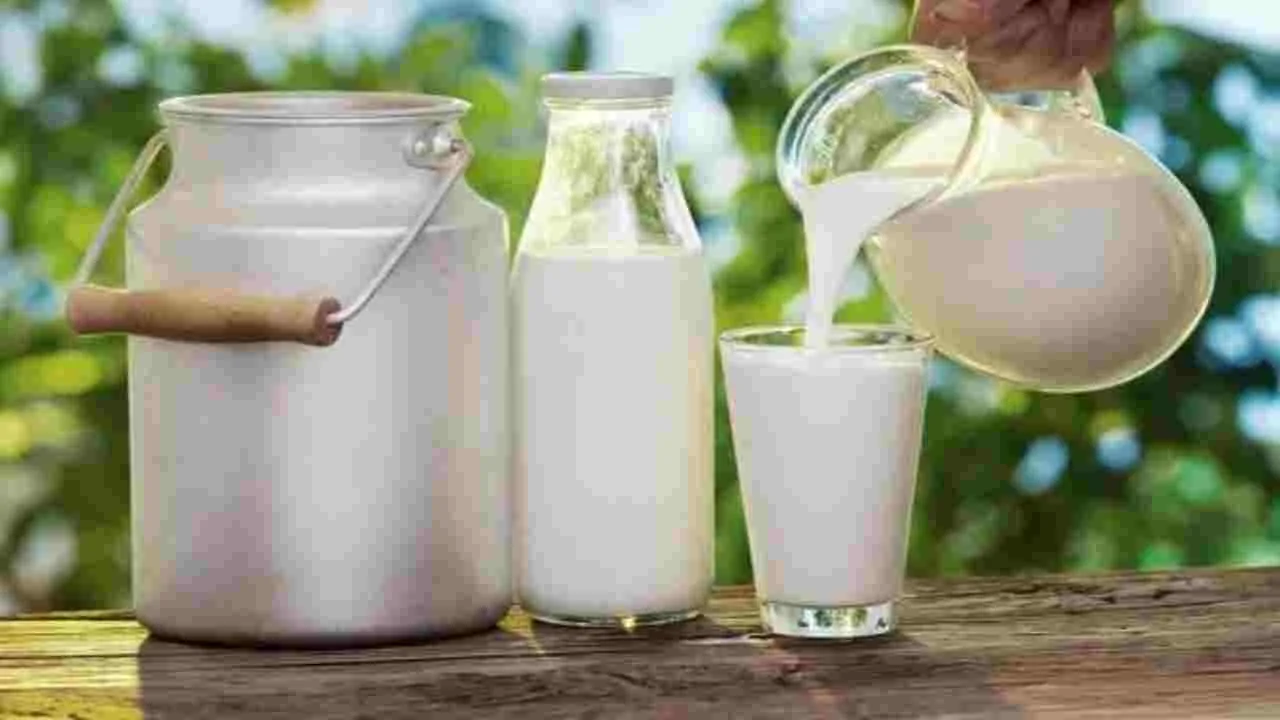
Milk Scheme: Big news is here. Efforts are being made to empower rural women by providing them with economic independence through milk production and dairy farming. Deputy Chief Minister Keshav Prasad Maurya shared these directives during a joint meeting with the Food Processing Department and the Uttar Pradesh State Rural Livelihoods Mission.
The plan is to extend the milk initiative to every village across all 75 districts in the state. There is a strong focus on involving women, farmers, and youth in milk production. Currently, 3.94 lakh women are engaged in milk production across 7,220 villages in 42 districts, generating around 10.77 lakh liters of milk each day. Notably, 72,669 women in this sector have achieved the status of Lakhpati Didis.
What is the current scenario in the state?
The total revenue from dairy companies stands at approximately ₹5,839 crore, with a net profit of ₹133 crore. Balini Milk Producer Company boasts 95,100 members in 1,440 villages across 7 districts, producing 2.50 lakh liters of milk daily. Kashi Milk Producer Company has 55,000 members in 1,770 villages across 10 districts, yielding 1.60 lakh liters of milk each day. Samarthya Milk Producer Company has around 100,000 members in 1,550 villages across 10 districts. Baba Gorakhnath Kripa Milk Producer Company includes 73,283 members in 1,160 villages across 7 districts, while Srijani Milk Producer Company has 71,320 members in 1,900 villages across 8 districts.
To promote the scheme, special awareness campaigns will be launched at the village level. There will be a focus on making the registration process, application forms, and necessary documentation more straightforward. Full departmental support will be provided to assist women and rural families in need.
The economy will get a new impetus
Keshav Prasad Maurya said that Prime Minister Narendra Modi’s commitment to women’s empowerment, self-reliant India, and the “One Crore Lakhpati Didi” initiative is being furthered through the milk revolution in Uttar Pradesh. Milk production is becoming a strong source of regular income for rural women. The government’s goal is to connect more women to this model, increasing their income and expanding employment and self-employment opportunities in villages. According to the government, increased women’s income will strengthen the economic condition of rural families and boost the rural economy.