


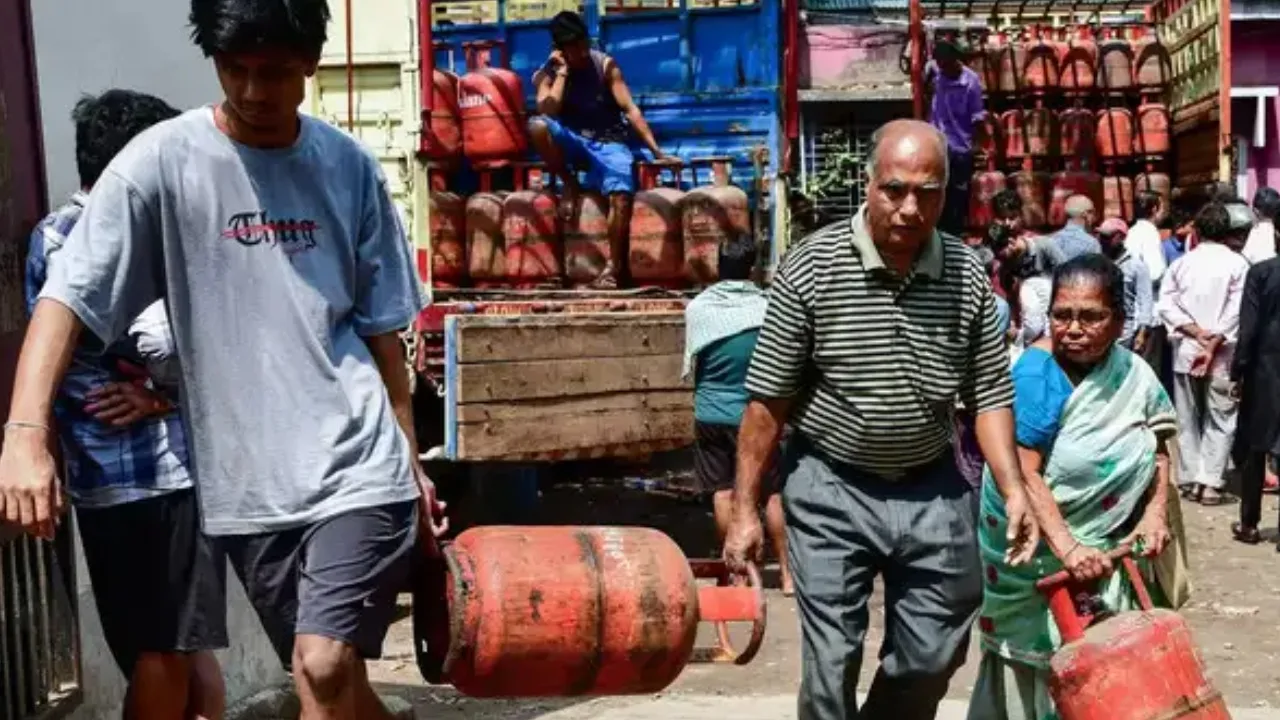
LPG: Starting from October 1, it will be mandatory to use biometric Aadhaar authentication (BAA) when booking LPG cylinders. This requirement entails completing the KYC process. Presently, the cost of a domestic LPG cylinder in Delhi stands at Rs 942. There is no confirmation yet regarding any price adjustments on October 1.
Nonetheless, as of that date, BAA will be a prerequisite for LPG cylinder bookings, necessitating the completion of e-KYC. This update also delves into the journey of how the price of an LPG cylinder surged from Rs 490 to Rs 942 and the rationale behind the government’s implementation of e-KYC.
Key Points on the New Aadhaar Rule for LPG Effective from October 1:
1. The Petroleum Ministry reports that about 89.9% of the 274.3 million active domestic LPG customers have fulfilled this requirement.
2. Customers who have completed their BAA will not require any further action and can continue booking cylinders as usual.
3. Those with pending BAA need to finalize Aadhaar authentication before booking a subsidized cylinder. This can be facilitated either by the cylinder delivery personnel through the OMC app or at the LPG distributor’s office.
Guidelines for Self-e-KYC:
If you are an Indane customer, you have the option to complete e-KYC/BAA independently through IndianOil ONE, Bharat Gas, HelloBPCL, and HP Gas platforms.
Reasons for Implementing e-KYC by the Government:
The government aims to ensure that subsidy benefits are availed only by eligible recipients, eliminate duplicate or ineligible connections, and prevent the commercial misuse of domestic LPG. The government highlights that the effective subsidy on a 14.2 kg domestic LPG cylinder was approximately Rs 210 in September compared to around Rs 721 in June.
Additional Regulations on Subsidy:
Customers who opt not to or are unable to complete BAA will still receive LPG but will not be eligible for the subsidy. They will be required to indicate their preference through OMCs’ digital channels like the consumer portal, mobile app, WhatsApp chatbot, or IVRS.
Insights into the LPG Price Fluctuations:
October being a festive month witnesses a surge in LPG consumption across households, hotels, restaurants, and street vendors. LPG cylinder rates are revised annually on October 1. Notably, domestic LPG cylinder prices have displayed significant variations over the past 12 years during the tenure of the Modi government.
Historical Price Trends of LPG Cylinders:
– In May 2014, the cost of a domestic cylinder was Rs 928.50.
– Under the Modi government, the price dropped to Rs 490 in October.
– By the time Modi assumed office as Prime Minister in May 2014, the price of a domestic cylinder in Delhi stood at Rs 928.50.
Insights into the October LPG Price Trends:
– In October 2014, the price of a 14.2 kg non-subsidized Indane cylinder in Delhi was Rs 880.
– The price decreased to Rs 517.50 in October 2015 and further dropped to Rs 490 in October 2016.
– Subsequently, prices started escalating, reaching Rs 649 in October 2017 and climbing to Rs 879 in October 2018. However, in October 2019, the price decreased to Rs 605.
Price Adjustments in Recent Years:
– In October 2020, the price remained at Rs 594.
– The price surged to Rs 899.50 in October 2021.
– Notably, there was a significant increase in LPG prices in 2022, with the price in Delhi recorded at Rs 1,053 on July 6, 2022. The price then dropped to Rs 903 on August 30, 2023, sustaining the same rate in October 2022 and 2023. Subsequently, in March 2024, the price decreased to Rs 803.
Recent Price Fluctuations:
The price of a 14.2 kg non-subsidized Indane cylinder in Delhi stood at Rs 853 on April 8, 2025, and maintained this rate in October 2025. The price then rose to Rs 913 on March 7, 2026, and subsequently increased to Rs 942 on June 7, 2026, remaining stable at this rate until September 29th.
Factors Influencing LPG Pricing:
The Arab Gulf benchmark plays a pivotal role in determining international LPG prices in India. Any alterations in LPG prices globally impact costs in India. Indian Oil clarifies that international LPG rates serve as the benchmark for pricing, with OMCs adjusting rates based on the preceding month’s average benchmark and foreign exchange rates.
Government Intervention in Domestic Cylinder Prices:
The government retains authority to direct OMCs to maintain prices as necessary for domestic 14.2 kg LPG cylinders. For instance, in May 2026, Indian Oil noted that despite the surge in global fuel prices, domestic LPG prices remained unaffected, shielding domestic consumers from the international price hikes. Consequently, fluctuations in international LPG prices do not directly translate to proportional increases in domestic cylinder prices.