

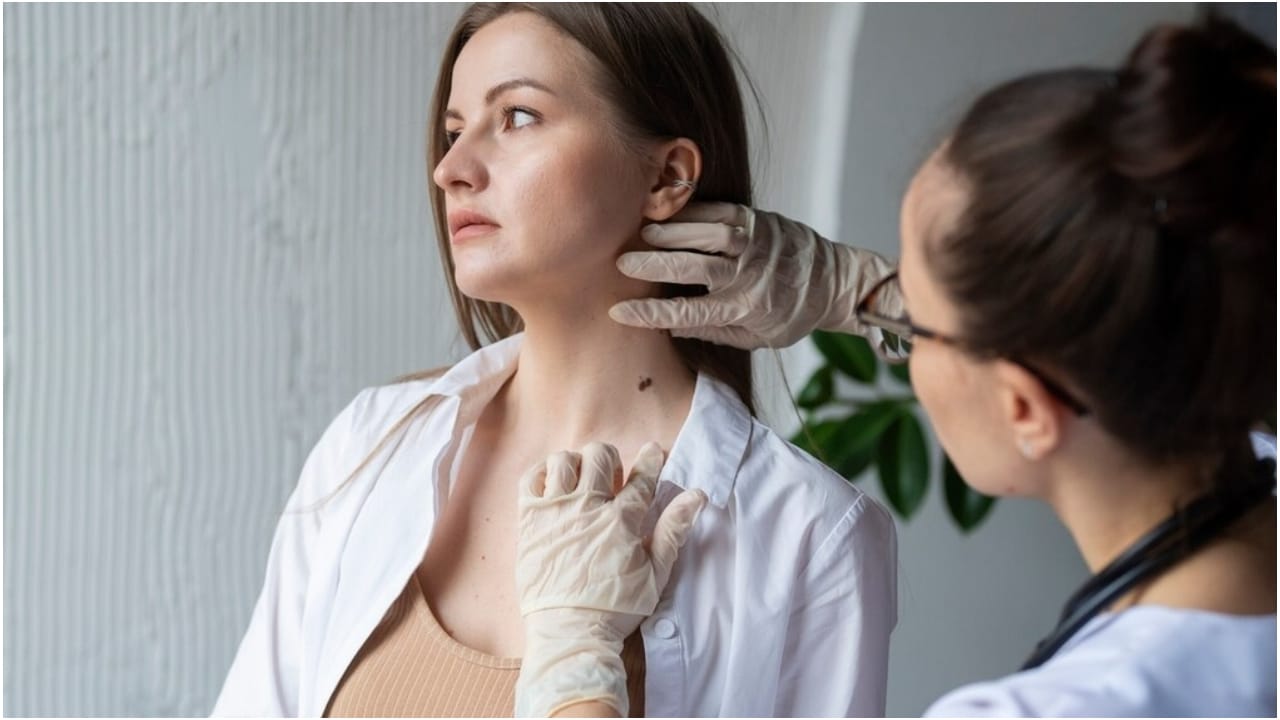
Skin Cancer Symptoms – Skin Cancer cases are increasing rapidly across the world, and India too has witnessed a steady rise in reported cases. What makes the disease particularly concerning is that its earliest signs appear right on the skin—clearly visible to the naked eye. When detected in time, skin cancer is often treatable. But the danger grows when people mistake these warning signs for common skin issues and ignore them. Here’s a detailed look at the early symptoms you should never overlook.
Early Symptoms of Skin Cancer
Most people are aware of the moles, freckles, or spots on their bodies. In many cases, the earliest sign of skin cancer appears as a change in these very marks.
If a new spot appears on your skin—or an old mole suddenly begins changing in colour, shape or texture—it may be the first indication of skin cancer. Sudden darkening, uneven borders, or rapid growth should be treated as red flags.
Other Early Warning Signs You Should Not Ignore
A persistent skin wound that refuses to heal even after several weeks is one of the most common early signs.
If a mole or patch begins to itch constantly, becomes painful or causes a burning sensation, it may signal the onset of cancerous changes.
Some people also notice repeated crusting or bleeding on the same spot. A skin patch that continuously grows in size or starts spreading to the surrounding area needs immediate medical attention.
Another sign is a waxy, shiny or pearl-like bump appearing on the skin. Additionally, skin that turns red, scaly or rough without any apparent reason can also be an early indicator.
Who Is at a Higher Risk of Skin Cancer?
Experts suggest that people with very fair skin are more vulnerable to developing skin cancer, especially if they spend long hours in direct sunlight. Individuals with a family history of the disease should also remain cautious.
The risk increases with age, weakened immunity, or a body covered with several moles. This is why any unusual skin change, no matter how minor it appears, should never be ignored. Getting it checked by a dermatologist at the earliest can help prevent serious complications.

