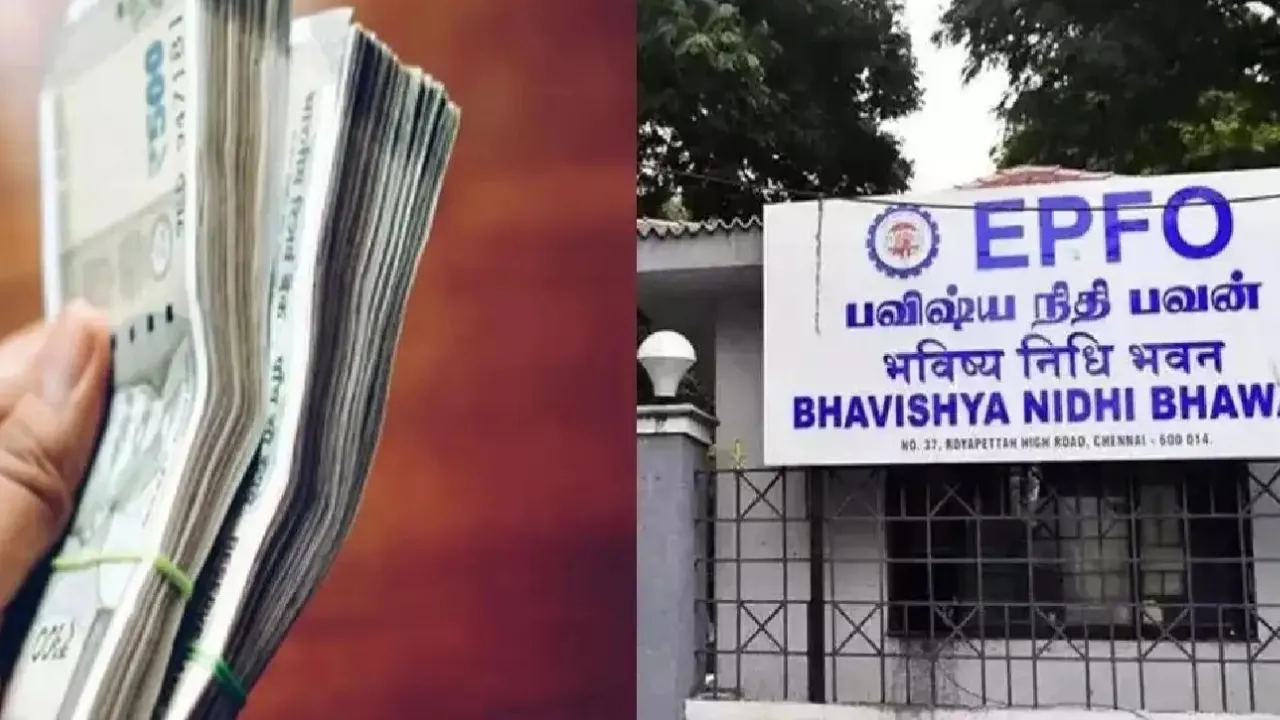
EPFO Pension: Labor unions have once again called for an increase in the minimum pension under EPS-95 from Rs 1,000 to Rs 9,000 monthly. This matter has escalated to both Parliament and the Supreme Court, bringing the Employees’ Pension Scheme 1995 back into focus.
What is EPS-95 and who benefits from it?
EPS-95, or the Employees’ Pension Scheme 1995, is a government pension initiative aimed at private employees in the organized sector. It is managed by the EPFO. When an employee contributes to the EPF, 8.33 percent of the employer’s contribution is allocated to the pension fund. Additionally, the government contributes 1.16 percent on salaries up to Rs 15,000. Employees who work for a minimum of 10 years are eligible to receive a monthly pension starting at age 58. However, this pension does not adjust for inflation.
What is the current pension amount under EPS-95?
The pension amount under EPS-95 is calculated based on the employee’s salary and total years of service. Currently, the minimum pension stands at Rs 1,000 per month. The government guarantees this amount through budgetary provisions, ensuring that eligible pensioners receive at least this minimum. This means that if your contributions yield a pension lower than Rs 1,000, the government will cover the difference.
Regarding the maximum pension, it is determined by the current salary cap of Rs 15,000. For individuals who have completed 35 years of maximum pensionable service, the maximum pension amounts to roughly Rs 7,500 per month, calculated using the formula (15,000 × 35) / 70.
However, the Rs 7,500 cap is applicable only to standard cases with a Rs 15,000 salary limit and 35 years of service. Following the Supreme Court’s decision, those who opted to contribute based on their actual salary may receive pensions exceeding Rs 7,500. Consequently, some pensioners are now receiving Rs 9,000 or more.
What does the government say?
Responding to a question in the Lok Sabha, Minister of State for Labour Shobha Karandlaje acknowledged that trade unions and public representatives have demanded an increase in pensions. However, the government has not yet given a timeline.
The government clarified that EPS-95 is not a return-based scheme, but rather a fixed-contribution and fixed-benefit scheme. The pension fund is created from two main sources: first, the employer contributes 8.33 percent of an employee’s salary. Then, the central government contributes 1.16 percent on salaries up to Rs 15,000. Additionally, the government ensures a minimum pension of Rs 1,000 through budgetary support. Currently, there are approximately 4.7 million pensioners who receive less than Rs 9,000 in pensions. This is why this demand remains politically and socially significant.
Why is it challenging to raise the pension directly to Rs 9,000?
A direct jump from Rs 1,000 to Rs 9,000 represents a ninefold increase. The EPS functions on a fixed contribution rate. Each year, the government performs an actuarial assessment to ensure the fund’s long-term viability. Such a substantial increase could exert considerable strain on the pension fund. The government has consistently emphasized that any decision must consider the fund’s stability and future obligations.
Supreme Court ruling on salary cap
In early 2026, the Supreme Court instructed the central government to reassess the EPFO’s Rs 15,000 salary cap and make a decision within four months. This cap has been in place since September 1, 2014, when it was raised from Rs 6,500 to Rs 15,000. Pensions are directly tied to the pensionable salary. Thus, if the salary cap is raised, the pension amount will also rise.
How much can the pension increase?
Rather than a direct increase of Rs 9,000, it’s more likely that the salary threshold will be raised and pensions will gradually increase under the current formula. The government has stated in Parliament that it is committed to providing robust social security through the EPF, EPS-95, and EDLI schemes, but that fund stability is equally important. Any increase would bring relief to over 4.7 million pensioners.
Latest News
- Weather warning – Heavy Rain, thunderstorms, lightning Alerts for 13 States Over Next 3 Days

- UP TGT Exam City Slip 2026 Released – Download at upessc.up.gov.in, Exam June 3-4

- ATM Alert: एटीएम में फंस जाए डेबिट कार्ड तो घबराएं नहीं, फटाफट यह काम करने से होगा समाधान

- Post Office Scheme – 7.5% Interest Rate, ₹5 Lakh Becomes ₹7,24,974 in 5 Years, Start with Just ₹1,000

- Best AI Video Editing Laptops Under 60,000 INR: Top Picks Her

- Best CNG Cars: पेट्रोल के बढ़ते दाम के बीच ये सीएनजी गाड़ी खरीदकर खर्च करें कम, माइलेज भी जबरदस्त

- Samsung Stable One UI 8.5 Update to Galaxy Tab S10 FE and Tab S10 FE+

- बुढ़ापे की लाठी बनेंगी ये तीन स्कीम्स, निवेश से पहले जानिए कितना मिल रहा ब्याज

- OnePlus Nord CE 6 vs Samsung Galaxy A57: Which Mid-Range 5G Phone Wins?

- Lenovo LOQ 15 Gen 11 Review: Best Budget Gaming Laptop?