


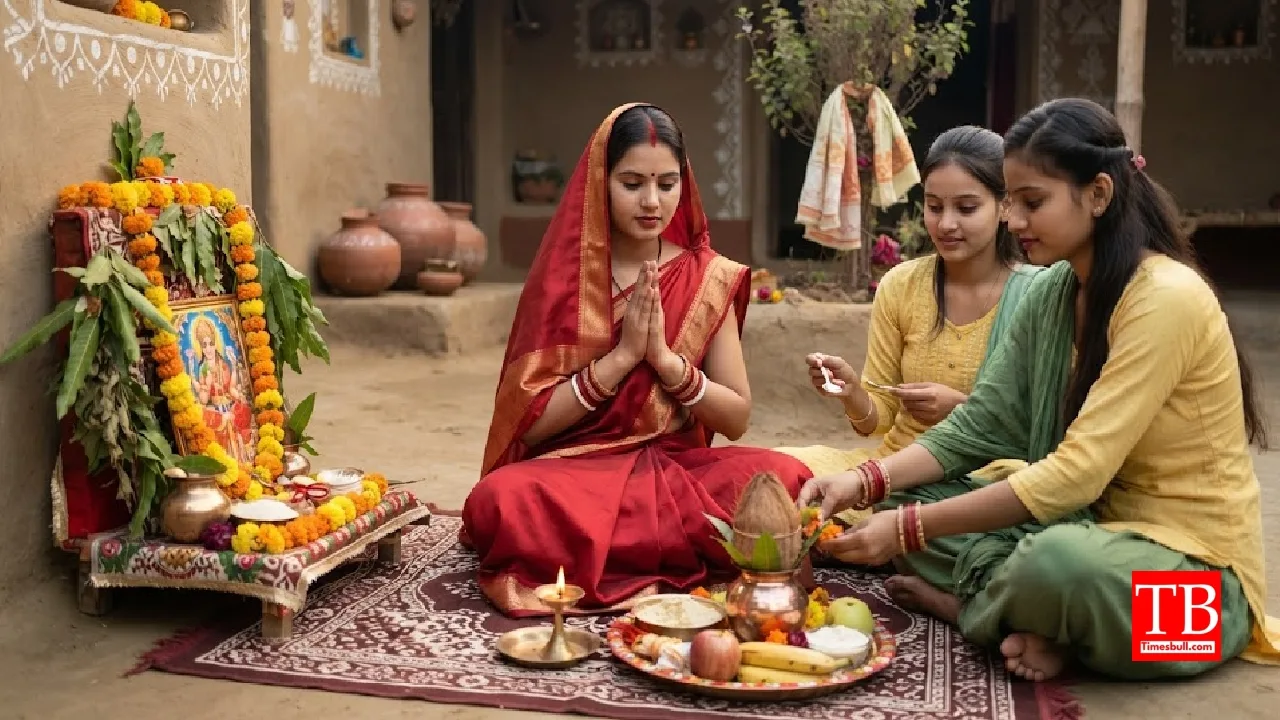
Jitiya Vrat Complete Guide – If you are among the mothers observing the Jitiya Vrat for the long life and happiness of your children, then this post is for you. Let us understand in simple terms when this fast falls, how to observe it, and the story behind it.
Jitiya Vrat 2026: Date and Timing
This year, Jitiya—also known as Jivitputrika Vrat—will be observed on Saturday, October 3rd. The fast began with the ‘Nahay-Khay’ ritual on Friday, October 2nd, and the ‘Paran’ (breaking of the fast) will take place on Sunday, October 4th. An important point to note here is that the ‘Udaya Tithi’ (the lunar day prevailing at sunrise) is considered for Jitiya Vrat. This means the fast is observed on the day when the *Ashtami Tithi* (eighth lunar day) is active at sunrise. Since the *Ashtami Tithi* begins on the morning of October 3rd and continues until the morning of October 4th, the fast will be observed on October 3rd.
Auspicious Time for the Main Puja
The best time for the evening *Puja* (worship) during the *Pradosh Kaal* is between 5:32 PM and 7:00 PM. During this time, worship Lord Jimutvahan and listen to the associated legend (*Katha*).
Time for Paran (Breaking the Fast)
The fast will be broken (*Paran*) after 7:28 AM on the morning of October 4th. First, offer *Arghya* (water offering) to the Sun God, and then break the fast.
What to Cook for Nahay-Khay?
On the day of *Nahay-Khay*, observing women bathe in the morning and prepare *Sattvic* (pure, simple) food. Traditionally, *Madua* (Ragi/finger millet) roti, *Noni* greens, and *Jhingni* (ridge gourd/sponge gourd) vegetable are prepared. In some regions, there is also a tradition of consuming fish and rice, though this depends entirely on local customs.
Late at night or before sunrise the next morning, the ritual of *Saragahi* or *Othgan* is performed. During this, sweet food or *Dahi-Chuda* (curd and flattened rice) is consumed to help sustain the body through the day-long *Nirjala* fast (fasting without water). Keep in mind that *Sargahi* (the pre-dawn meal) must be completed before sunrise.
Who is worshipped during the ritual?
In the Jitiya Vrat, King Jimutavahan is worshipped first. He was the king of the Gandharvas and was renowned for his self-sacrifice and compassion. Additionally, worshipping the female kite and the female jackal is essential. Symbolic idols of them are crafted using cow dung and clay. It is believed that both of them also observed the Jivitputrika Vrat; therefore, listening to their story is considered mandatory.
The Story of Jimutavahan—A Unique Example of Sacrifice
According to legend, Jimutavahan was the son of the Gandharva King Jimutketu. He had no interest in royal affairs and chose to live in the forest to serve his parents. One day, he saw an elderly female serpent weeping. Upon inquiry, he learned of an agreement between Garuda and the Nagas (serpents), whereby one Naga was sent daily as food for Garuda. That day, it was the turn of the serpent woman’s son, Shankhchud.
Jimutavahan’s heart was moved with compassion. He draped himself in a red cloth and lay down on the sacrificial stone in Shankhchud’s place. Mistaking him for a Naga, Garuda carried him away, but upon discovering the truth, he was deeply impressed by Jimutavahan’s sacrifice. Garuda then spared the lives of the Nagas.
This spirit of sacrifice and protection lies at the core of the Jitiya Vrat.
The Story of the Kite and the Jackal—Consequences of Breaking the Rules
There is another story narrated during this fast. It is said that a female kite and a female jackal shared a deep friendship. Both decided to observe the Jitiya Vrat.
The kite completed the fast with full devotion and adherence to the rules, but the jackal could not withstand the hunger and secretly ate food during the night. In doing so, she violated the rules of the fast. In their next lives, they were born as sisters—the kite as the elder sister and the female jackal as the younger one. The elder sister observed the Jitiya fast every year, ensuring her offspring remained healthy and happy. The younger sister, while blessed with children, also had to endure hardships.
The moral of this story is clear: adherence to the rules and sincere devotion are paramount when observing the fast.
Why is it essential to wear the Jitiya thread around the neck?
In the evening, all the women observing the fast gather to worship Jimutvahana and listen to the legend. Afterward, they wear the Jitiya—a thread made of silk or cotton—around their necks. This thread is considered a symbol of their children’s longevity and protection.
Checklist of Puja Essentials
If you are observing the Jitiya fast for the first time, gather these items in advance.
Key Items:
An image or an idol (made of *Kusha* grass) of Jimutvahana
Idols of the kite and the female jackal (made of cow dung or clay)
Ridge gourd (*Torai*) or bamboo leaves
A yellow cloth (to spread out)
Red Jitiya cord or thread
Worship Materials:
Unbroken rice grains (*Akshat*), *Roli* (vermilion powder), *Sindoor* (vermilion), turmeric, sandalwood paste, incense, *Diya* (lamp), *Ghee* (clarified butter), camphor, *Gangajal* (holy water from the Ganges), betel leaves, betel nuts, cloves, cardamom, *Shringar* items (traditional adornments), mustard oil, and *Dakshina* (offering/fee).
Offerings (Bhog and Prasad):
7 or 11 varieties of seasonal fruits and flowers
*Thekua*, *Puri*, *Pua*, *Kheer* (rice pudding), and sweets
Soaked black gram (*Chana*)
Pure water in a copper or clay vessel (*Lota*)
Significance of Ashtami Shraddh and Matru Navami
The day the Jitiya fast is observed coincides with *Ashtami Shraddh*, while the day of *Paran* (breaking the fast) falls on *Matru Navami*. Consequently, many families offer a decoction of mustard seeds to their deceased ancestors. Some also offer a stream of rice starch (*Maand*) on *Ashtami*.
Significance of Staying Awake at Night During the Fast
Scriptures state that staying awake at night—accompanied by contemplation and reflection—holds special significance during the Jitiya fast. It is believed that mothers who worship Jimutvahan Baba and listen to the associated legend with devotion and sincerity are blessed with happy and long-lived children.
Points to Keep in Mind
Women who observe the fast based on *Udaya Tithi* (the lunar day prevailing at sunrise) will observe it on October 3rd. According to the *Panchang* (almanac), *Ashtami Tithi* begins on the morning of October 3rd. The *Sargahi* (pre-dawn meal) should be consumed before sunrise. According to the Varanasi and Mithila *Panchangs*, this time falls before 4:50 AM.
Perform the *Paran* (breaking of the fast) only after the *Ashtami Tithi* has concluded; otherwise, the spiritual benefits of the fast are not attained. Regional customs may vary, so please adhere to the traditions of your own family lineage.
The Jitiya or Jivitputrika Vrat is not merely a religious ritual; it is a symbol of a mother’s maternal love, sacrifice, and unwavering faith. The legend of Jimutavahana teaches us that risking oneself to protect others is the highest form of righteousness (*Dharma*), while the story of the kite and the jackal illustrates the immense importance of discipline and devotion in observing this fast.
If you are observing this fast, do so with complete devotion and strict adherence to the prescribed rules, while offering prayers for the long life and happiness of your children.