
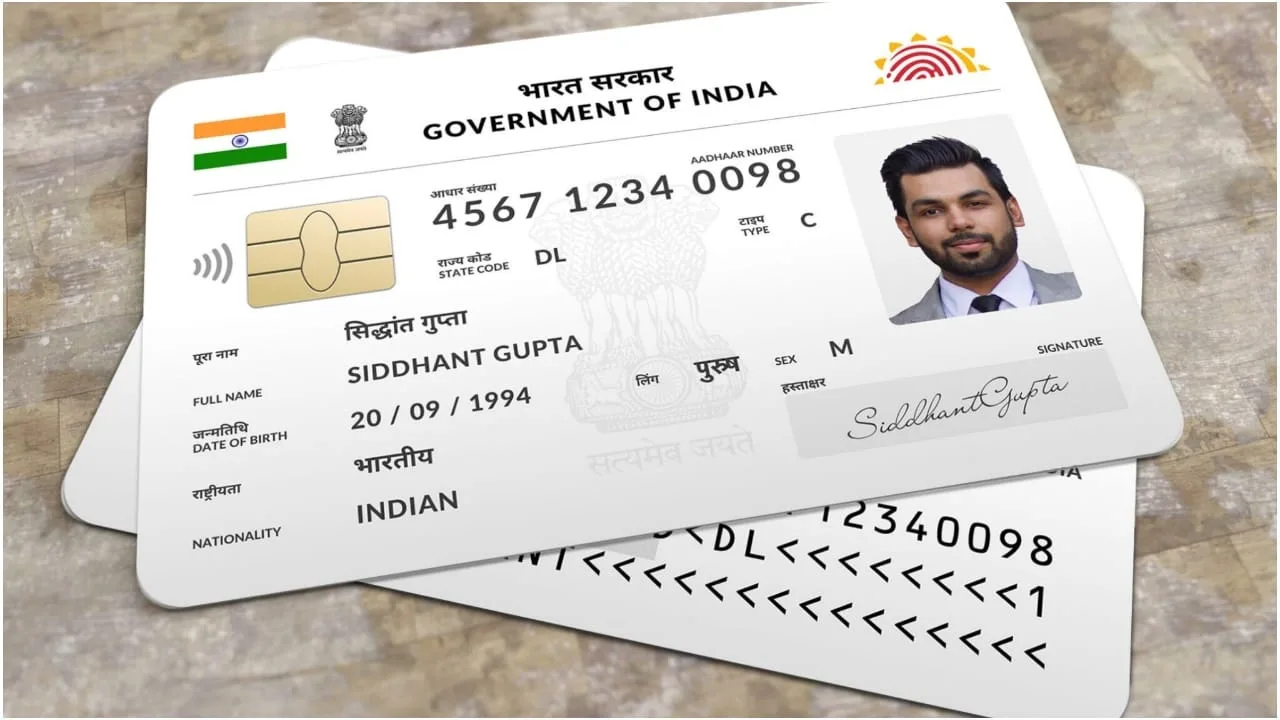
New Aadhaar Card Format: Currently, the Aadhaar card is used almost everywhere in India—whether as identity proof or address proof. From applying for loans to getting a passport or PAN card, Aadhaar has become essential. Even school-going children now have Aadhaar cards. However, with its widespread usage, complaints related to Aadhaar misuse have also increased rapidly.
Since Aadhaar contains sensitive personal details such as name, date of birth, and address, the risk of identity misuse has grown. To address these concerns, the Unique Identification Authority of India (UIDAI) is now planning to introduce a new Aadhaar card format with limited visible information.
What Will Change in the New Aadhaar Card?
According to officials associated with Aadhaar, the most significant change in the new Aadhaar card format will be the removal of personal details such as address and date of birth from the physical card. The new card is expected to display only the holder’s photograph and a QR code.
Notably, even the 12-digit Aadhaar number may not be printed on the card. All verification will be conducted digitally via the QR code, reducing exposure to sensitive personal information.
UIDAI Plans to Implement New Rules from December
UIDAI CEO Bhuvnesh Kumar recently announced that the authority plans to implement these new rules starting in December. The main objective of this move is to reduce offline Aadhaar verification, especially at places such as hotels and event venues where physical Aadhaar copies are often collected.
He stated that online verification helps maintain user confidentiality and significantly reduces the chances of personal data misuse.
Why UIDAI Wants Limited Information on Aadhaar Cards?
Bhuvnesh Kumar also explained that UIDAI is carefully evaluating what information should and should not appear on Aadhaar cards. According to him, keeping only a photograph and a QR code provides greater privacy.
He added that if more personal details are printed on the card again, it could lead to misuse, as institutions and individuals may start accepting and circulating such cards, increasing the risk of identity fraud.
Focus on Digital and Secure Aadhaar Verification
The new Aadhaar card format is expected to drive institutions toward digital Aadhaar verification over paper-based checks. This shift will not only strengthen privacy safeguards but also align Aadhaar usage with India’s broader data protection framework.
UIDAI believes this change will significantly reduce Aadhaar-related fraud and unauthorised data sharing in the coming years.
Latest News
- Apple MacBook Neo Deal Alert: Get It For Under ₹58,000 on Amazon Right Now

- Pakistan Attack: आत्मघाती हमले से दहला पाकिस्तान, 23 लोगों की मौत, 50 से ज्यादा घायल, जानें

- Honor Magic 9 Series Leaks: Flagship Upgrades with Massive 8,000mAh Battery and 200MP Cameras

- Motorola Edge 60 Fusion Review: Mid-Range King or Outdated?

- FD Update– Breaking Your FD Early? Know the consequences

- Bank Holiday–RBI Announces Closure of SBI, HDFC and All Banks Next Week, Save the Dates

- Samsung Galaxy S26 Ultra Amazon Deal – Get ₹23,509+ Discount with Bank Offers and Exchange Benefits

- Best Scooters For College Girls 2026 – Perfect Mix Of Mileage, Style And Lightweight Design

- Kodak Matrix QLED Google TV 2026 Series Launched in India Just Under 10,999

- Senior Citizen FD Rates: सीनियर सिटीजन को यहां से मिल रहा बंपर ब्याज, जल्द करें निवेश