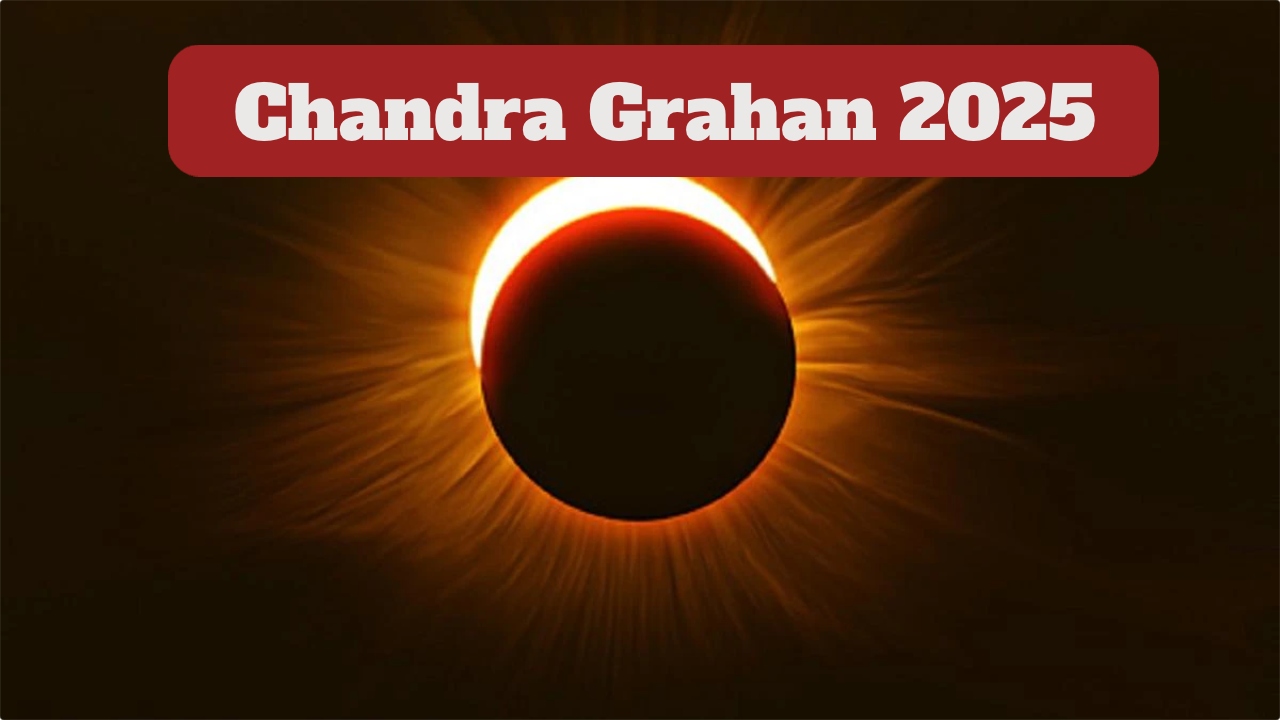
Chandra Grahan 2025 Update: Today, on September 7, a unique natural sight will be seen in the sky. The second and last lunar eclipse of the year is going to take place on Sunday. This rare coincidence will be seen on September 7. This will be a complete lunar eclipse, visible not only in India but also in many parts of the world.
This view of tonight will be clearly visible in select areas of Asia, Western Australia, East Africa, and Europe. During a full lunar eclipse, the moon will appear as a glowing red ball, known as a Blood Moon. There will be a ‘red lunar eclipse’ from 9:57 pm to 1:26 am, which is called a Red Lunar Eclipse in scientific language.
The Sutak period of the lunar eclipse has started, and it will end with the eclipse. As per Indian time, the lunar eclipse will begin at 09:58 pm and it will end at 01:26 pm. Children, elderly and pregnant women are advised to stay away during Sutak and the eclipse.
The lunar eclipse will last from 09.58 pm to 01.26 am. The total duration of the eclipse will be 3 hours and 28 minutes. But the lunar eclipse will be at its peak from 11.01 pm to 12.22 pm. The peak time of the eclipse is reported as 11:42 pm. Let us tell you that there are three types of lunar eclipses: first full lunar eclipse, second partial lunar eclipse and third penumbral lunar eclipse.
– What should not be done in a lunar eclipse:-
1. Cooking or eating food should be avoided.
2. We should avoid doing auspicious work.
3. Do not touch the idols of God.
4. Pregnant women should not cut vegetables. Do not use a knife, scissors, needle, etc.
5. Children, elderly and pregnant women should not go out of the house.
How is ‘Blood Moon’ formed
A full lunar eclipse occurs when the Earth comes between the Sun and the Moon and its dark shadow falls on the Moon. At this time, the moon does not appear completely black, but appears dark red or copper in colour. This happens because the Earth’s atmosphere bends the sunlight. When sunlight passes through the atmosphere, atmospheric particles scatter the small colours around, and only the reddish light reaches the moon. This is why the moon appears with a red glow during the eclipse, which we call ‘Blood Moon’.
Latest News
- New Honda City Facelift 2026 Launched – Sporty Coupe Look And ADAS Safety Revealed

- 8th Pay Commission: केंद्रीय कर्मचारियों की बढ़ेगी बंपर सैलरी! आयोग ने उठाया यह बड़ा कदम

- China: चीन के कोयला खदान में भयंकर विस्फोट, 90 लोगों की गई जान, पीएम मोदी ने भी जताया दुख

- Weather warning – Heavy Rain, thunderstorms, lightning Alerts for 13 States Over Next 3 Days

- UP TGT Exam City Slip 2026 Released – Download at upessc.up.gov.in, Exam June 3-4

- ATM Alert: एटीएम में फंस जाए डेबिट कार्ड तो घबराएं नहीं, फटाफट यह काम करने से होगा समाधान

- Post Office Scheme – 7.5% Interest Rate, ₹5 Lakh Becomes ₹7,24,974 in 5 Years, Start with Just ₹1,000

- Best AI Video Editing Laptops Under 60,000 INR: Top Picks Her

- Best CNG Cars: पेट्रोल के बढ़ते दाम के बीच ये सीएनजी गाड़ी खरीदकर खर्च करें कम, माइलेज भी जबरदस्त

- Samsung Stable One UI 8.5 Update to Galaxy Tab S10 FE and Tab S10 FE+