


Petrol Price: There was no change in the prices of petrol and diesel on Wednesday, November 25. Despite stable rates, the price of CNG has crossed ₹100 in Kanpur and Hamirpur. In Delhi, ethanol-free petrol is being sold at ₹167.35 per litre, while petrol blended with 20% ethanol is priced at ₹102.12 per litre.
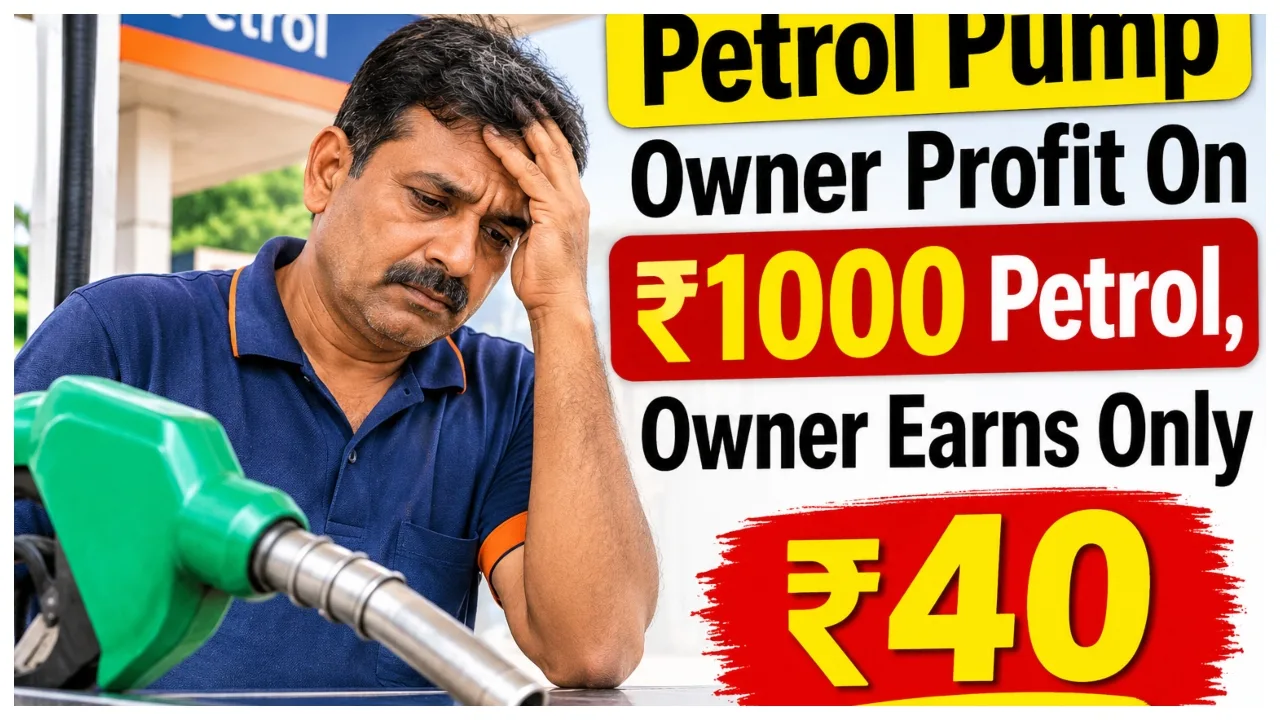
Have you ever wondered how much a petrol pump owner earns when you purchase petrol worth ₹500 or ₹1000? In reality, a pump owner earns only ₹3 to ₹4.39 per litre of petrol and ₹2.50 to ₹3 per litre of diesel. The rest of the amount goes toward government taxes and the oil company. Let’s explore how much commission is earned on one litre of petrol and understand the details.
How much commission is earned on 1 litre of petrol?
According to government data, the formula for dealer commission, effective from December 1, 2024, is as follows: ₹3,144.03 per 1,000 litres + 0.870% for petrol and ₹2,332.51 per 1,000 litres + 0.266% for diesel.
In simpler terms…
Petrol commission: ₹3.50 to ₹4.39 per litre
Diesel commission: ₹2.50 to ₹3.03 per litre
This means that if you purchase 10 litres of petrol, the pump owner earns only ₹35 to ₹44.
How much does a petrol pump owner earn in a month?
A petrol pump owner’s earnings depend on the total volume of petrol sold in a day.
Small pump: 2,000 litres/day = ₹7,000/day = ₹2.10 lakh/month
Large pump: 8,000–10,000 litres/day = ₹32,000/day = ₹9.60 lakh/month
However, not all of this money goes into the owner’s pocket.
What are the operating expenses for a pump owner?
Staff salaries (6–10 people) = ₹1.5–₹2 lakh
Electricity + machinery maintenance = ₹40,000–₹60,000
Land rent/loan EMI = ₹1–₹3 lakh
Losses due to theft/pilferage = ₹20,000–₹30,000
How is additional income generated at a petrol pump?
Shops / ATMs / Car washes – Nowadays, pumps can generate significant extra income through on-site shops, PUC (Pollution Under Control) certification services, and car washes.
CNG / EV charging – Newer pumps also generate additional revenue through CNG and EV charging facilities.
Margins for oil companies
Many people assume that oil marketing companies receive a direct retail commission per litre, but that is not the case. The actual earnings of these oil companies depend on the margin—the difference between the base cost of crude oil purchased from the international market and the final selling price after the oil has been refined and brought to market.