

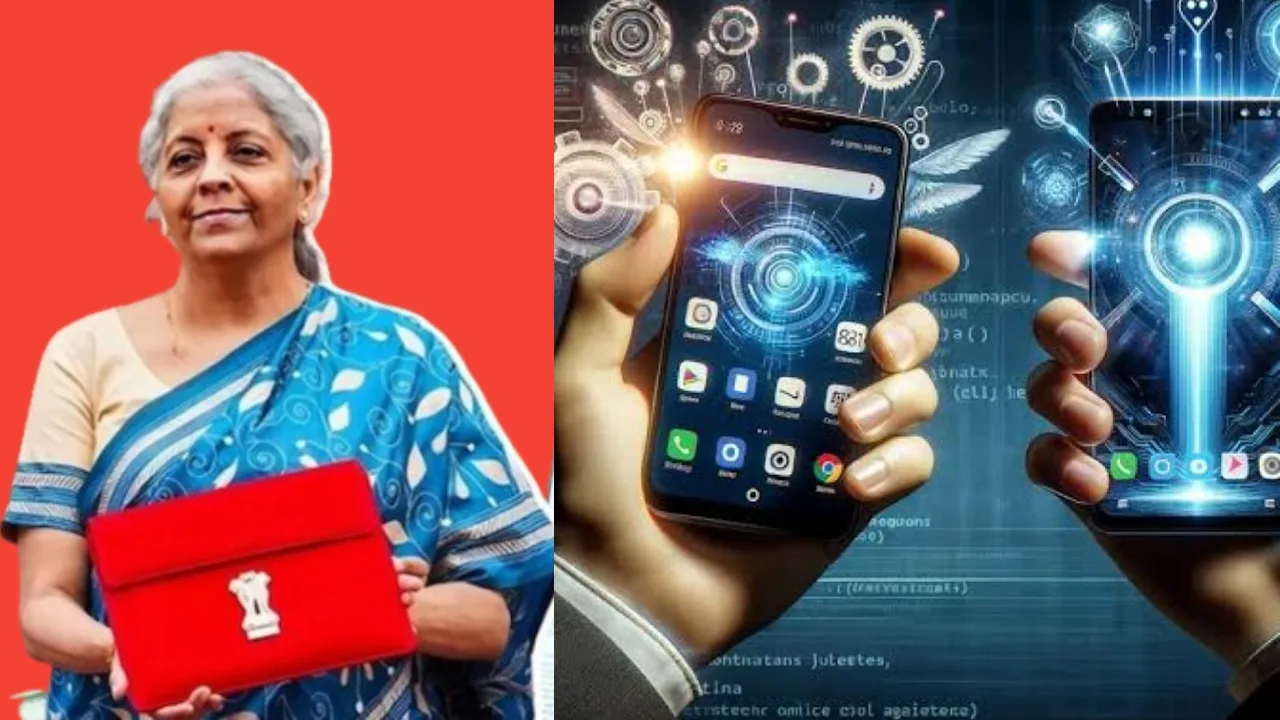
Union budget 2026: All eyes are currently on the Budget 2026, which will be presented on February 1, 2026. This budget is giving special attention to the electronics sector and will be presented by Finance Minister Nirmala Sitharaman. Industry bodies like ICEA and MAIT have demanded rationalization of customs duties to strengthen the Make in India initiative. This budget aims to promote domestic manufacturing by balancing import and export duties, which will impact the prices of gadgets for consumers. Let’s look at the potential impact of changes in customs duties on mobile phones, laptops, and smartwatches.
Read More: Mega Bank Merger: Two Banks Set to Merge — Will Your Chequebook and Passbook Change?
What will happen in Mobile phone sector?
This time, the mobile phone sector has the highest expectations. ICEA has demanded a reduction in Basic Customs Duty (BCD) from 15% to 10% on mobile components such as microphones, receivers, speakers, and PCBAs. They have also suggested reducing the duty on finished hearables and wearables from 20% to 15%. If these changes are implemented, the cost of imported components will decrease, potentially making mobile phones 5-8% cheaper.
There are also expectations that the PLI scheme under Make in India (which is ending in March 2026) will be extended. This extension would increase local production, boost exports, and lead to stable or lower prices in the domestic market due to increased competition.
What will be the impact on laptops?
The impact of Budget 2026 on laptops is mixed. MAIT has demanded a reduction in customs duty from 10% to 5% on camera modules, display assemblies, and connectors. If this reduction is implemented, it will lower the manufacturing cost of non-touch laptops and basic models, potentially making them cheaper.
Read More:Government Special Scheme – Women to Receive Interest-Free Loans Up to Rs 5 Lakhs
However, the demand for high-end components such as Interactive Flat Panel Displays (IFPDs) is already high. Therefore, any increase in demand could make touchscreen laptops more expensive. Promoting Make in India will boost laptop assembly, lead to reduced import duties, and ultimately lower prices in the long run.
Strong demand for Smartwatch and wearable parts
The Indian Cellular and Electronics Association (ICEA) has requested a reduction in import duties on finished smartwatches and wearables from 20% to 15% and on mechanical parts from 15% to 10%. If implemented, this would make smartwatches more affordable and boost local manufacturing.
Furthermore, extending the Production Linked Incentive (PLI) scheme to components like batteries and PCBs will encourage local production, increase exports, and indirectly lower prices. Overall, while this budget may not directly reduce costs through customs duty rationalization, the focus is clearly on promoting Make in India.