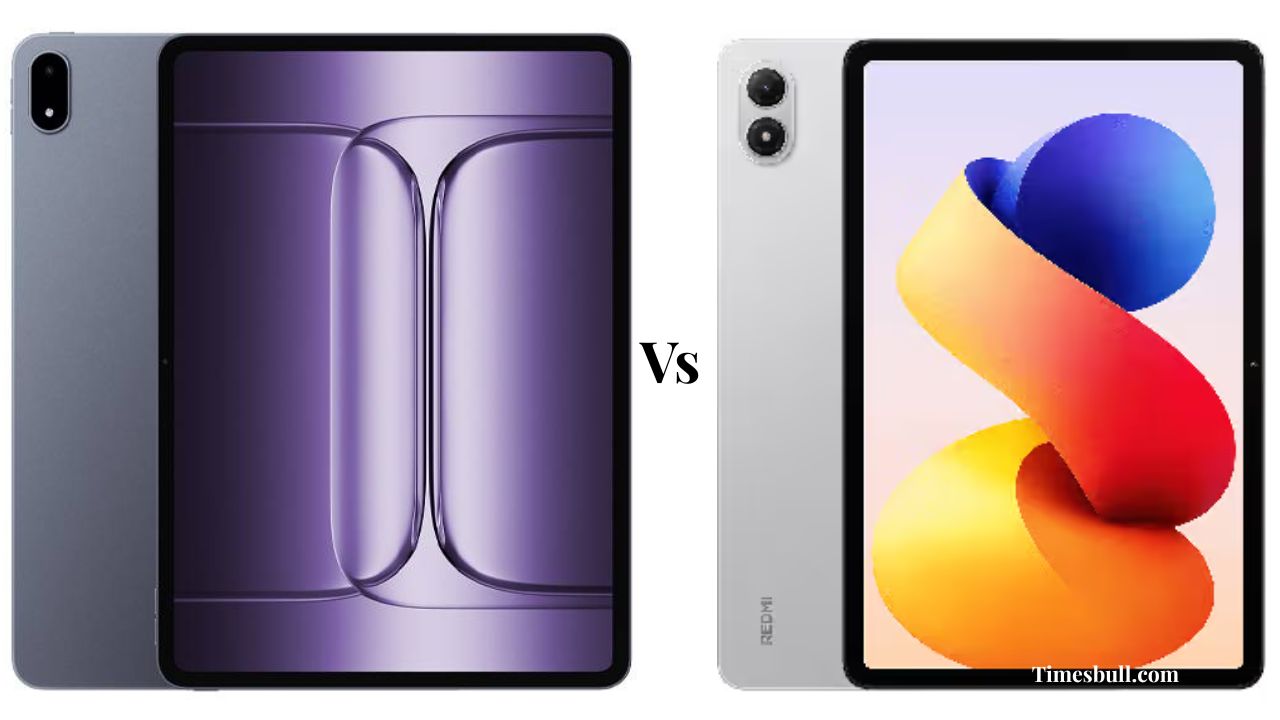
Redmi Pad 2 Pro 5G vs OnePlus Pad 3: The 2025 tablet market offers something for every person, from affordability to top-tier performance. Redmi Pad 2 Pro 5G and OnePlus Pad 3 sit on two sides of the continuum. Redmi aims for affordability and middle-range performance, while OnePlus aims for professionals and creatives with premium hardware. In this comparison, let’s look at design, display, performance, and value to see which of these is suited best to you.
Design and Build: Sleek vs Portable
Both tablets feature aluminum frames with glass finishes, but it’s different priorities. Redmi Pad 2 Pro 5G is thinner and lighter in weight, making it incredibly portable for students and casual users. It also offers a matte glass option for durability. OnePlus Pad 3 focuses on immersion with ultra-thin bezels and a higher-premium build, though portability takes a slight hit.
Display: Brightness and Smoothness
OnePlus Pad 3 raises the bar with a 13.2-inch OLED screen that features a 144Hz refresh rate and 900 nits brightness, perfect for gaming and HDR streaming. The Redmi Pad 2 Pro 5G offers a 12.1-inch LCD screen at 120Hz and 600 nits, which is fit for typical usage but lacks intensity. They are both stylus-accepting, but the OnePlus Pad 3’s more responsive nature puts it in first place.
Performance: Power versus Balance
For those requiring pure brute muscle, the OnePlus Pad 3 delivers with the Snapdragon 8 Elite chip, supported by UFS 4.0 storage and up to 24GB of RAM. It’s designed to handle multitasking, gaming, and creative workloads. The Redmi Pad 2 Pro 5G, powered by the Snapdragon 7s Gen 4, is more suitable for everyday apps and browsing. It also supports microSD expansion, making it affordable for budget buyers.
Software and Ecosystem
Both tablets run on Android 15 but receive further polish from OnePlus through ColorOS optimizations and greater ecosystem integration for users already part of the OnePlus ecosystem. Redmi Pad 2 Pro 5G runs on HyperOS 2, which is simple and does the trick, but omits long-term support and the extent of ecosystem.
Battery and Charging
Both of them possess around 12,000mAh batteries, ensuring longer usage. The charge is different OnePlus Pad 3 boasts 80W fast charging, minimizing recharging time dramatically, whereas Redmi Pad 2 Pro 5G features 33W charging along with the facility of reverse charging. Redmi is power-efficient with its mid-range chip, whereas OnePlus provides uninterrupted speed in recharging.
Cameras and Audio
Where multimedia is concerned, OnePlus Pad 3 wins with its 13MP OIS rear camera and 8-speaker setup, giving better video and audio output. Redmi Pad 2 Pro 5G takes the minimalist route with a standard 8MP rear camera and quad-speaker setup, which are decent for video calls and entertainment purposes, but not top-notch grade.
Pricing and Value
Pricing is where we find the greatest divergence. The Redmi Pad 2 Pro 5G costs around $300, perfect for students and users on a budget who require a high screen size on a limited budget. The OnePlus Pad 3, costing around $600, doubles the cost but offers the best performance and high-end specs aimed at power users.
Verdict: Which One to Buy
The OnePlus Pad 3 is unequivocally the powerhouse tablet for content creators, professionals, and gamers, thanks to its superior screen, flagship processor, and ecosystem advantages. Yet, for budget-conscious buyers, the Redmi Pad 2 Pro 5G is a smart and budget-friendly option, offering portability, solid performance, and excellent battery life for half the price.
Latest News
- ITR Filing Before May 31? You May Get Notice

- Women Free Bus Travel Scheme – How to Get Free Bus Travel From June 1, 2026? How to Apply

- LSG Vs PBKS Video: ऋषभ पंत पर भड़के अर्जुन तेंदुलकर! वीडियो देखकर आप भी रह जाएंगे हैरान

- Apple MacBook Neo Deal Alert: Get It For Under ₹58,000 on Amazon Right Now

- Pakistan Attack: आत्मघाती हमले से दहला पाकिस्तान, 23 लोगों की मौत, 50 से ज्यादा घायल, जानें

- Honor Magic 9 Series Leaks: Flagship Upgrades with Massive 8,000mAh Battery and 200MP Cameras

- Motorola Edge 60 Fusion Review: Mid-Range King or Outdated?

- FD Update– Breaking Your FD Early? Know the consequences

- Bank Holiday–RBI Announces Closure of SBI, HDFC and All Banks Next Week, Save the Dates

- Samsung Galaxy S26 Ultra Amazon Deal – Get ₹23,509+ Discount with Bank Offers and Exchange Benefits