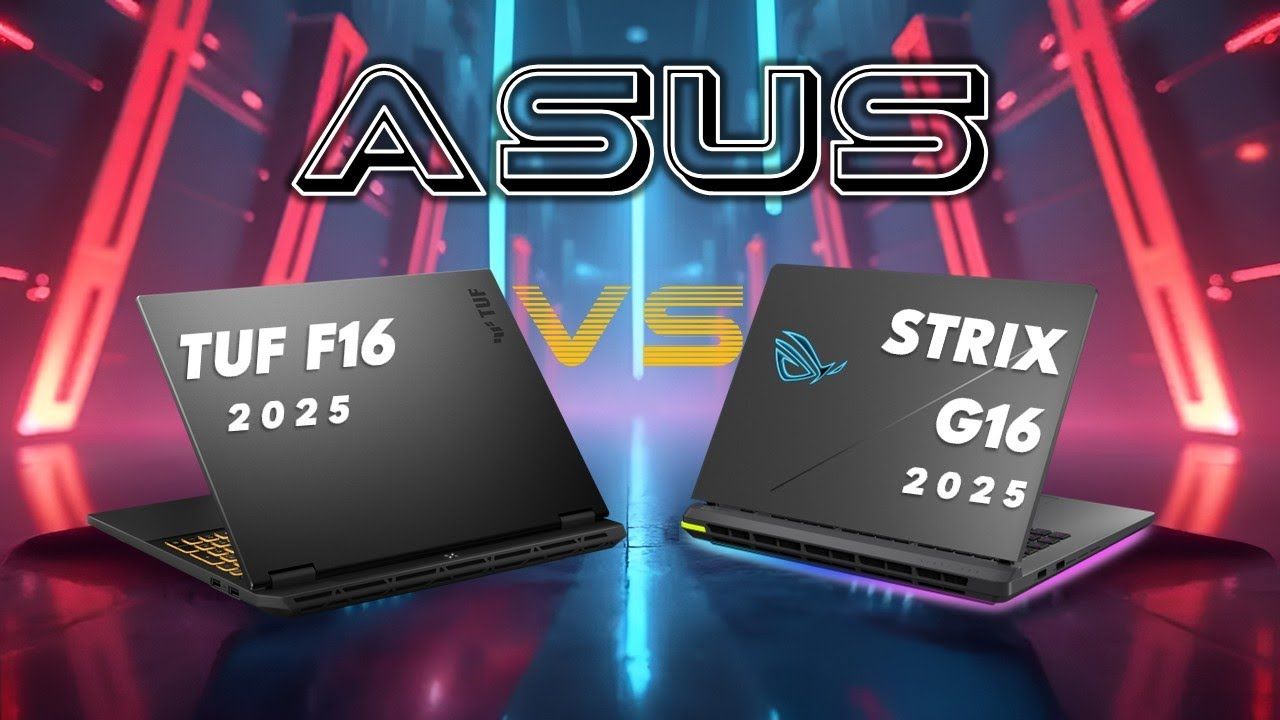
Asus TUF Gaming F16 vs ROG Strix G16: The company has rolled out two gaming the TUF Gaming F16 FX608JMR and the ROG Strix G16 G614PH-priced at ₹1,39,990 each. While the first look seems the same, it is only after a closer look that the apparent difference in performance, design, and graphics becomes starkly clear. The question is, which one gives you more value for money? We will break it down into bits.
ASUS TUF Gaming F16 vs ROG Strix G16: Processor
The TUF Gaming F16 is powered by Intel’s 14th Generation Core i7-14650HX processor with a maximum clocking speed of 5.2GHz, while the ROG Strix G16 boasts AMD’s Hexadeca-Core Ryzen 9-8940HX chip, which offers a slightly higher clocking speed of 5.3GHz. Both have 16 cores and show efficient performance with demanding games and multitasking. However, Ryzen 9 tends to deliver smoother multi-core performance, giving ROG Strix G16 a slight edge in heavy workloads.
Display and Design Comparison
Both laptops come with a 16-inch FHD+ WUXGA IPS LCD panel that boasts a 165Hz refresh rate and 300 nits brightness. Anti-glare means there’s less disturbance during long gaming sessions. Each has a 16:10 aspect ratio and 90% screen-to-body ratio to ensure an immersive viewing experience.
In terms of build, the TUF F16 is slightly thicker at 27.3mm but lighter at 2.2kg, while the ROG Strix G16 is slimmer at 22.6mm but heavier at 2.5kg. If portability matters more, TUF feels more convenient, while Strix looks sleeker and premium.
Performance of Graphics and Gaming
Graphics are essential in any gaming laptop. In the given series, TUF Gaming F16 has NVIDIA GeForce RTX 5060, while ROG Strix G16 has RTX 5050. Both feature 8GB of dedicated VRAM, but RTX 5060 in TUF gives marginally better frame rates and rendering. So, if gaming visuals and performance are your top priority, then TUF Gaming F16 wins here.
Memory and Storage
Both are fitted with 16GB DDR5 RAM and a 1TB NVMe PCIe SSD. However, the TUF’s RAM runs at 5600MHz compared to ROG’s 5200MHz, and it also provides dual memory slots that support up to 64GB for expansion, whereas the ROG Strix only has one slot. This makes the TUF better for future upgrades.
Audio and Keyboard Experience
On the ROG Strix G16, you get Dolby Atmos as well as a 2-speaker setup with Smart Amplifier technology. TUF includes Dolby Atmos with AI noise-canceling, but the sound from the ROG seems richer. Both have backlit RGB keyboards, though the ROG offers a 4-zone RGB layout compared to the single zone on the TUF.
Battery and Connectivity
Each one harbors a 90Wh battery, with support for 280W power. Connectivity options remain mostly the same between the two: Wi-Fi 6, Bluetooth 5.3, HDMI, USB Type-C, and Ethernet ports. TUF has a slight edge since it offers Thunderbolt 4 support, whereas ROG Strix does not.
Conclusion
Both laptops fall in the same price bracket but cater to different users altogether. While the ROG Strix G16 excels in sound and sleek design, the TUF Gaming F16 scores better in raw performance, graphics, and upgradability. To gamers who need performance and flexibility for a longer period, the TUF Gaming F16 feels like the smarter buy.
Latest News
- Cheapest Available 5G Smartphones in India Under 10000

- UPSC Prelims Answer Key 2026 – How to Download UPSC Prelims Answer Key at upsc.gov.in

- 8th Pay Commission: एनपीएस और पुरानी पेंशन में कौन सी बेहतर, जानिए बड़ा अपडेट

- Xiaomi 17T Launching With Leica 5x Zoom and Huge 6,500mAh Battery Under ₹60,000

- NEET UG 2026 – Haryana & Bihar Announce Free Bus Service for Candidates on June 20-21

- PM Kisan 23rd Installment: Farmers to get Rs 2000 in June? Know Here

- Best Premium Smartwatches Under ₹10,000: Upgrade to Luxury Metallic Builds, AMOLED Screens, and In-Built GPS

- Maruti Dzire CNG Continues Dominance – Fuel Efficient Sedan Wins Indian Families

- Vivo Y600 Turbo Set to Debut: Featuring a 165Hz Display, Dimensity 8500, and a Massive 9,020mAh Battery

- HMD Vibe 2 5G Debuts in India with 6000mAh Battery & 50MP Camera: Get It For Just ₹9,499 With Launch Offers