


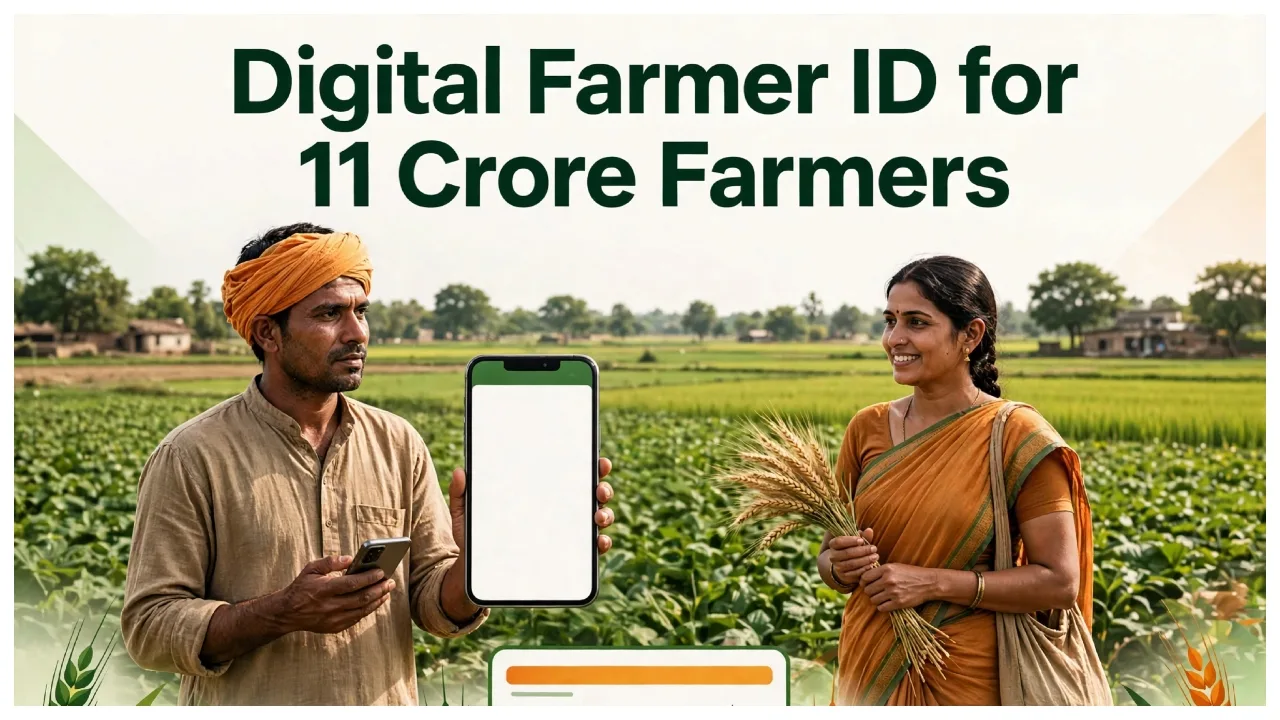
Farmer ID Registration: The government is extending the benefits of various schemes to farmers across the country. To facilitate these efforts, a digital system linked to agriculture—known as ‘Farmer ID’—has been developed. Through this initiative, the government is connecting with approximately 110 million (11 crore) farmers nationwide.
According to reports, the government has already met its target of creating Farmer IDs for 110 million farmers. While the deadline for this exercise was set for March 31, 2027—meaning only about five months remained—the target has, in fact, already been achieved. This identification will link to the farmers’ digital records, ensuring they face no difficulties in accessing various digital services.
What is a Farmer ID?
A Farmer ID serves as a digital identity, developed under the ‘AgriStack’ framework. It contains the farmer’s personal information and agricultural records. The primary objective is to create a comprehensive digital record for each farmer, allowing government offices to easily verify their identity and eligibility. Furthermore, it eliminates the need for repeated document verification when applying for different government schemes.

Benefits of a Farmer ID for Farmers
A Farmer ID enables farmers to easily access a wide range of government schemes. It also assists them in securing bank loans and obtaining a Kisan Credit Card (KCC). Additionally, it facilitates compensation for crop loss under the Pradhan Mantri Fasal Bima Yojana (PMFBY) and ensures easier access to relief during natural disasters. It also simplifies the process of selling crops at the Minimum Support Price (MSP).
Participation of Women
It is worth noting that women have also actively participated in this government initiative; they account for approximately 26% of the total farmers registered. Furthermore, 81% of the farmers have already completed their registration.
What should a farmer do if they do not have a farmer ID?
Farmers who have not yet obtained a ‘Farmer ID’ can seek information through their state’s farmer registration system or the Department of Agriculture. This process requires an Aadhaar card, a mobile number, and land-related documents. Farmers should review the guidelines provided on their state’s official farmer registry portal. If there are any discrepancies or incorrect information in the land records, the Revenue Department should first rectify them.