


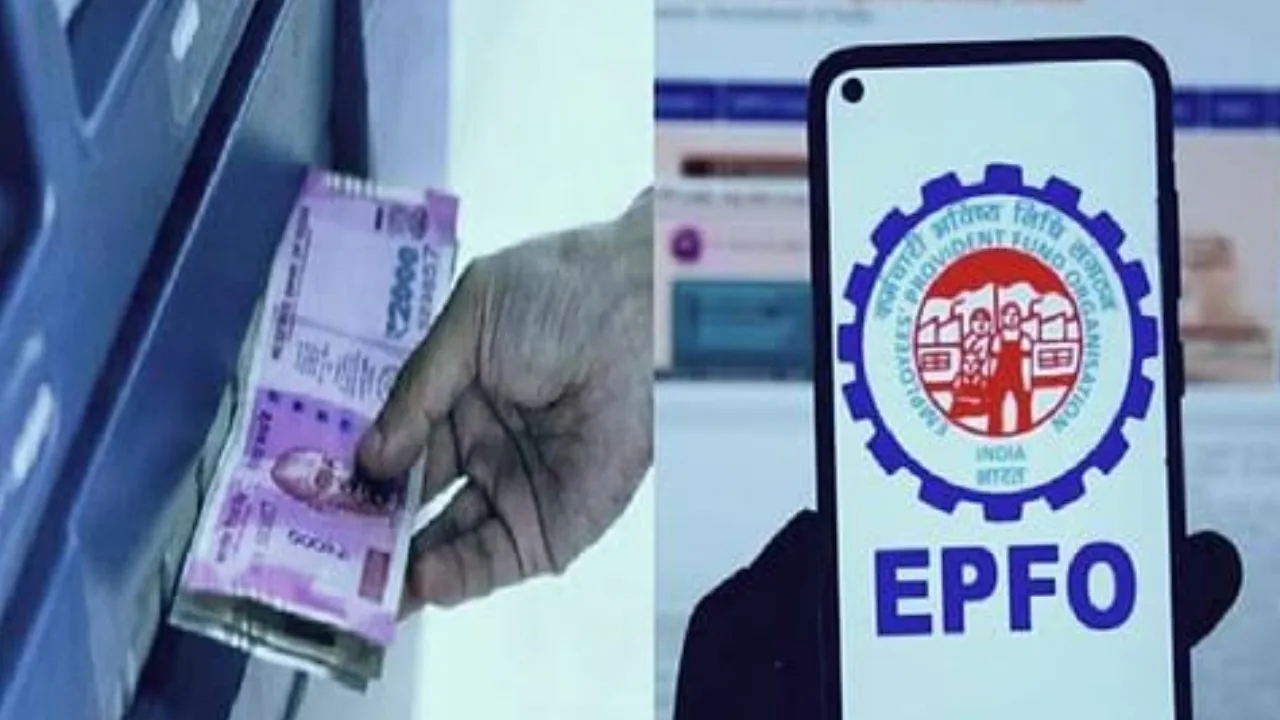
EPFO: In the period leading up to 2027, significant changes could impact millions of employees who contribute to their Provident Fund (PF). The Employees’ Provident Fund Organisation (EPFO) is reportedly set to overhaul several aspects of its services. Under these upcoming reforms, account holders will have the ability to access their PF balances through UPI and ATMs. Instead of collecting the full sum in one go after retirement, members will be able to opt for periodic withdrawals—monthly, quarterly, or half-yearly.
During its 240th meeting on 19 November, the Central Board of Trustees (CBT) for the EPFO sanctioned a number of important reforms to withdrawal rules. Notable among these are lowering the minimum balance condition from 25% to 10% and shortening the waiting period for final withdrawal from twelve months to just two. Alongside these changes, the EPFO is in the process of a comprehensive technical upgrade known as EPFO 3.0. The following sections outline these four major reforms for PF account holders and discuss their potential advantages.
1. EPFO 3.0: A complete overhaul
Work is ongoing on EPFO 3.0, which aims to modernise EPFO’s technology infrastructure. This will make managing PF accounts more straightforward and accelerate claims processing. The upgraded platform is intended to be capable of managing data for around 2 billion employees over the coming half-century.
As per reports, EPFO 3.0 is targeted for rollout in February 2027. The upgrade will see EPFO transition to paperless services, and a centralised system modelled after core banking will be introduced. Employees will then be able to access PF services even after relocating to a different city, rather than depending on previous regional offices.
2. UPI and ATM withdrawals for PF accounts
Soon, PF contributors might no longer have to endure the cumbersome online withdrawal methods. EPFO is laying the groundwork to enable PF withdrawals through UPI, with the BHIM app slated for use. According to the Financial Express, the UPI-based withdrawal option could become available by December 2026. Users will be able to check their total balance, see how much they can withdraw, and monitor the minimum security balance. However, while the UPI launch is tentatively scheduled, there is yet no confirmed date or official word on ATM withdrawal availability, so this feature remains uncertain for now.
3. Staggered PF withdrawals post-retirement
With the EPFO’s proposed update, retirees will not be required to withdraw the entire PF lump sum in one transaction. Instead, they will have the flexibility to receive payments on a monthly, quarterly, or six-monthly basis. Interest will continue to accrue on any balance left in the account. Members can also choose to take out part of their funds as a lump sum, with the remainder withdrawn in instalments. Additionally, a proposal exists to permit withdrawals equivalent to the accrued interest.
Initially, this phased withdrawal facility is expected to help around 6.32 lakh members aged over 55 with PF balances exceeding Rs 5 lakh. In the event of the member’s death, nominees or dependents will have the option to either continue receiving instalments or withdraw the remaining amount. However, suitable amendments to the scheme are still required before this can be implemented.
4. Allowing third-party PF contributions
Plans are underway at the EPFO to broaden participation in the PF system beyond regular employees. Individuals will soon be permitted to make voluntary deposits using their UAN. Moreover, third parties will be able to make small contributions to PF accounts, such as a customer tipping a delivery partner, or donations from other individuals or organisations.