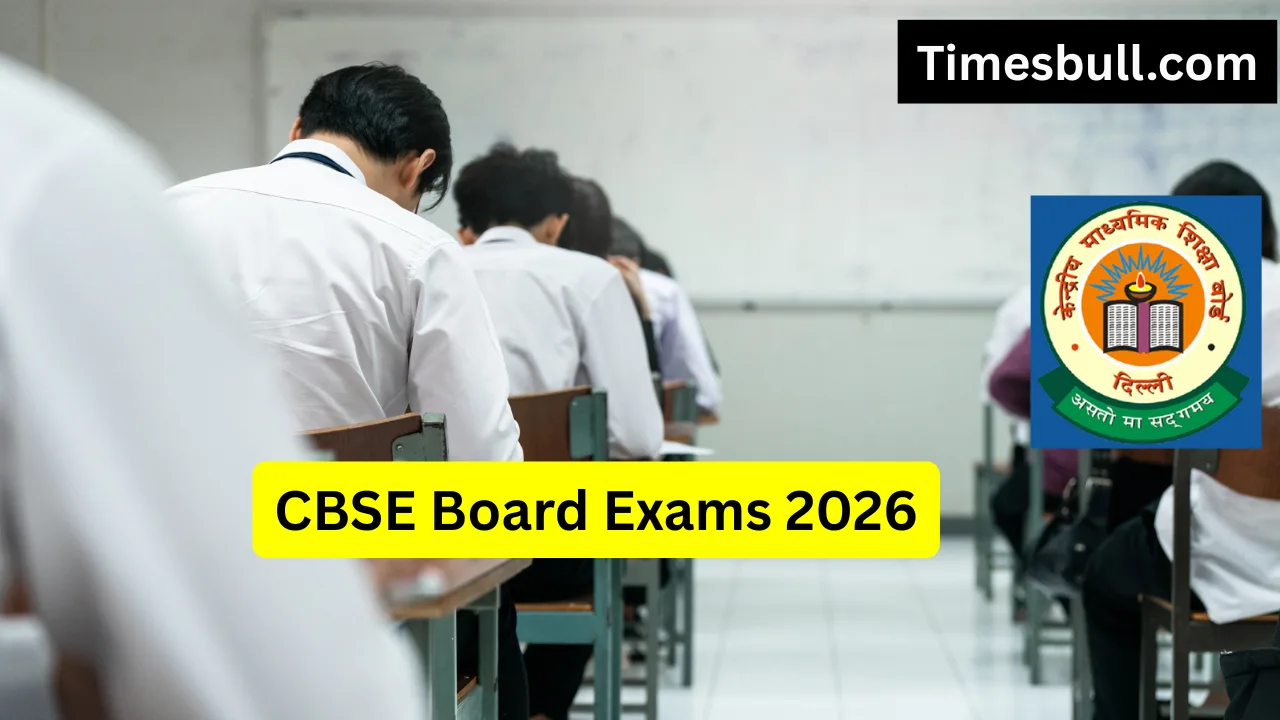
CBSE Class 12 Board Exams 2026 : The Central Board of Secondary Education will evaluate more than one crore Class 12 answer sheets through an on-screen marking system which will begin with the 2026 board examinations. The board will implement this system to provide a faster and more precise and better organized evaluation process.
The Class 12 board exams draw a vast number of candidates who need their answer sheets checked through manual processes which require extensive time and resources. The evaluation process for CBSE will be handled through digital operations which will follow an organized and effective evaluation framework.
What is on-screen marking
The process of on-screen marking involves converting all answer sheets into digital formats through scanning after the exam period ends. The scanned documents will be stored in a protected online database. Examiners will check answers on a computer screen without using physical answer sheets.
The digital system will record marks directly into the system which decreases the probability of errors in summing the scores.
Seven stage evaluation process
The evaluation process at CBSE will be conducted through seven stages which will enable smooth operation of the evaluation procedure:
• The collection of answer sheets from every exam center
• The scanning process which converts all answer books into digital format
• The process of uploading scanned copies to a main portal
• The distribution of digital copies to certified examiners
• The process of teachers evaluating content through on-screen methods
• The procedure of entering marks into the system through direct entry
• The final stage involves creating results through result compilation and preparation
The structured process will ensure that the checking of one crore answer sheets proceeds through an organized system.
Why CBSE introduced this system
The introduction of on-screen marking system established three main goals which drove its development:
• The evaluation process needs to become faster
• The evaluation process needs to decrease errors which occur during marking and tallying
• The evaluation process requires better tracking abilities and clear visibility of operations
• The evaluation process achieves better results with digital systems which eliminate the need for physical answer book transportation
• The system provides better performance through digital technology applications
Manual checking requires the delivery of answer sheets across multiple locations which leads to extended processing times. Digital evaluation removes this issue.
What it means for students
The exam pattern and question papers will remain the same for students. The school will implement a new method which changes only the evaluation process. The new system may help in quicker declaration of results because digital evaluation needs less processing time.
The new system will provide students with results which will be more exact and organized.
Preparation for implementation
Schools have received instructions from CBSE to update teacher records while training evaluators for the new system. The digital platform will be accessible to all teachers who participate in evaluation after they complete their required training.
Schools must provide all essential technical resources which include both computers and internet connections.
Why this step is important
The CBSE has decided to modernize board exams through its current examination system. The board uses digital evaluation for Class 12 exams to increase efficiency while preserving transparent marking procedures.
The use of on-screen marking to assess over one crore answer sheets represents a significant advancement toward establishing a technology-based examination framework throughout India.
Related Posts

Bhargwi
My name is Bhargawi Shrivastava, and I am a BCA graduate with a strong interest in content writing. Since February 2025, I have been working with Times Bull as a content writer. I started my journey by writing for different sections like gadget, education, and lifestyle. Currently, I am working...
Related Stories
 India
India Education
 latest news
 India
India Business
 Entertainment
 Education
 Business
 Business
 latest news