


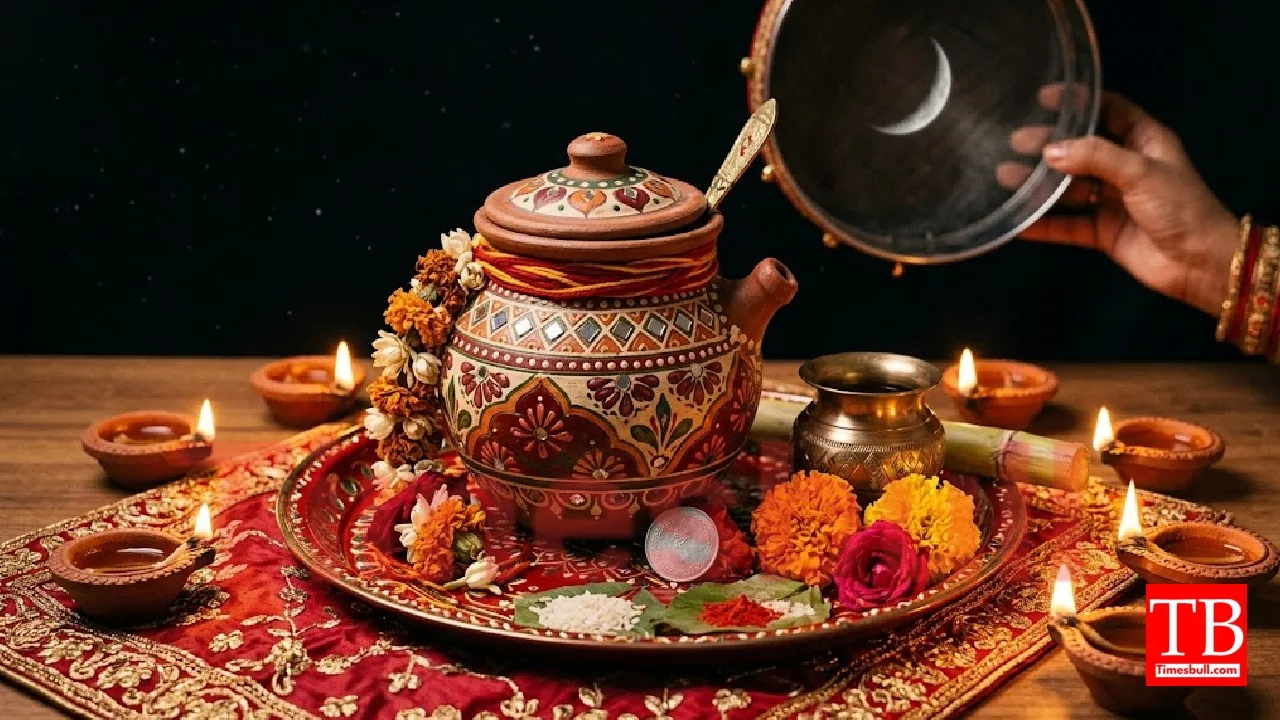
Karva Chauth Fasting – Karva Chauth is the most “tough but sweet” day for Indian women. On October 29, Thursday, sisters and mothers observe a fast without drinking water for the whole day, praying for the long life of their husbands and a happy married life. When the moon slowly rises in the evening, an earthen karva (small pot) becomes the central object of worship.
There are also shiny pots made of steel, brass and copper available in the market, but in reality the “real” ones are often made of clay, which are simple in appearance but have a sweet earthy aroma. After all, why do old people always recommend clay curry?
Karva: Not just a vessel for holding water
In the worship of Karva Chauth, Karva symbolises “Karva Mata”. Women fill water in the karva and offer Arghya by pointing it towards the moon. This “vessel filled with water” means continuity and completeness of life. The fast is not broken until the arghya is offered after seeing the moon—it is this very act that gives formal completion to the whole day’s wait.
Why is it auspicious to make clay?
From a religious point of view, both soil and water are the basic elements of nature. The earthen pot symbolises connection to the earth, and the water within symbolises purity and life force. Gold and silver utensils may be expensive, but they do not have that simple energy of “growing from the soil”. Earthen Karwa is cheap and easily available everywhere, but it is closest to the most ancient method of worship.
Tradition of changing Karva: transfer of good fortune
In many places, women prepare two karves. After the puja, they exchange karwa with each other, then offer the karwa to the mother-in-law or senior women in the family and seek blessings. This “exchange” is not just a formality, but a symbol of the transfer of good fortune and blessings—you give me good fortune, I give you happiness.
A little advice: If you are celebrating Karwa Chauth this year, choose clay Karwa. It is not durable and is a hassle to wash, but when you place it in the puja thali, you will find the peace that is “down to the roots”—the truest taste of Karwa Chauth.