


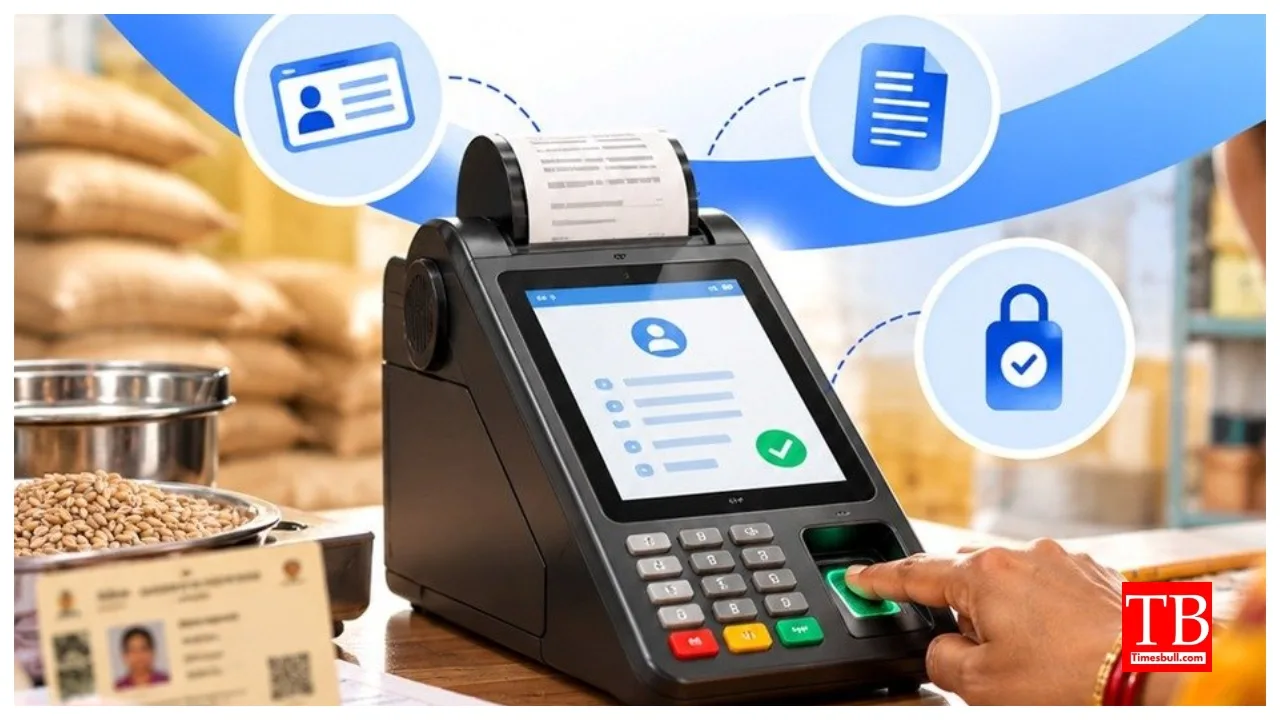
Digital Ration Distribution: If you are a ration card holder, you are likely receiving free rations provided by the government. To make the national ration distribution system simpler and more transparent, the government is using digital technology. For this purpose, e-PoS (Electronic Point of Sale) machines are being used at government ration shops. These machines facilitate the digital recording of ration distribution, helping to minimise irregularities and ensuring that rations reach eligible beneficiaries.
The use of e-PoS machines for ration distribution allows for the verification of the recipients’ identity and the recording of details regarding the distribution. Let us explore in detail how these machines function and what benefits they offer to ration card holders.
What is an e-PoS machine?
An e-PoS is an electronic device used at ration shops to verify beneficiaries and maintain records of ration distribution. When a ration card holder arrives at a shop to collect their rations, their identity is verified according to a prescribed process. Subsequently, the details of the ration provided are recorded on the machine. This enables the department to track exactly how much ration has been issued to each beneficiary.

What are the benefits of an e-PoS machine?
The e-PoS machine enables Aadhaar-based identity verification for eligible individuals. This helps reduce the likelihood that unauthorised persons will claim rations. In cases where biometric verification encounters issues, the system may operate according to state-specific regulations. Furthermore, the e-PoS machine ensures that all records of ration distribution are maintained in a digital format. This helps in keeping track of which beneficiary receives what quantity of rations and when. Maintaining digital records makes it easier to monitor the distribution of rations and allows for the investigation of any irregularities.
The e-PoS (Electronic Point of Sale) machine also supports the ‘One Nation, One Ration Card’ scheme. Under this system, eligible ration cardholders can obtain their rations from anywhere in the country. This is particularly beneficial for those who have moved away from their home villages or states for employment or work.
तकनीक ने राशन वितरण की प्रक्रिया को भी डिजिटल बनाया है। e-PoS मशीन के जरिए राशन वितरण का रिकॉर्ड डिजिटल रूप से दर्ज किया जाता है, जिससे वितरण से जुड़ी जानकारी को व्यवस्थित तरीके से रिकॉर्ड करने में मदद मिलती है।
#ePoS #RationDistribution #DFPD https://t.co/TdVCp2urkC
“>October 17, 2026
Furthermore, digital records make it simple to access information regarding ration distribution, which assists in ensuring that rations reach the eligible beneficiaries and facilitates the monitoring of the distribution system. Additionally, ration cardholders can follow the prescribed process to collect their rations and lodge complaints if they receive less than their entitled amount.
Understanding ‘Sarthak PDS’
To further improve the ration distribution system, the government employs both digital and administrative measures. In this context, the ‘Sarthak PDS’ (Public Distribution System) is being enhanced to make it more efficient and technologically robust. It is important to refer to the official guidelines issued by the relevant department to understand the specific features and operational details of this initiative.