


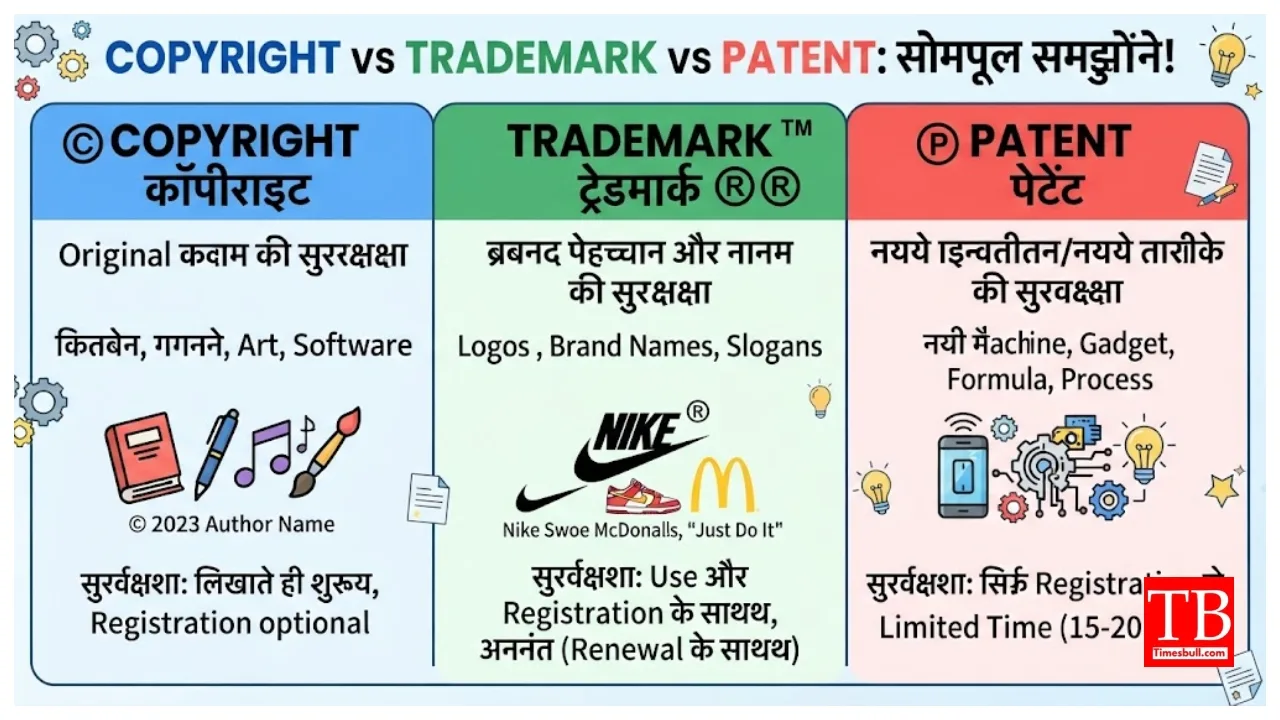
Copyright vs. Trademark vs. Patent: Today, people frequently hear the terms ‘copyright’, ‘trademark’, and ‘patent’. Knowledge of these rights becomes crucial when an individual creates a business brand, a book, a design, software, or a new invention. All three are forms of intellectual property rights. While the objective of all three is to provide legal protection for creations or developments, they apply to different things: copyright protects creative work, a trademark protects brand identity, and a patent protects new inventions. Let us explore these three in detail.
What is copyright?
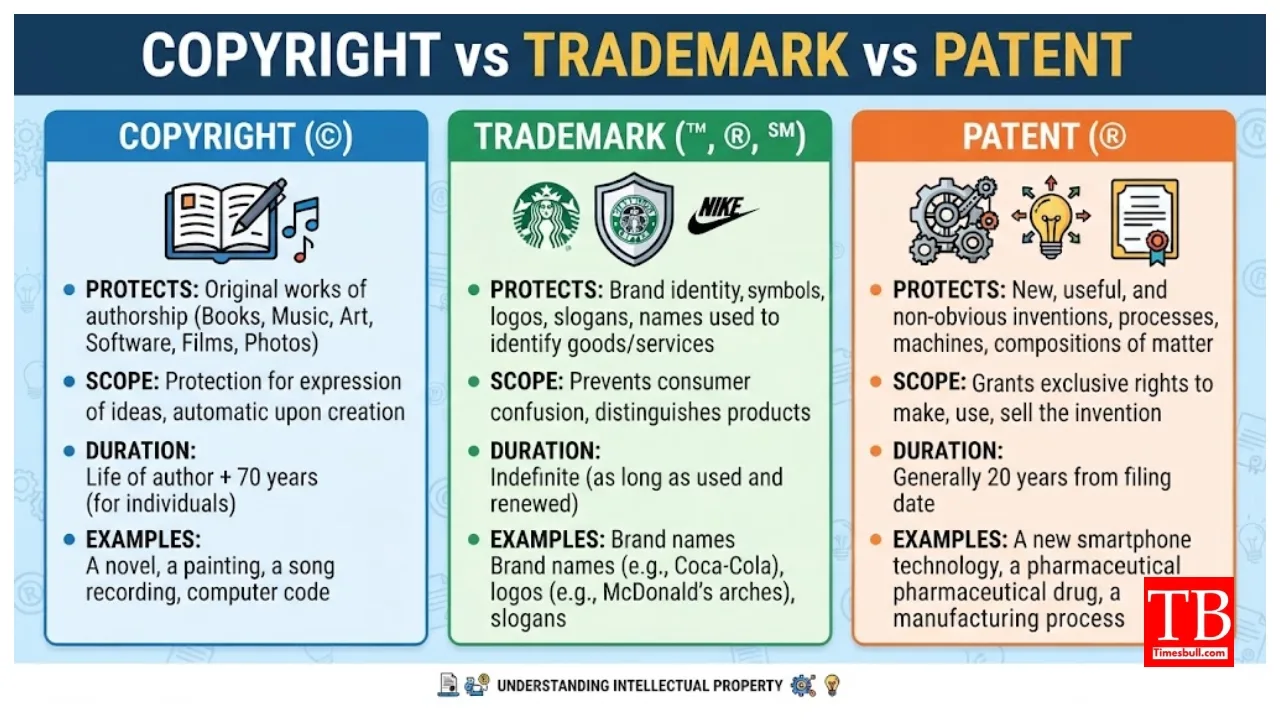
Copyright is a legal right granted for an individual’s original creation. This can include books, articles, songs, photographs, films, music, paintings, software, and other creative works. This right implies that the creator has the authority to decide how their work is published, copied, or distributed. For instance, if an author writes a book, no one else can copy and sell it without their permission.
When does copyright infringement occur?
Copyright infringement occurs when someone performs an act—over which the owner holds exclusive legal rights—without the owner’s permission. For example, copying someone else’s photograph, article, video, or music and using it as one’s own without authorisation can lead to a dispute.
What is a patent?
A patent is a form of legal protection granted for a new and useful invention. If an individual creates an invention that meets the statutory requirements, they can obtain exclusive rights to that invention for a specific period. Simply put, if someone develops a new machine or technical process, and that invention meets the legal criteria for a patent, they can secure patent protection for it. Consequently, others cannot use the patented invention without permission.
What is required for a patent?
It is important to note that simply giving something a new name or making minor modifications does not qualify one for a patent. An invention must meet the criteria stipulated by patent law. Generally, conditions such as novelty, an inventive step, and industrial applicability are essential. Therefore, before applying for a patent, it is crucial to verify that the invention is not already publicly available or previously patented.
What constitutes patent infringement?
A case of patent infringement arises when an individual uses an invention covered by a valid patent in a manner that violates the patent owner’s exclusive rights, without having the necessary permission.
What is a trademark?
A trademark refers to the identity of a business or brand. Simply put, when a customer recognises a specific company or its products upon seeing a particular name or logo, that brand becomes associated with the trademark.
Why is a trademark important?
If a business has secured its brand identity as a trademark, it gains legal rights with that trademark. The trademark provides a legal basis for protection against others using a deceptively similar symbol or mark.
What is trademark infringement?
Trademark infringement occurs when someone uses a registered trademark without authorisation in a way that causes confusion among the public about the brand or the source of the goods. For instance, if a person sells a product using a name or logo that closely resembles that of a renowned brand—thereby confusing customers—a trademark dispute arises.