


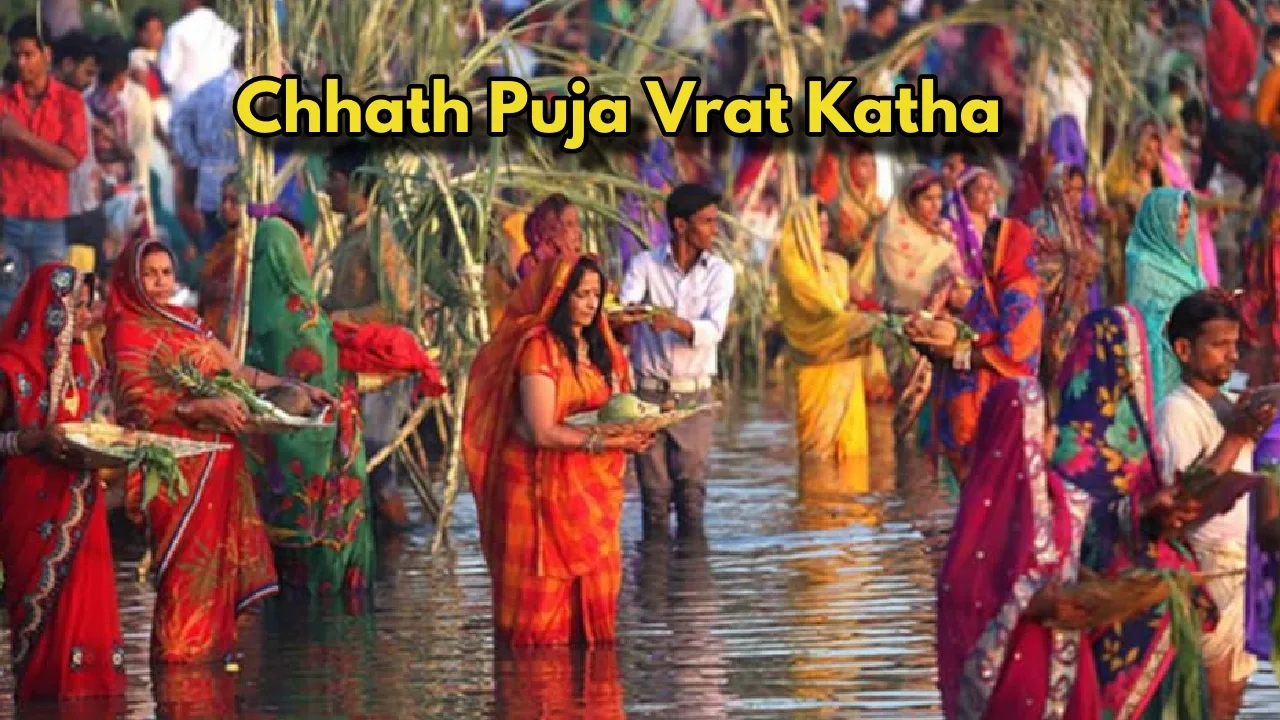
Chhathi Maiya Vrat Katha 2026 – If you are from Bihar, Jharkhand or Eastern UP, then you know what Chhath is. The rest of the people only know that this is a festival in which people stand on the riverbank and offer water to the Sun. But the truth is that Chhath Mahaparva is one of the most difficult and purest festivals of the Hindu religion. This is a four-day fast, in which the devotees do not eat anything throughout the day, remain dehydrated, and the most important thing – here the setting sun is saluted as much as the rising one.
So, today let us know everything about this great festival which you might not have read anywhere. We will also check which things are true and which are just beliefs.
First of all, when is Chhath Puja?
This year, i.e. in 2026, Chhath Mahaparva starts on 13th November, Friday and will end with offering Arghya to the rising sun on 16th November, Monday.
The schedule for four days is as follows:
13 November (Nahay-Khay): On this day, fasting people take a bath and eat satvik food. Like pumpkin vegetable, gram dal and rice. This is the beginning of the fast.
14 November (Kharna): Whole day Nirjala fast. In the evening, jaggery kheer and roti are prepared, which are accepted as prasad. After this, a strict 36-hour waterless fast begins.
15 November (Sandhya Arghya): Arghya to the setting sun in the evening. On the ghat, soup is decorated with thekua, sugarcane and fruits and the Sun God is saluted by standing in the water.
16 November (Usha Arghya): The fast is broken by offering Arghya to the rising sun in the morning.
Now, the story that hardly anyone has told you
Usually people tell the story of King Priyavrat, but the real question is: who is Chhathi Maiya? It is mentioned in literature. It is believed that when Lord Brahma created the universe, Chhathi Maiya, i.e. Devasena, appeared from the sixth part of nature. She is considered the goddess who protects children. This is the reason why during Chhath, long life and good health of the children is wished for. In many places, she is also worshipped as Usha, the wife of the Sun God.
Did Ram and Sita also celebrate Chhath?
You must have often heard that Chhath was celebrated even during the Ramayana period. There is a simple answer to this – there is no concrete historical evidence for this, but there is definitely a belief. It is said that after killing Ravana, sage Mugdal had advised Ram to worship the Sun to get rid of the guilt of Brahmahatya. In the Mahabharata, there is mention of Draupadi and Karna worshiping the Sun. All these are stories of religious faith, which further increase the glory of this festival.
Another interesting thing: Not only women, men also keep fast.
Chhath is often considered a “women’s festival”, but it is not so at all. Men also observe this fast with full rituals. In Bihar and Jharkhand, men can be easily seen offering Arghya at Vrati Ghat. This festival is not about any one gender, but about the happiness of the entire family.
Finally, one important thing
Chhath is not just a custom. This is a confluence of science and faith. Vitamin D is obtained from the rising sunlight in the morning, so standing on the river bank makes one feel connected to nature. But the most important thing – this festival teaches that the rising sun is as important in life as the setting sun. Because even the setting sun promises to rise again tomorrow. So if you too are going to the ghat this Chhath, then make some space. Help an elderly fasting person catch the soup. This is the true Chhath.