


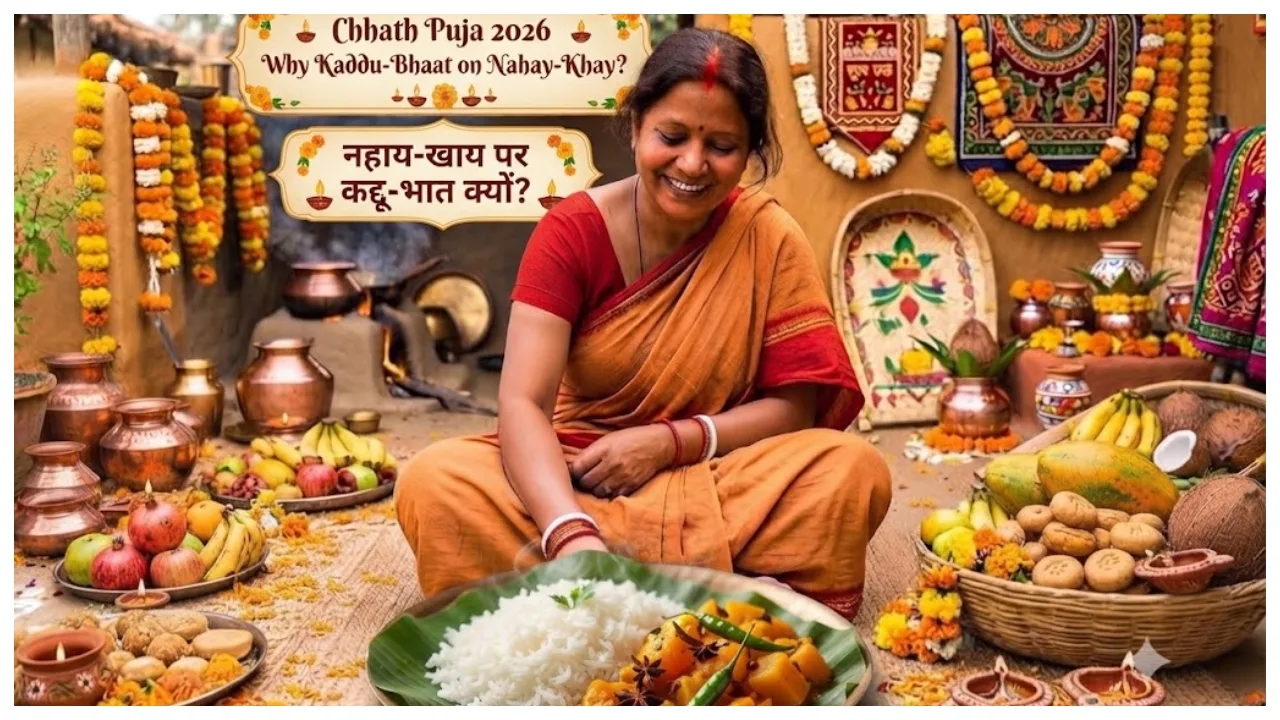
Chhath Puja 2026: Chhath Puja begins on the fourth day (Chaturthi Tithi) of the waxing phase (Shukla Paksha) of the lunar month of Kartika. This four-day-long grand festival is dedicated to the worship of the Sun God (Surya Dev) and Chhathi Maiya. It is celebrated with immense fervour in several states across India, including Bihar, Jharkhand, and eastern Uttar Pradesh. During this festival, both men and women observe a rigorous fast.
Chhath Puja commences tomorrow, November 13th. In this festival, arghya (offerings) is presented to the Sun God in both his setting and rising forms. The festival begins with ‘Nahay-Khay’ and concludes with ‘Usha Arghya’. On the day of ‘Nahay-Khay’, those observing the fast wake up early and bathe—traditionally in a river or a pond. Following this, the entire house, courtyard, and kitchen are thoroughly cleaned. Clean utensils and a dedicated stove are used for preparing the food.
Complete Calendar for Chhath Puja 2026
Nahay-Khay, November 13, Friday
The first day of Chhath Puja is known as ‘Nahay-Khay’. On this day, kaddu-bhaat (a dish made of pumpkin and rice) and chana dal (split Bengal gram) hold special significance.
Kharna, November 14, Saturday
The second day is ‘Kharna’. Those observing the fast remain without food or water throughout the day; in the evening, they prepare gur ki kheer (jaggery-based rice pudding) and roti (flatbread) as prasad (offering) for the ritual.
Sandhya Arghya, November 15, Sunday
On the third day, Arghya is offered to the setting sun.
Usha Arghya and Paran, November 16, Monday
On the fourth day, arghya is offered to the rising Sun in the morning. Following the prayers and rituals, those observing the fast conclude it by performing ‘Paran’ (breaking the fast).
What is prepared on ‘Nahay-Khay’?
On this day, kaddu-bhaat (pumpkin and rice) is prepared, and its preparation follows specific, prescribed rules. In many households, this sacred meal is still prepared on a traditional earthen stove (chulha) fuelled by dried mango wood. Furthermore, only brand-new or specially cleaned brass and bronze vessels are used for cooking.
Why do those observing the fast consume kaddu-bhat ?
A Symbol of Purity: Kaddu-bhat is prepared without the use of garlic, onions, or spices. It is cooked using pure ghee and rock salt (sendha namak).
Offering to the Sun God: The meal is first offered to the Sun God, after which the devotees consume it as prasad (a sanctified offering).
It is believed that the arrival of Chhathi Maiya coincides with this meal, marking the formal commencement of the *vrat* (fast).
Preparation for Energy: The combination of rice (carbohydrates) and split Bengal gram/chickpea lentils (*chana dal*—protein) provides sustained energy, helping the body endure the rigorous nirjala (waterless) fast. Consuming *chana dal* creates a feeling of fullness; furthermore, protein is the most satiating macronutrient, as it helps suppress hunger-inducing hormones, thereby preventing food cravings during the fast.
Pumpkin Contains Water: During the Nirjala fast of Chhath, the body is prone to dehydration; the water content in pumpkin helps keep the body hydrated.
Detoxifying the Body: The combination of rock salt and pumpkin (or bottle gourd) proves highly effective in flushing out toxins from the body.
The tradition of consuming kaddu-bhat on the day of Nahay-Khay is not merely a ritual; it is a practice devised by our ancestors, reflecting a precise harmony between faith and Ayurveda.