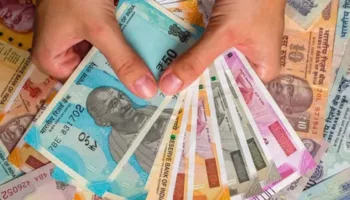
Money Saving Tips: Every working person eagerly awaits the first of the month. The moment the salary hits the bank account, there’s a sense of relief, knowing that household expenses will be easily covered. But this relief doesn’t last long. As the month progresses, pockets start to empty, and the balance reaches zero. Then begins the challenge of managing until the next salary arrives.
Often, people assume that their income is low, which is why they can’t save money. However, the truth is that in most cases, the problem isn’t low income, but unplanned spending. If you change your spending habits, the same salary can make you financially strong.
The 50/30/20 Rule Can Be a Strong Foundation
If spending starts as soon as the salary arrives, this habit gradually harms your financial health. In such a situation, the 50/30/20 rule provides a strong foundation. According to this rule, half of your income should be allocated to essential expenses, including house rent, electricity and water bills, groceries, and loan EMIs. A portion of the income can then be spent on lifestyle and hobbies. Most importantly, a fixed portion of the income should be set aside for savings and investments. It’s best to put money into savings or investments as soon as the salary arrives, so that savings are secured before any spending begins.
Keeping Track of Expenses Changes Habits
The next important step towards saving money is keeping a record of every expense. Small daily expenses often go unnoticed, but these expenses together add up to a large amount at the end of the month. If you note down your daily expenses in a diary or on your mobile phone, at the end of the month, you will clearly see where and how the money was spent. This makes it easy to understand which expenses were necessary and which ones can be controlled. This habit automatically curbs unnecessary spending.
Patience is essential when shopping
Online shopping has made spending even easier. Often, things are bought impulsively without much thought, even if they aren’t truly needed. In such cases, it’s beneficial to make a rule for yourself: don’t buy anything immediately. If you like something, postpone the purchase for a few days. Often, after some time, that item doesn’t seem as necessary. This small change can help control impulse buying and lead to significant savings.
Even small expenses prevent big savings
Daily tea, snacks, or short cab rides may seem insignificant, but when added up over a month, these expenses can reach thousands of rupees. If you pay a little attention to these small expenses and save even a few rupees every day, this amount can become a substantial saving over a year. This money can then be invested to build a fund for the future.
The habit of paying yourself first
The smartest way to do Financial Planning is considered to be ‘Pay Yourself First’. This means setting aside savings for yourself as soon as you receive your salary. By setting up an auto-debit in your bank account, a fixed amount goes directly into your savings or investment account, ensuring that savings happen automatically. This requires no effort and eliminates the temptation to postpone saving. Gradually, this habit becomes a strong financial safety net for you.
If these methods are incorporated into your daily life, the problem of empty pockets at the end of the month can gradually disappear. With proper planning and a little discipline, the path to financial freedom can be made easier.
Note: This information is for general awareness only. Always consult a financial advisor before making any investment decisions.