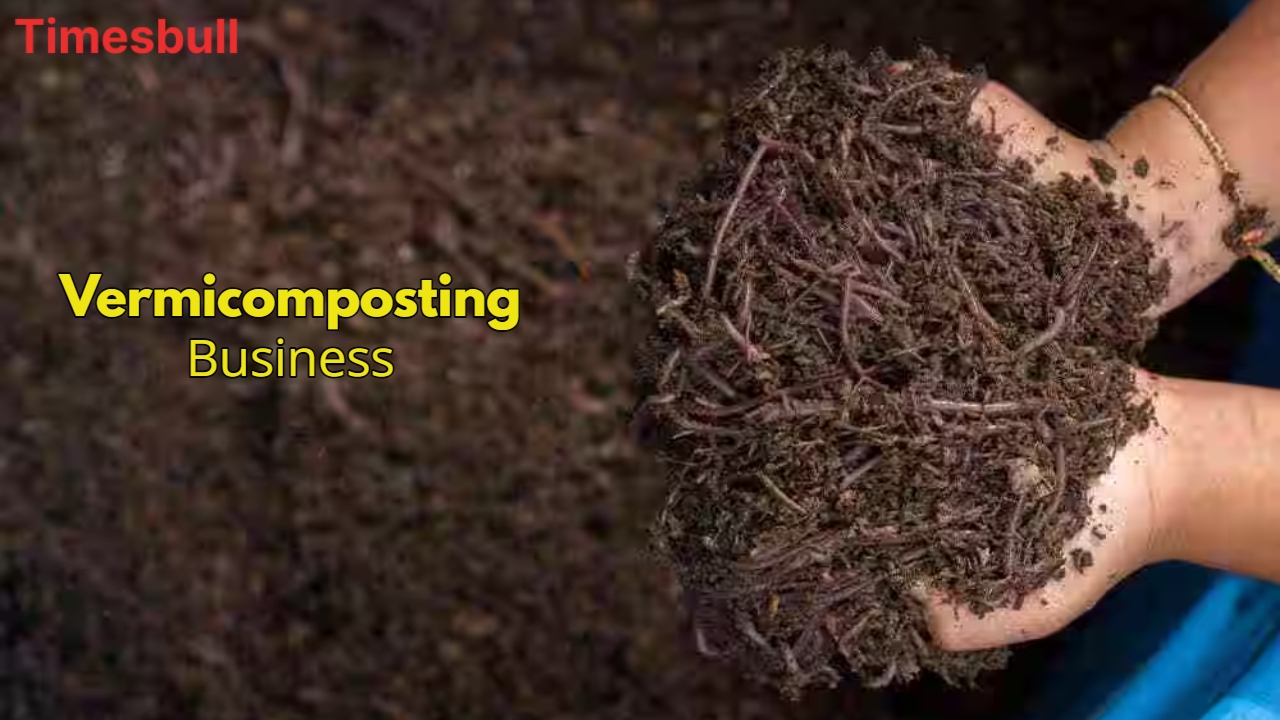
In today’s era, where toxic chemicals have ruined agriculture, the demand for organic farming is growing at a rapid pace. This demand has made the vermicompost business a profitable startup. For educated youth, this is a golden opportunity to become a successful entrepreneur with minimal investment and work in harmony with nature. In this article, we will explore in detail how you can change your fortune by setting up a vermicompost unit.
Start a startup without heavy machinery

People are often intimidated by the cost of expensive factories and heavy machinery before starting a new business. However, the biggest advantage of a vermicompost unit is that it requires neither large machinery nor high-tech infrastructure. It is a completely natural and simple process.
To start this project, all you need is a small open space. When choosing a location, be careful not to allow rainwater to accumulate there. All you need is cow dung, earthworms, plastic sheets, and straw or sacks to cover the dung. Once the setup is ready, the earthworms do their work on their own, saving you the need to work day and night.
The Vermicomposting Process
The process of making vermicompost is simple, but it’s crucial to pay attention to certain technical details. First, the ground is leveled, and a plastic sheet approximately 2 meters wide is laid on it. Next, a layer of cow dung is spread over it, and earthworms are released onto it. Another layer of cow dung is then added. It’s important to ensure the total height of this pile of cow dung does not exceed one and a half feet, otherwise the heat can kill the earthworms.
Finally, this ‘bed’ is tightly covered with straw or jute sacks. Earthworms love moisture, so sprinkling water periodically is a must. Earthworms convert ordinary cow dung into high-quality, steel-based manure within about 60 days. Protecting the pile from snakes and rats is also crucial during this process.
One-time investment, recurring profits
The economics of this business are very interesting and profitable. You can start it with a small investment of just ₹50,000. The biggest expense is purchasing earthworms, which are available in the market for around ₹1,000 per kilogram. But here’s a secret: earthworms reproduce very rapidly, doubling their numbers every three months.
This means that once you purchase earthworms, you won’t need to buy them again to expand your business. Furthermore, raw materials like cow dung and straw are very cheap, or sometimes free, in villages, keeping your running costs minimal. As the number of earthworms increases, you can expand your business exponentially by increasing the number of beds.

Marketing and Earnings Path
These days, health-conscious people are willing to pay higher prices for fruits and vegetables, provided they are grown organically. Therefore, you won’t have to struggle much to sell your compost. You can directly contact farmers and plant nurseries in your area. In cities, people are creating ‘kitchen gardens’ on their rooftops, where there is a huge demand for small steel packaging of 5 to 10 kg.
You can also sell it on online e-commerce platforms by branding it yourself. Experts believe that if you start this business professionally with 20 beds, your annual turnover can reach ₹8 to ₹10 lakh within just two years. This steel model of farming is set to be a game-changer for the youth of rural India by 2026.
Latest News
- ITR Filing Before May 31? You May Get Notice

- Women Free Bus Travel Scheme – How to Get Free Bus Travel From June 1, 2026? How to Apply

- LSG Vs PBKS Video: ऋषभ पंत पर भड़के अर्जुन तेंदुलकर! वीडियो देखकर आप भी रह जाएंगे हैरान

- Apple MacBook Neo Deal Alert: Get It For Under ₹58,000 on Amazon Right Now

- Pakistan Attack: आत्मघाती हमले से दहला पाकिस्तान, 23 लोगों की मौत, 50 से ज्यादा घायल, जानें

- Honor Magic 9 Series Leaks: Flagship Upgrades with Massive 8,000mAh Battery and 200MP Cameras

- Motorola Edge 60 Fusion Review: Mid-Range King or Outdated?

- FD Update– Breaking Your FD Early? Know the consequences

- Bank Holiday–RBI Announces Closure of SBI, HDFC and All Banks Next Week, Save the Dates

- Samsung Galaxy S26 Ultra Amazon Deal – Get ₹23,509+ Discount with Bank Offers and Exchange Benefits