

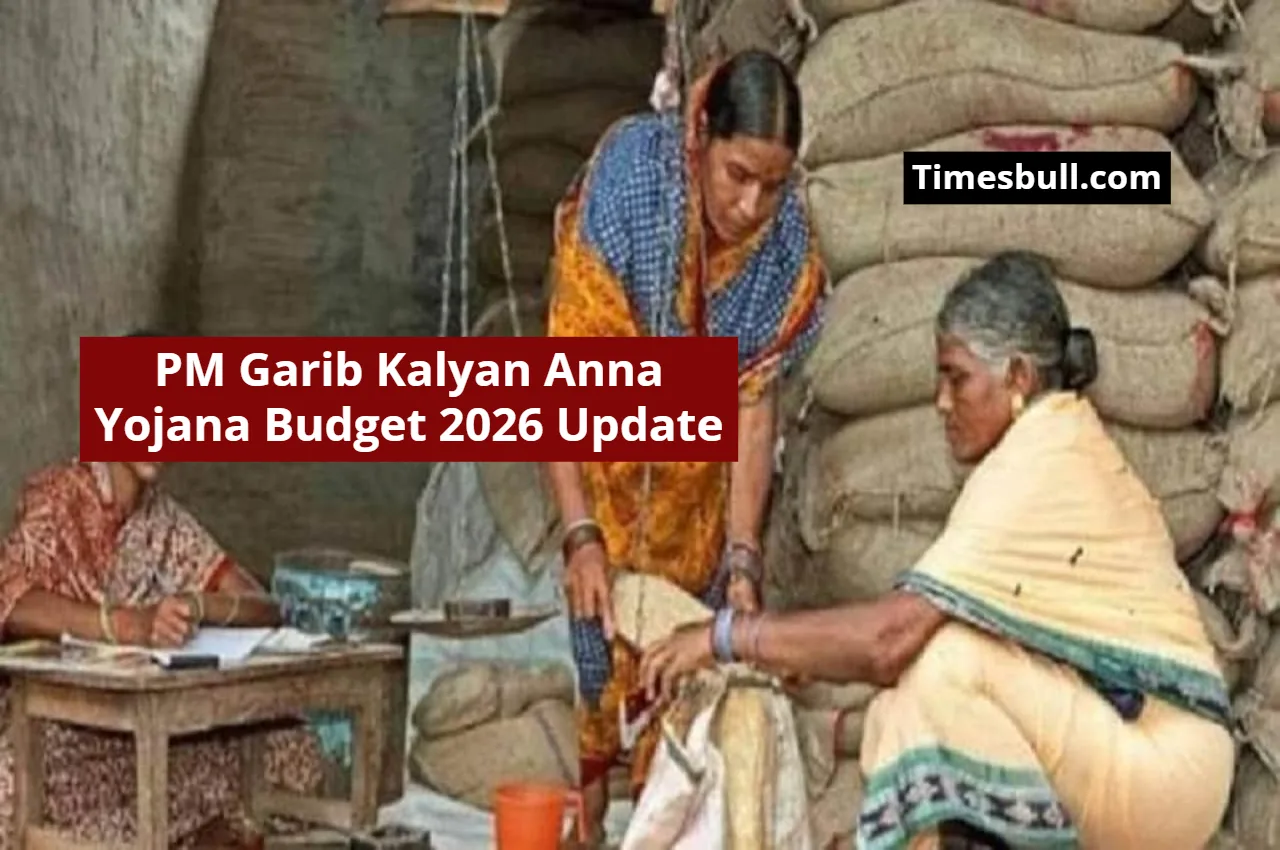
Budget 2026: The Union Budget, which shapes the direction of the country’s politics and economy, is once again in the spotlight. Prime Minister Narendra Modi’s government is set to present its 13th budget on Sunday, while Finance Minister Nirmala Sitharaman will deliver the budget speech for the ninth consecutive time. The entire country is watching this budget closely, especially the schemes that directly affect the poor and middle class.
Read More- Apple iPhone 16 Now Available At Rs 62999 on Flipkart Before iPhone 18 Series Launch
Focus on Welfare Schemes Before the Budget
In recent times, the government has revamped several major social schemes. After the change in the name of MNREGA, discussions are now intensifying regarding the Pradhan Mantri Garib Kalyan Anna Yojana (PMGKAY). This scheme has proven to be a lifeline for millions of families with limited income, for whom daily meals remain a major concern.
Relief Campaign Started During the Covid Crisis
The PM Garib Kalyan Anna Yojana was launched in March 2020 during the Covid-19 pandemic. At that time, the nationwide lockdown had plunged millions of migrant workers, daily wage earners, and poor families into a severe crisis. The government implemented it as a temporary relief measure to ensure that no one went hungry. Gradually, this scheme evolved from emergency assistance into a permanent social security net.
Scheme Extended Until 2028
The government has extended this scheme from January 1, 2024, to December 2028. Currently, it covers approximately 81.35 crore people. Under the Antyodaya Anna Yojana, eligible families receive 35 kilograms of wheat or rice free of cost every month, while priority category beneficiaries receive 5 kilograms of food grains per person. This distribution is done through ration shops across the country via the Public Distribution System.
What Was the System Before Free Rations?
Under the National Food Security Act, the poor previously received wheat and rice at a nominal price. Wheat was provided at Rs 2 per kg and rice at Rs 3 per kg. The PM Garib Kalyan Anna Yojana completely changed this system by making rations free, thereby directly reducing the financial burden on poor families.
Focus on Nutrition and Fortified Rice
The government started distributing fortified rice in July 2024. This rice is enriched with iron, folic acid, and other essential nutrients. The aim is not just to fill stomachs, but to combat malnutrition and improve the health of children and women.
How Much is Being Spent on the Scheme?
Financially, this scheme represents a significant investment for the government. It is estimated that approximately ₹11.80 lakh crore will be spent on it over the next five years. On average, ₹2.13 lakh crore is being provided as food subsidy every year. In the Union Budget 2025-26 alone, more than ₹2 lakh crore was allocated for this scheme. This amount is spent on grain procurement, distribution, storage, fortification, and strengthening the Public Distribution System (PDS).
Impact on Poverty and Hunger
According to government data, this scheme provided relief to millions of people during the pandemic. At that time, an additional five kilograms of food grains were provided per person. Even today, this scheme plays a crucial role in meeting the daily needs of the poor in rural and urban areas. In July 2025 alone, more than 34 lakh metric tons of food grains were distributed, demonstrating its wide reach.
Read More- Education Budget 2026 Benefits for Students – Lower Fees Better Infrastructure AI Education
What to Expect in Budget 2026?
The government claims that the PM Garib Kalyan Anna Yojana is receiving international acclaim. Now, all eyes are on the upcoming budget to see if the scheme will receive more resources, expand its scope, or witness any new improvements in the distribution system.