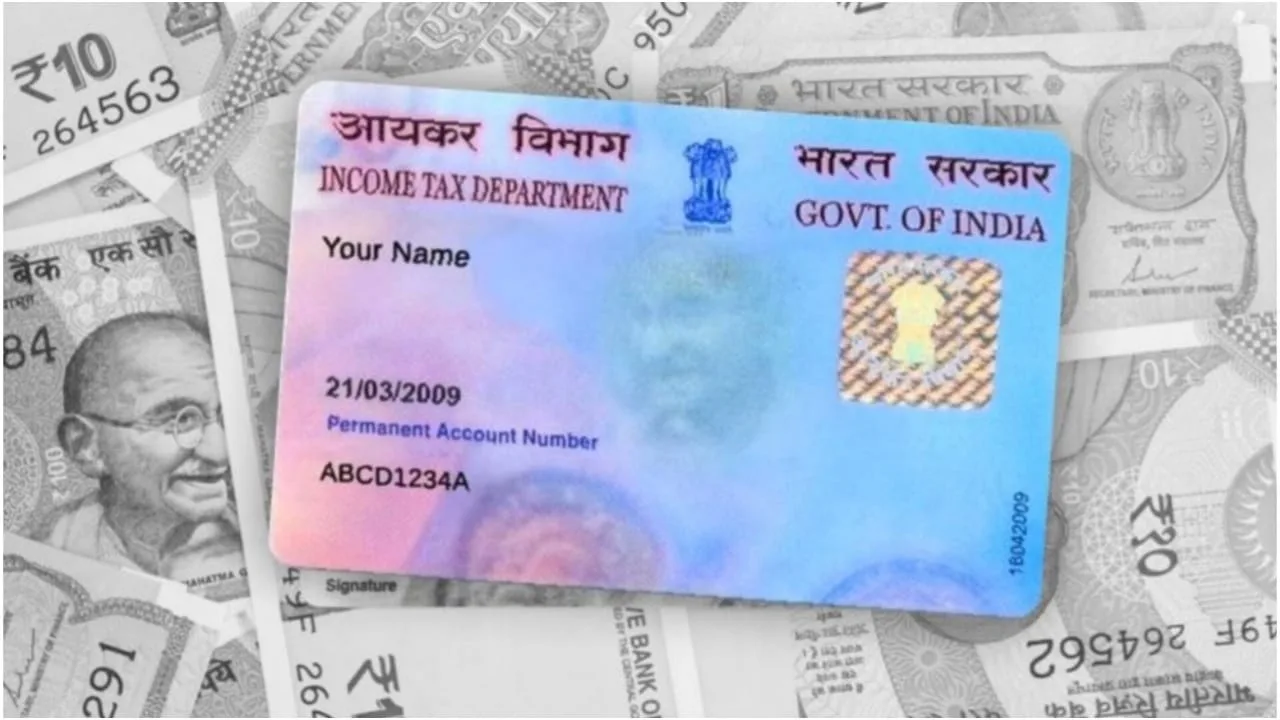
PAN CARD rules: Big news for PAN Card holders. New income tax regulations will take effect across the country on April 1, 2026. This will also introduce a new rule regarding PAN cards. The Income Tax Department has suggested a new guideline concerning PAN cards, which will be implemented on April 1, 2026, alongside the new Income Tax Act.
As per the new proposal, starting April 1, a PAN card will not be necessary for purchasing or selling a plot, house, or flat valued at less than 20 lakh rupees. At present, a PAN card is required for property transactions exceeding 10 lakh rupees, but this regulation will change on April 1, allowing transactions up to 20 lakh rupees without a PAN card.
The updated PAN card requirement will be advantageous for individuals in smaller towns or those dealing with lower-priced properties. This change will benefit small-scale buyers and sellers of land. Average families will gain from this, as they will be able to buy or sell a home valued between 10 and 20 lakh rupees without needing a PAN card.
Under the new regulation, properties transferred as gifts or through joint development agreements will also fall under the New PAN Card Rules, as long as the gifted property is appraised at 20 lakh rupees or more. The Business Idea: Start These 4 Businesses With Low Investment, Then Earn Big Every Month”/gas-cylinder-why-was-the-number-of-subsidized-cylinders-reduced-government-explains-the-reaso-750917.html" class="tb-related-post-link" rel="bookmark">Gas Cylinder: Why Was the Number of Subsidized Cylinders Reduced? Government Explains the Reaso has implemented these new PAN card rules in response to the increasing property prices observed in recent years.
The new PAN card regulation will also alleviate the paperwork burden for middle- and lower-income families. While a PAN card will still be necessary for property transactions in urban areas, transactions below 2 million rupees will become more straightforward. This means you can now receive money with one hand while signing documents with the other.
It’s important to highlight that the new rule does not eliminate the requirement for a PAN card. Instead, a PAN card will still be mandatory for transactions involving properties worth Rs 20 lakh or more. This will assist tax officials in linking property purchases to income records and monitoring significant real estate transactions.