


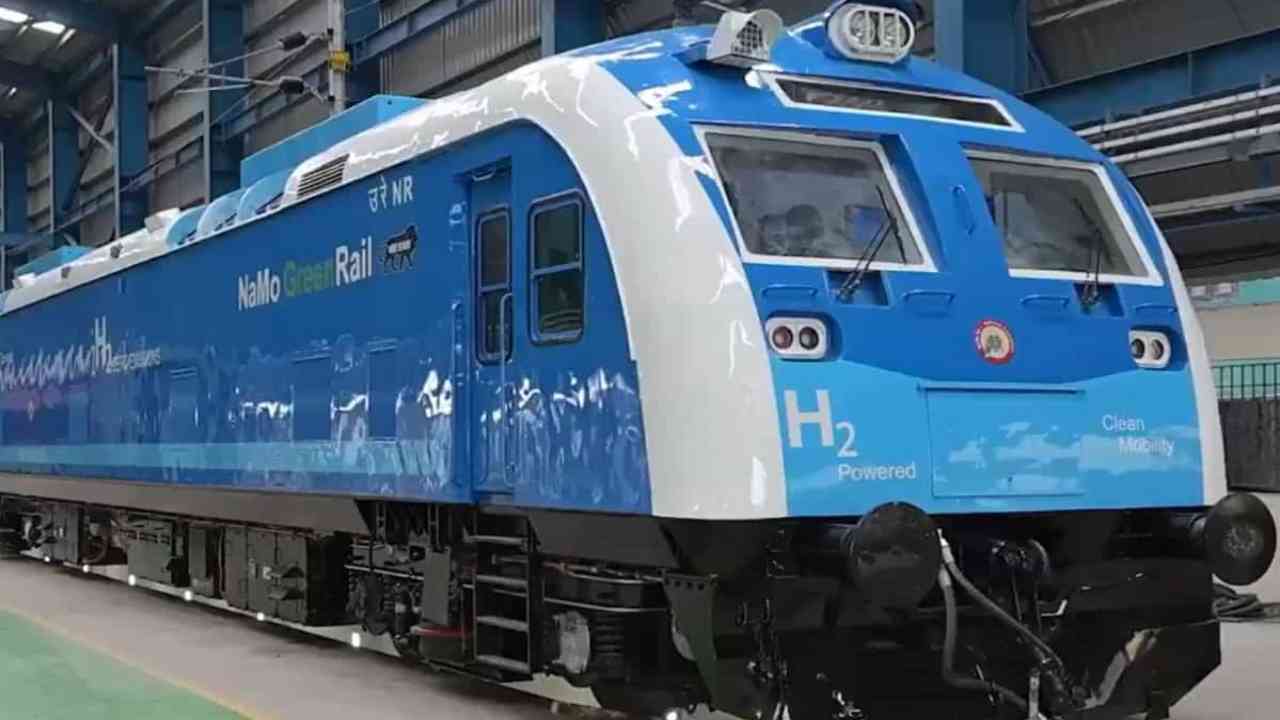
Hydrogen Train: Preparations for India’s first hydrogen-powered train are almost done. This pilot project by Indian Railways is in its final phase. During the pilot, the train will operate between Jind and Sonipat in Haryana. It’s set to be one of the longest broad-gauge hydrogen trains globally. The train will consist of 10 coaches, which include two driving power cars and eight passenger coaches. All of these coaches have been fully designed and built locally at the ICF in Chennai.
Hydrogen trains are already in service in Germany and China, but this Indian version is the longest broad gauge train (5 feet 6 inches) ever made. With a combined power output of 2,400 kW from its two power cars, it ranks among the most powerful hydrogen trains worldwide.
📌 Also Read: PM Kisan Yojana - How Many People from a Family Can Take Benefit? Know When the 22nd Installment Will Come
The train will operate using green hydrogen
The hydrogen for this train will be sourced from a state-of-the-art hydrogen plant located in Jind. This plant can store up to 3,000 kg of hydrogen and generates it from water through electrolysis. Officials have confirmed that a reliable 11 kV power supply has been established to maintain the plant’s continuous operation. Haryana Chief Secretary Anurag Rastogi, during a project review, highlighted the importance of having a strong backup and quick response system to ensure everything runs smoothly.
Route, speed, and ticket pricing
This train will travel between Jind and Sonipat, passing through Gohana. Successful trial runs have been conducted, and all technical checks are complete. Officials have set the train’s operational speed at 110 km/h. However, information about commercial operations, ticket bookings, and the precise schedule will be announced later. While ticket prices haven’t been officially disclosed yet, media reports indicate that fares might range from Rs 5 to Rs 25.
📌 Also Read: Budget 2026 - Government to give farmers a gift, installment amount will be Rs 10,000
Special Features
Metro-like train, each coach has two doors on both sides. Noiseless trains will provide comfort to passengers. Fans, lights and air conditioning facilities. 8 passenger coaches, with doors that will be completely closed before the train starts moving for safety. 360 kg of hydrogen can travel up to 180 km, which is several times faster than conventional electric trains. Power engines at both ends of the train, allowing faster acceleration and smoother speed