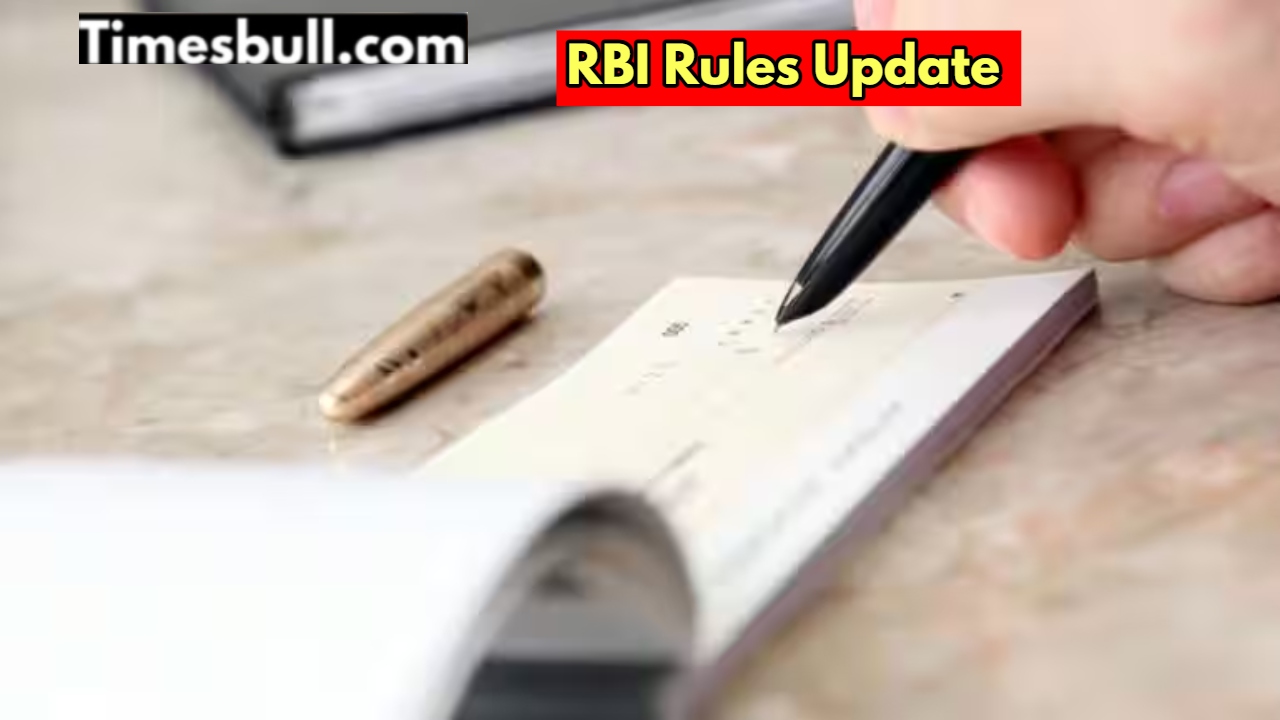
New Delhi: If you open an account in a bank, you also prefer to get a cheque book issued. Most people get a cheque book issued as per their convenience. They can withdraw any amount of money without going to the bank by using a cheque. If you are planning to withdraw money using a cheque, then first know about the guidelines related to it.
Many times, due to ignorance of rules, all the money can be lost from your account. This mistake will be nothing but signing the cheque, which can prove to be costly. Most people do not know the rules and regulations of signing a cheque. According to the guidelines of the Reserve Bank of India, signing at the wrong place on the cheque can lead to loss of all the money in the account. You can know the rules of signing a cheque below.
How many types of cheques are there?
You must know that there are two types of cheques. One of them is a bearer cheque and the other an order cheque. If the bearer cheque is presented at the bank, the money can be withdrawn. Under an order cheque, payment is made only to the person whose name is written.
Understand the signature in a bearer cheque.
A bearer cheque should be understood like cash. There is no need to sign on the back of the cheque to encash it. Apart from this, if the order cheque has to be given to someone else, then it is necessary to sign on the back. In simple language, it is also called endorsement. Keep in mind, it is appropriate to sign on the back only when transferring it.
How to understand the signature on an order cheque
If you want to give the order cheque to someone else, then you have to sign on the back. This is called endorsement. Keep in mind that you have to sign on the back only when transferring it. If you sign on the back of the bearer cheque by mistake, then the wrong person can take advantage of it and withdraw money.
The right way to sign
You should always sign on the front. Sign on the back only when the cheque has to be transferred to someone else. Do not sign while withdrawing money yourself.
Latest News
- Indian Railways– 155 Trains Express Declared High-Speed, Thousands of Railway Staff to Benefit

- Monsoon Alert – Warning Heavy to Very Heavy Rain alert & thunderstorms in 22 States Over Next 4 Days

- America-Iran War: मिडिल ईस्ट में तनाव होगा खत्म! ईरान ने होर्मुज रास्ते पर कही बड़ी बात

- PM Surya Ghar Yojana 2026: Get Up to Rs 78,000 Subsidy within 6 Easy Steps, Know Here

- Cheapest Available 5G Smartphones in India Under 10000

- UPSC Prelims Answer Key 2026 – How to Download UPSC Prelims Answer Key at upsc.gov.in
- 8th Pay Commission: एनपीएस और पुरानी पेंशन में कौन सी बेहतर, जानिए बड़ा अपडेट

- Xiaomi 17T Launching With Leica 5x Zoom and Huge 6,500mAh Battery Under ₹60,000

- NEET UG 2026 – Haryana & Bihar Announce Free Bus Service for Candidates on June 20-21

- PM Kisan 23rd Installment: Farmers to get Rs 2000 in June? Know Here