
Hydrogen Bus Service Begins Operations, Know Ticket Fare, Timings
This will reduce dependence on private vehicles and encourage government employees and the general public to use public transport.

 Join Us
 Add as a preferred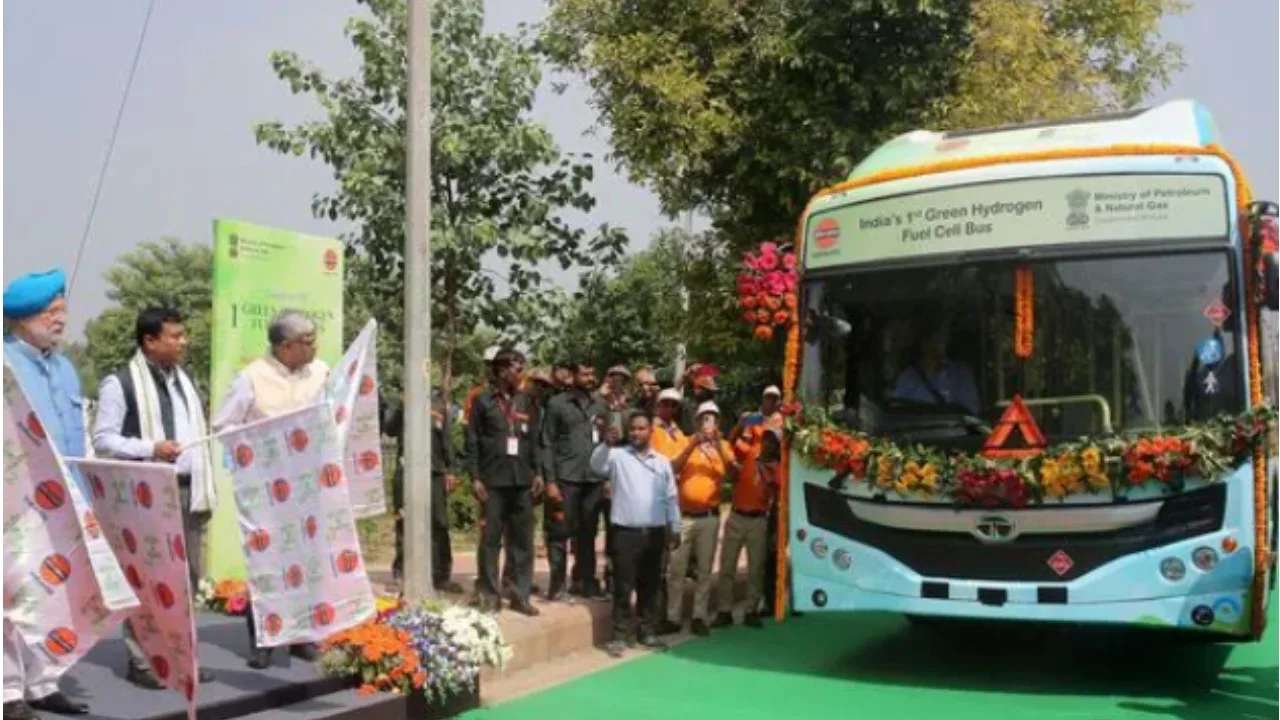
Hydrogen Bus
Hydrogen Bus: Big news for bus commuters. A hydrogen-powered shuttle bus service commenced in Delhi on May 15th. This initiative is being launched in partnership with the DMRC, the Ministry of Housing and Urban Affairs, and the Ministry of Petroleum. The service will run between the Central Secretariat and Sewa Tirtha metro stations. The bus will operate from Monday to Friday. Its aim is to facilitate easy last-mile connectivity for government employees and the general public while decreasing the reliance on private vehicles.
The bus service will operate from Monday to Friday.
Morning – 8:30 AM to 12:30 PM
Evening – 3:30 PM to 6:30 PM
Buses will arrive every 30 minutes.
The buses will travel in both directions.
Benefits of hydrogen buses
The introduction of the hydrogen shuttle bus service will simplify travel from metro stations to workplaces. This will lessen the reliance on private vehicles and motivate government employees and the public to opt for public transport. These buses will link the Central Secretariat and Seva Tirtha metro stations with nearby government offices.
Hydrogen bus route
The service will encompass several key government offices and locations, including Kartavya Bhawan, Vigyan Bhawan, Nirman Bhawan, Akbar Road, Baroda House, National Stadium, National Gallery of Modern Art, and India Gate, among others.
Hydrogen bus rental
DMRC will oversee bus operations and ticketing, while IOCL will supply drivers and hydrogen fuel. This project is viewed as a significant advancement towards fostering clean energy and sustainable public transport in India. Tickets will be obtainable via NCMC cards, UPI, and cash payments. The fares for these buses are set at Rs 10 and Rs 15.
How does a hydrogen bus work?
Hydrogen buses are based on fuel cell technology. Hydrogen gas is stored in high-pressure tanks on the roof of the bus. This hydrogen is then transported to the fuel cell stack, where it chemically reacts with oxygen drawn from the outside air. This process generates electricity, which powers the bus’s electric motor. Significantly, this entire process produces no smoke or toxic gases. Only water vapor is emitted from the bus, making it considered a completely environmentally friendly technology.
What will be the impact on CNG buses?
Hydrogen buses are a cleaner and more modern option than CNG buses. Currently, many locations are using H-CNG technology, which blends hydrogen with CNG. This reduces carbon emissions. However, as hydrogen production and refueling infrastructure develops in the future, hydrogen buses may gradually replace CNG buses. These buses are also expected to have lower operating costs, making travel more affordable.
FAQs: People Also Ask
Hydrogen buses are based on fuel cell technology.
Hydrogen buses are a cleaner and more modern option than CNG buses.
The service will encompass several key government offices and locations, including Kartavya Bhawan, Vigyan Bhawan, Nirman Bhawan, Akbar Road, Baroda House, National Stadium, National Gallery of Modern Art, and India Gate, among others.
DMRC will oversee bus operations and ticketing, while IOCL will supply drivers and hydrogen fuel. This project is viewed as a significant advancement towards fostering clean energy and sustainable public transport in India. Tickets will be obtainable via NCMC cards, UPI, and cash payments. The…
Hydrogen buses are based on fuel cell technology. Hydrogen gas is stored in high-pressure tanks on the roof of the bus. This hydrogen is then transported to the fuel cell stack, where it chemically reacts with oxygen drawn from the outside air. This process generates…

Sweta Mitra
Next Article
IPL 2026: इस एक्ट्रेस से शादी करेंगे तिलक वर्मा! कर रहे डेट, जानिए अपडेट
तिलक वर्मा (tilak verma) जहां शानदार प्रदर्शन की वजह से चर्चा में रहते तो दूसरी निजी जिंदगी में भी लोगों के बीच केंद्र बन जाते हैं. इस बीच वे अपनी व्यक्तिगत जिंदगी को लेकर चर्चा का विषय बने हुए हैं.


IPL 2026 Update: इंडियन प्रीमियर लीग (IPL 2026) की गूंज दुनियाभर में सुनाई दे रही है, जिस पर सभी फैंस की नजरें हैं. आईपीएल (ipl) के 5 खिताब जीतने वाली मुंबई इंडियंस (mumbai Indians) खराब प्रदर्शन की वजह से क्रिकेट प्रेमियों के निशाने पर हैं. लेकिन उसके नए नवेले खिलाड़ी तिलक वर्मा (tilak Verma) ने बढ़िया प्रदर्शन कर फैंस का दिल जीता है.
तिलक वर्मा (tilak verma) जहां शानदार प्रदर्शन की वजह से चर्चा में रहते तो दूसरी निजी जिंदगी में भी लोगों के बीच केंद्र बन जाते हैं. इस बीच वे अपनी व्यक्तिगत जिंदगी को लेकर चर्चा का विषय बने हुए हैं. इस बार उनकी चर्चा की वजह कुछ और नहीं, बल्कि एक वीडियो बना हुआ है. वीडियो सोशल मीडिया पर तेजी से वायरल हो रहा है. इसमें सूर्य कुमार यादव मजाकिया अंदाज में तिलक को इन लिव कहते सुनाई देते हैं.
Write a Comment