
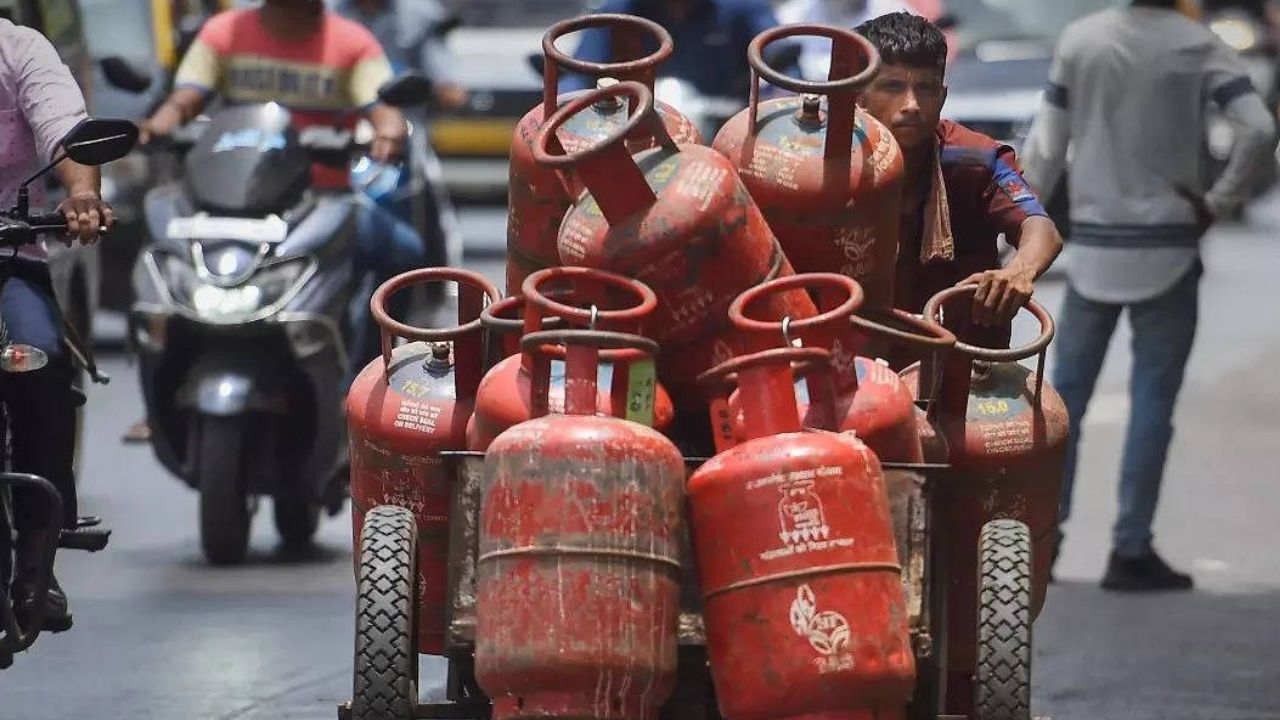
Gas Cylinder Using Tips: Nowadays, almost every household uses LPG gas cylinders for cooking. It has become one of the most essential necessities in our kitchens. However, it often happens that while cooking, the gas suddenly runs out, and we don’t know whether it’s because the cylinder is empty or there’s a problem with the burner. This can lead to interruptions and increased discomfort.
If you know in advance how much gas is left in your cylinder, you can easily avoid this hassle. There are some simple home methods that can help you determine how much gas is left without a machine. Let’s find out one trick that can be useful for everyone.
The water method is the easiest
The easiest and most popular way to check the gas level in a cylinder is with water. Simply fill a glass or mug with water. Pour this water slowly from the top of the cylinder to the bottom. Then, touch the cylinder from top to bottom with your hand. Where the cylinder feels cool, that’s where the gas is present. The bottom will feel warm.
Because there’s no gas there. The gas-filled area is actually colder because LPG is in liquid form, and its evaporation creates cooling. This trick is the simplest and gives immediate results. If the coldest part is too low, then the cylinder is about to empty. In this situation, it’s best to book a new cylinder early so you don’t run out of gas.
You can also tell by weight
How much gas is left in your gas cylinder? If you want a more accurate estimate, use a weighing method. Every LPG cylinder has its empty weight (tare weight) written on the top, such as 15.3 or 15.5 kilograms. If you have a weighing machine at home, you can use a weighing machine.
So, place the cylinder on the counter and measure its total weight. Subtract the empty weight from the total weight. This will give you the actual weight of gas remaining in the cylinder. For example, if the total weight is 28.5 kg and the empty weight is 15.5 kg, you have approximately 13 kg of gas left in your cylinder.