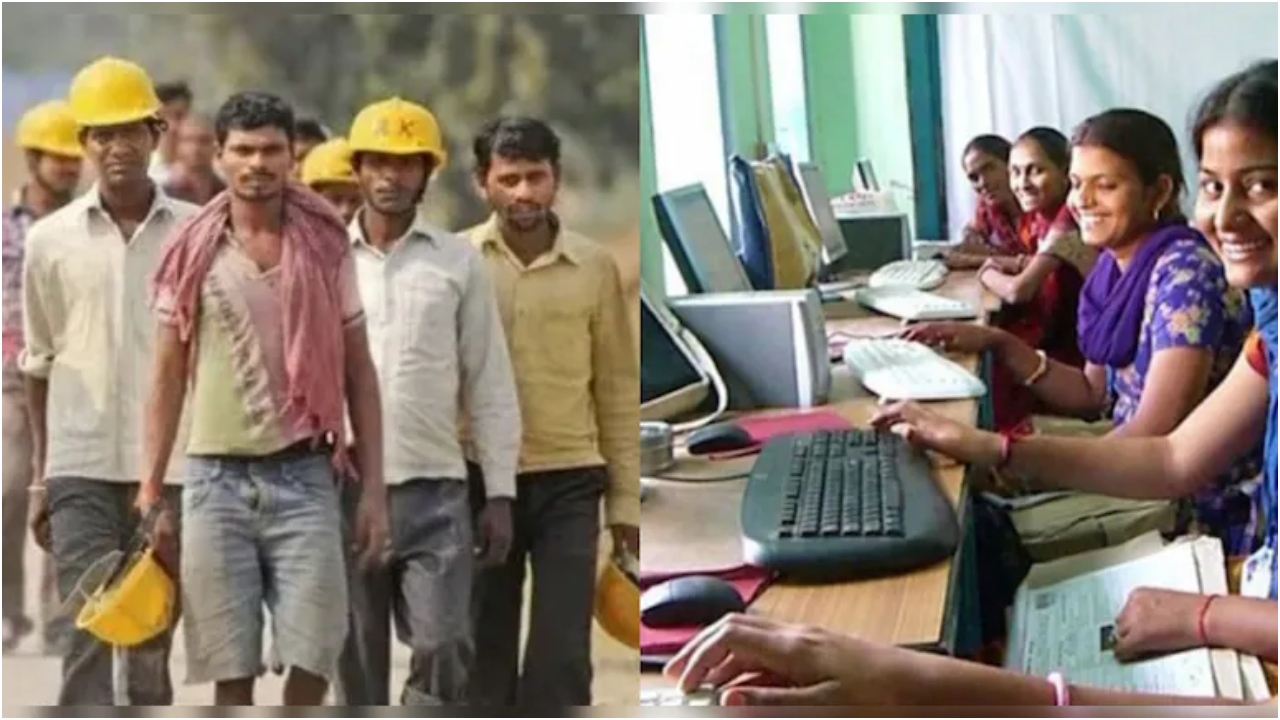
New Delhi: The central government has made a significant change to labour laws, benefiting workers directly. The new rules now provide gratuity benefits to employees after one year instead of five. Furthermore, changes have also been made to the rules for women employees.
The four labour codes across the country—the 201 Labour Code, the 2020 Industrial Relations Code, the 2020 Social Security Code, and the 2020 Occupational Safety, Health and Working Conditions Code—will directly benefit workers in different categories. The significant changes have brought excitement to the working class. The specific changes labourbor law are discussed in detail below.
Changes in Gratuity Eligibility
According to the Ministry of Labour and Employment, the new rules will now allow fixed-term employees to receive all the same benefits as permanent employees. This includes benefits such as leave, medical, and social security. Employees will now begin receiving gratuity benefits after one year instead of five years.
If an employee leaves or retires, they will be eligible for gratuity benefits only after one year. Fixed-term employees will now receive the same benefits as permanent employees.
Important Facts About Gig and Platform Workers
Did you know that gig work, platform work, and aggregators are being defined in law for the first time? Aggregators will be required to contribute a percentage of their annual turnover, limitedper centercent of the amount paid/payable to gig and platform workers.
Meanwhile, welfare benefits will be easily accessible through Aadhaar-linked Universal Account Numbers. They will be fully portable and available in all states without any migration restrictions.
Benefits for Contract Workers
Short-term employees will have increased employment prospects. They will receive social security benefits equal to those of permanent employees. Legal protections will also be guaranteed. Fixed-term employees will be eligible for gratuity after one year of continuous service. Previously, this minimum period was five years.
Latest News
- NEET UG 2026 – Haryana & Bihar Announce Free Bus Service for Candidates on June 20-21

- PM Kisan 23rd Installment: Farmers to get Rs 2000 in June? Know Here

- Best Premium Smartwatches Under ₹10,000: Upgrade to Luxury Metallic Builds, AMOLED Screens, and In-Built GPS

- Maruti Dzire CNG Continues Dominance – Fuel Efficient Sedan Wins Indian Families

- Vivo Y600 Turbo Set to Debut: Featuring a 165Hz Display, Dimensity 8500, and a Massive 9,020mAh Battery

- HMD Vibe 2 5G Debuts in India with 6000mAh Battery & 50MP Camera: Get It For Just ₹9,499 With Launch Offers

- 8th Pay Commission लागू होते ही कितना हो जाएगा फिटमेंट फैक्टर, चेक करें अपडेट

- Oppo Find X9 Ultra Launched in India: Check Reliance Digital Price, Bank Offers, and Flagship Specs

- Electricity Bill Saving– How to Save Power During Summer Heat? Here Are the Few Tips

- Gold-Silver Rate – Gold ₹44,396 per 10 grams & Silver ₹1,85,462 per kg cheaper from the Peak